AI Voice Clones in Scam Calls?
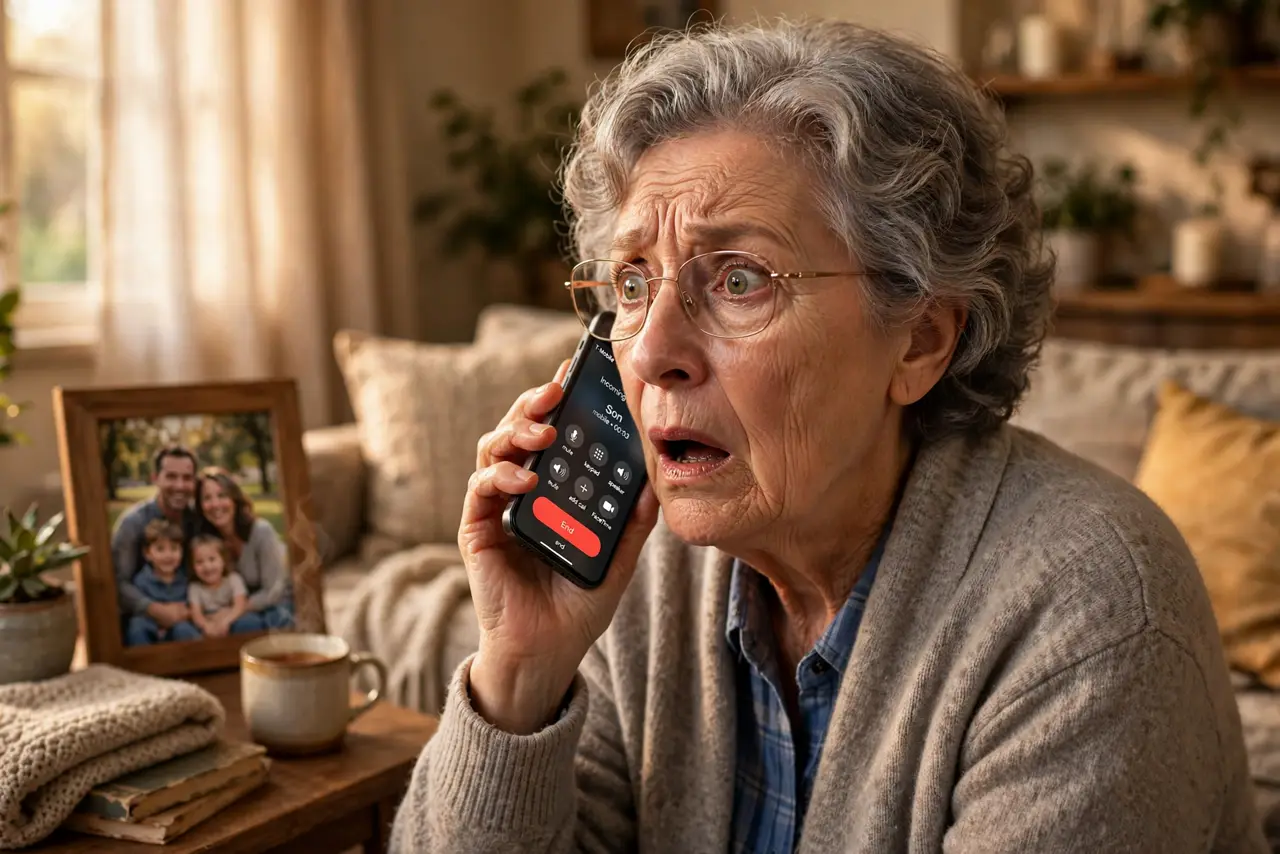
A panicked voice that sounds exactly like your grandchild calls: accident, hospital, need money wired now. AI voice cloning needs only seconds of audio — from social media videos — to fake a loved one convincingly. The defense isn't detecting the fake; it's verifying through a channel the scammer doesn't control.
TL;DR / Quick Fix
Scammers now clone a loved one's voice from a few seconds of audio and call claiming an emergency needing money. Pause and verify through a different channel — call the person back on their real number. Set a family code word in advance; a real emergency caller will know it.
Follow these steps
- Pause before you act. Urgency is the weapon — 'don't tell anyone, send money now.' A real emergency survives a five-minute verification pause; a scam does not.
- Call back on the real number. Hang up and call the person directly on the number you already have. If they answer, confused and fine, you just dodged it.
- Text another family member. Ask someone near the supposed victim to check on them physically. Two independent confirmations beat one panicked call.
- Set a family code word now. Agree on a word or phrase only the family knows. In a real emergency call, ask for it — a scammer cannot guess it.
- Ask something only they know. If you stay on the line, ask a personal question with no public answer — not their birthday, something genuinely private.
- Report the attempt. Report to the FTC and your phone carrier. Cloned-voice reports help investigators track the operations running them.
What NOT to do
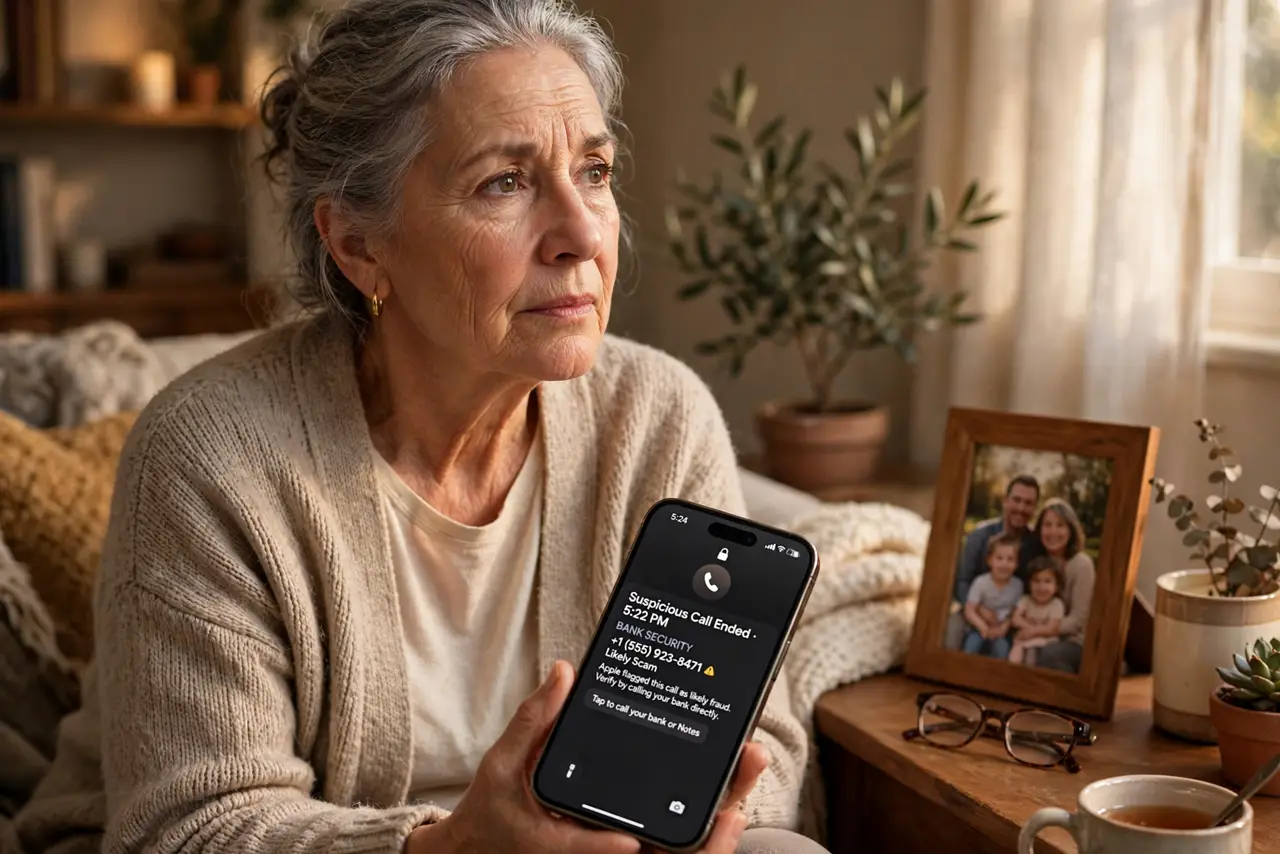
- Do not wire money or buy gift cards on a single call's say-so. No real emergency requires instant untraceable payment — that demand is the scam's signature.
- Do not trust caller ID. Scammers spoof familiar numbers routinely — see spoofed numbers. The display proves nothing.
- Do not post voice-rich videos publicly without thinking. Every public video is raw material for cloning — tighten social media privacy for kids especially.
- Do not keep the code word written near the phone. A code word on a sticky note is a password on a sticky note — memorize it.
Frequently asked questions
How much audio does cloning need?
Shockingly little — a few seconds of clear speech from a video or voicemail can produce a convincing clone with current tools.
Can I detect a cloned voice by listening?
Not reliably. Clones still glitch occasionally, but counting on your ear is a losing game — verify through another channel instead.
What if the caller knows personal details?
Scammers harvest details from social media and breaches. Personal details prove research, not identity — the code word is the real test.