Pick an Arcade Stick
Fighting games reward precise inputs, and a good arcade stick — the joystick-and-buttons layout from actual arcade cabinets — gives many players cleaner execution than a pad. But sticks range from $50 toys to $300 tournament gear, and the differences that matter aren't the price tag. Here's what actually counts.
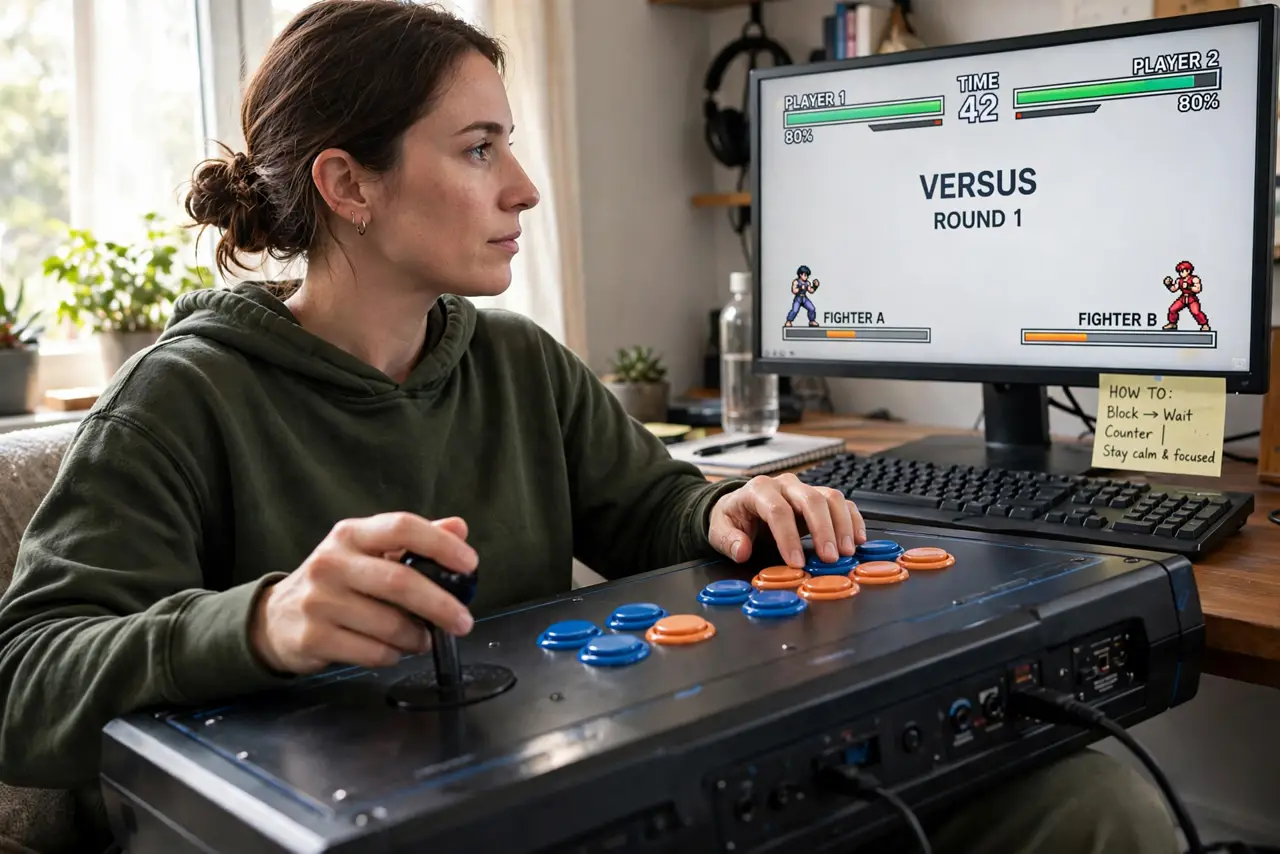
TL;DR / Quick Fix
Quick fix: for fighting games, pick a stick with genuine arcade parts (Sanwa or Seimitsu buttons and lever), a heavy stable base, and compatibility with your platform. Beginners do fine with mid-range sticks — expensive ones buy durability and modding ease, not skill.
Follow these steps
- Prioritize genuine arcade parts. Sanwa or Seimitsu levers and buttons are the arcade standard — responsive, consistent, and replaceable. No-name clones feel mushy and wear fast; parts quality is the core spec.
- Check platform compatibility. Sticks are licensed per platform family. A PlayStation stick won't work on Xbox and vice versa — verify your exact console or PC support before buying.
- Want a heavy, stable base. The stick shouldn't slide when you play. Weight and rubber feet matter more than looks — lap players especially need stability.
- Pick your lever type. Japanese ball-top levers (loose, fast) vs Korean battops (stiffer, snappy returns) — try both if you can. Beginners adapt to either; it's preference, not quality.
- Consider modding ease. Enthusiast sticks open up for part swaps — new buttons, different gates, quieter switches. If you like tinkering, a mod-friendly case pays off for years.
- Don't overspend as a beginner. A solid mid-range stick with real parts teaches you everything. Upgrade when you know what *you* want differently — and if a standard controller drifts, that's a different problem.
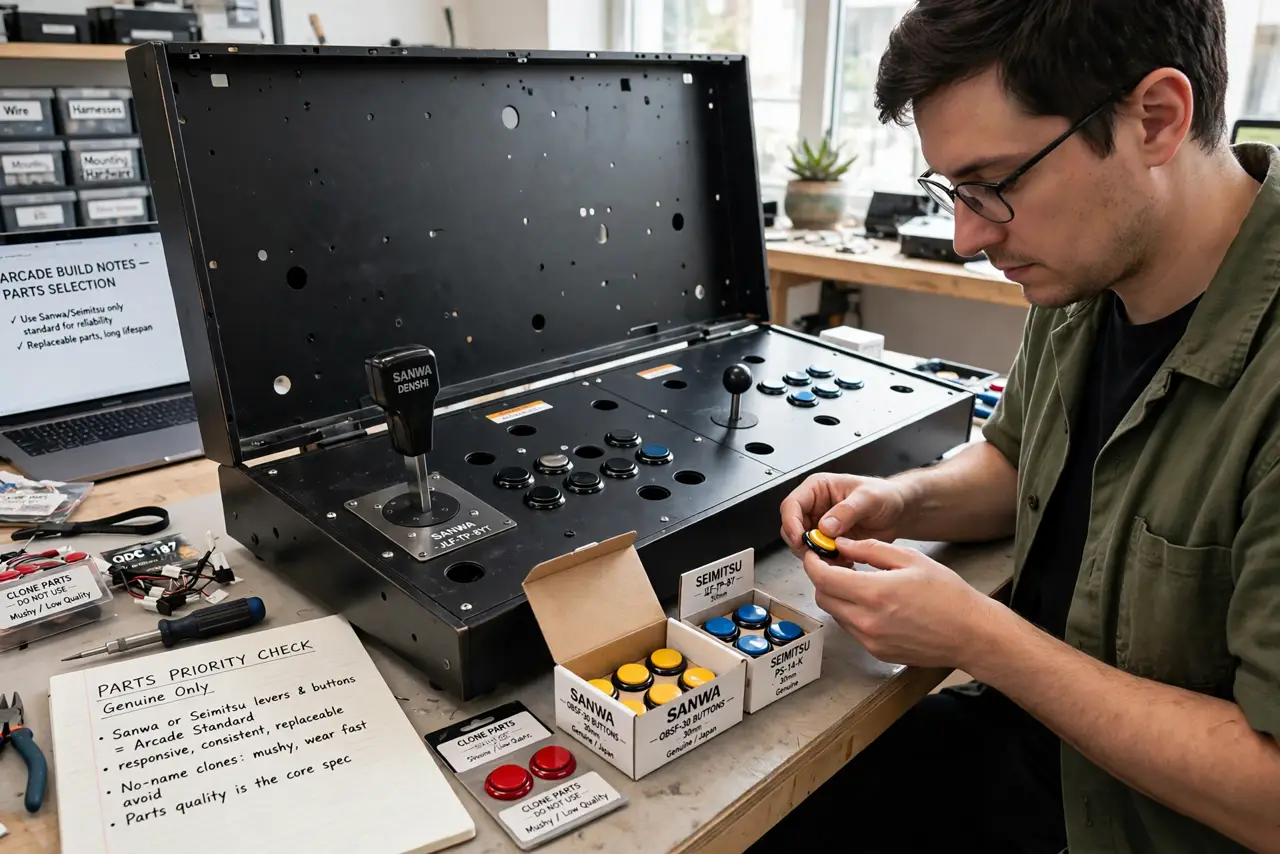
What NOT to do
- Do not buy the cheapest stick on the marketplace. Toy-grade parts teach bad habits and break — the mid-range floor is where real sticks start.
- Do not assume it improves your rank. A stick changes input feel, not skill — practice improves execution, whatever you hold.
- Do not ignore the noise factor. Clicky arcade buttons are loud — consider quiet switches or your household's tolerance before late sessions.
- Do not forget the cable. Detachable cables survive yanks and travel; fixed cables fray at the stress point eventually.
Frequently asked questions
Stick or pad — which is better?
Neither universally. Sticks suit precise directional inputs and arcade tradition; pads suit comfort and portability. Top players win on both — it's preference.
Can I use one stick on PC and console?
Many sticks support PC plus one console family. True multi-platform sticks exist but cost more — check the compatibility list, not the marketing.
How long do arcade parts last?
Genuine parts are rated for millions of presses — years of heavy play. And they're replaceable, which is the point of buying real parts.