Set Up an Automatic Pet Feeder
Late meetings, weekend trips, and the 5 AM face-pawing all point to the same fix: a feeder that dispenses the right portion at the right time, every time. But a jammed auger or a dead battery turns convenience into a hungry pet. Choosing and testing the feeder properly is what makes it trustworthy.
TL;DR / Quick Fix
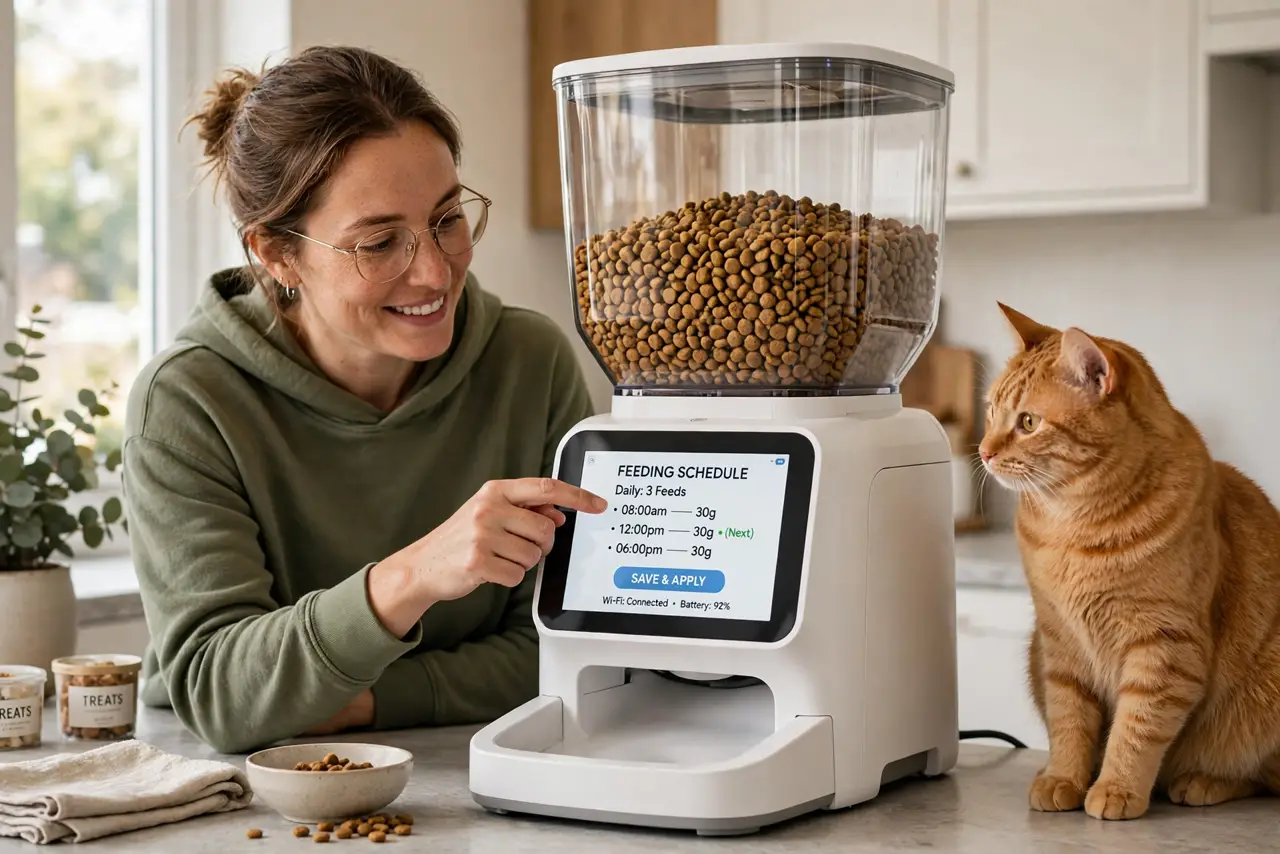
Quick fix: choose a feeder with a sealed hopper and portion control, fill it with your pet's kibble, and program two to three small meals a day in the app or on the panel. Test it for a full day while you are home before trusting it for a trip.
Follow these steps
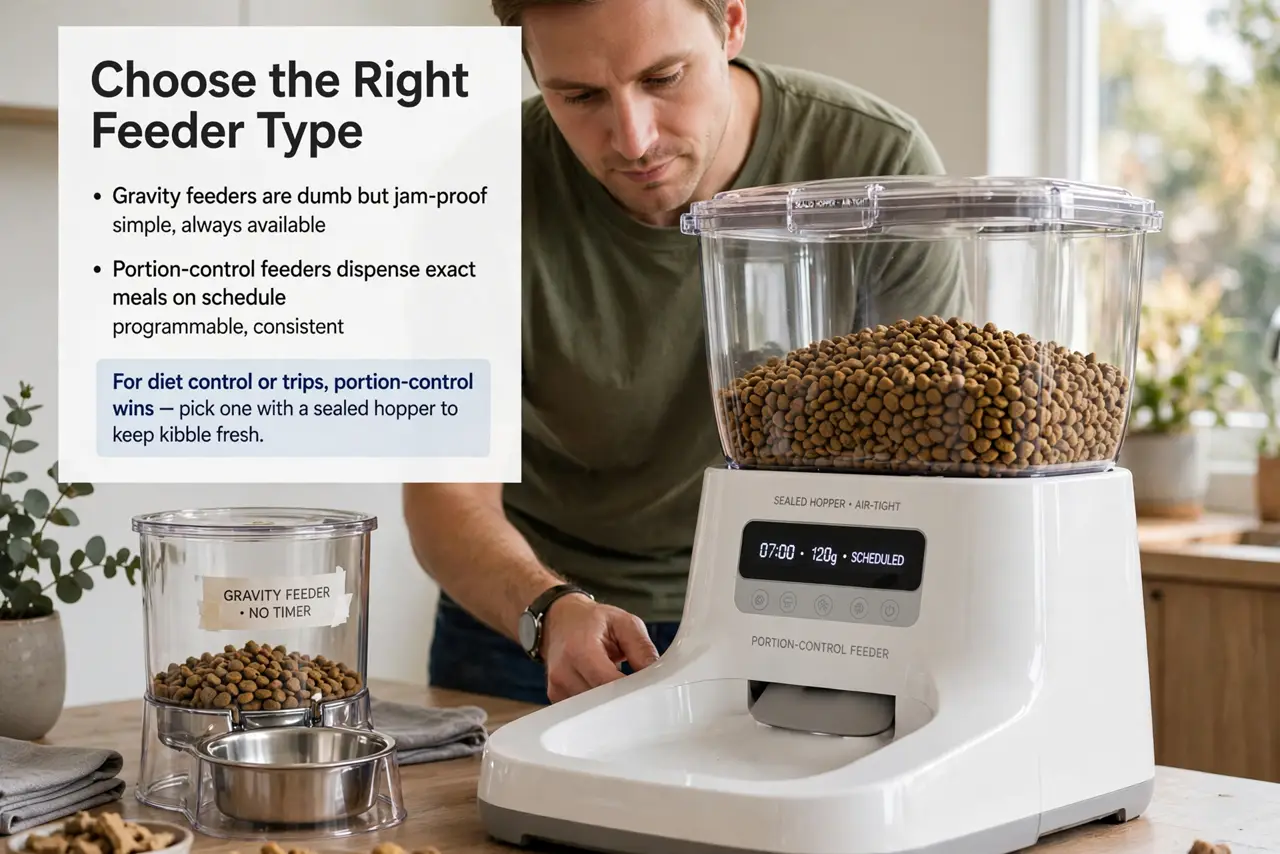
- Choose the right feeder type. Gravity feeders are dumb but jam-proof; portion-control feeders dispense exact meals on schedule. For diet control or trips, portion-control wins — pick one with a sealed hopper to keep kibble fresh.
- Match kibble to the mechanism. Check the feeder's supported kibble size. Oversized or oddly shaped kibble jams augers — the number one feeder failure.
- Program small, frequent meals. Two to three smaller meals beat one big dump — better digestion, less begging. Set the schedule in the app or on the panel and confirm each slot.
- Test for a full day at home. Run the complete schedule while you are there to watch. Confirm portions look right, nothing jams, and your pet actually eats from it before any trip.
- Plan for power loss. Choose a feeder with battery backup, or keep batteries installed alongside the plug. A feeder that dies in an outage is a decoration.
- Keep a human backup for long trips. For multi-day absences, a neighbor checking in beats any gadget. Tech handles the routine; humans handle the exceptions.
What NOT to do
- Do not trust it untested on a trip. Every feeder deserves a supervised trial run — discovering a jam from another city helps no one.
- Do not use it with wet food. Automatic feeders are for dry kibble — wet food spoils in the hopper within hours.
- Do not forget to clean it. Stale kibble dust gums up the mechanism — wash the hopper and bowl weekly.
- Do not set portions by guesswork. Weigh the dispensed food once against your vet's recommendation — 'looks about right' overfeeds most pets.
Frequently asked questions
Will my pet overeat from a gravity feeder?
Often yes — gravity feeders offer unlimited food. Portion-control feeders are the answer for weight management.
Can feeders handle two pets?
Only with microchip or collar-tag feeders that open per pet. Standard feeders cannot stop one pet eating both portions.
What if the power goes out?
Battery-backup models keep the schedule. Without backup, meals stop — another reason for a human checker on long trips.