'Your Bank' Calls? Verify Before You Trust
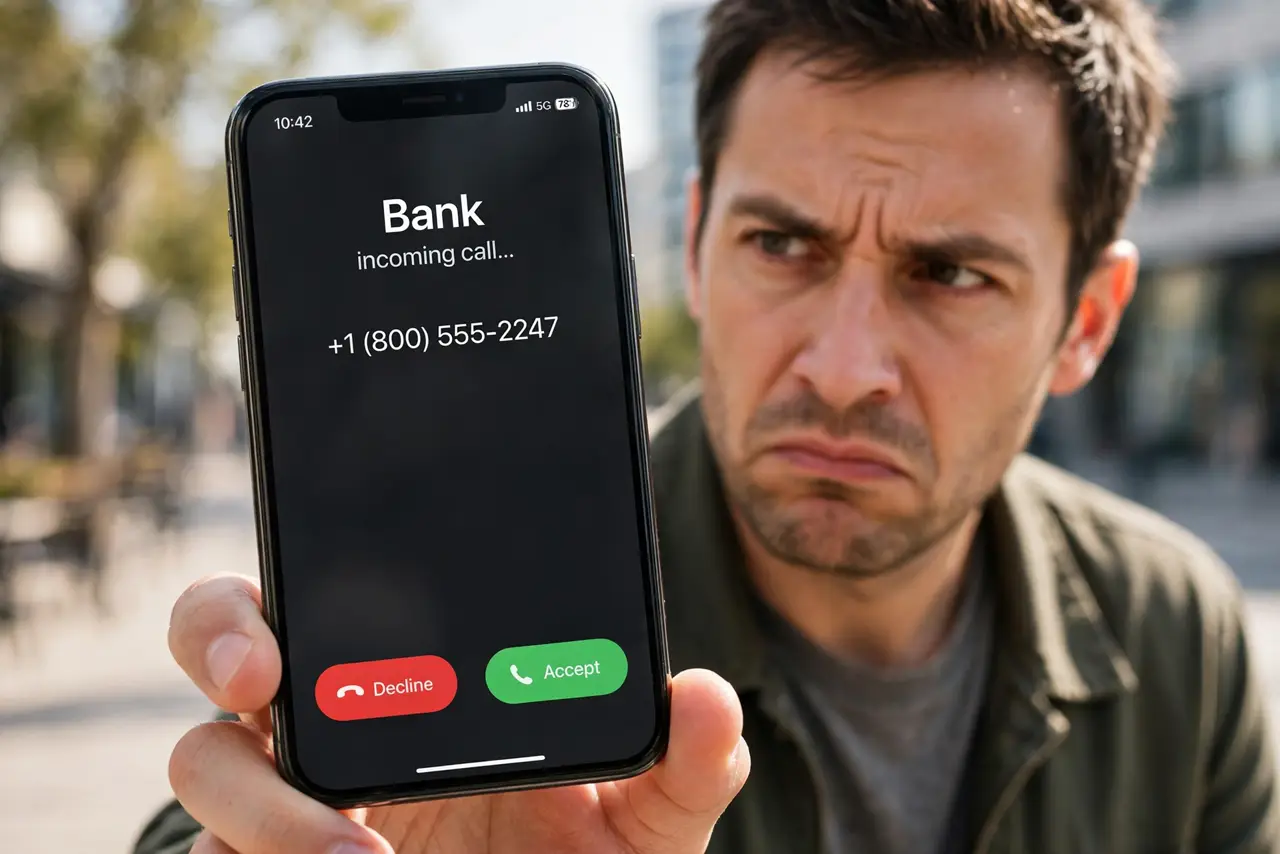
Your phone rings and the screen says it's your bank — but the caller asks for your password or a code. Caller ID can be faked in seconds, so the display proves nothing. This guide shows how to verify before you trust.
TL;DR / Quick Fix
Quick fix: hang up and call your bank using the number on your card or app — never trust an incoming call, even if the display names the bank. Real banks never ask for your password or SMS codes by phone. If you shared anything, call the bank's fraud line.
Follow these steps
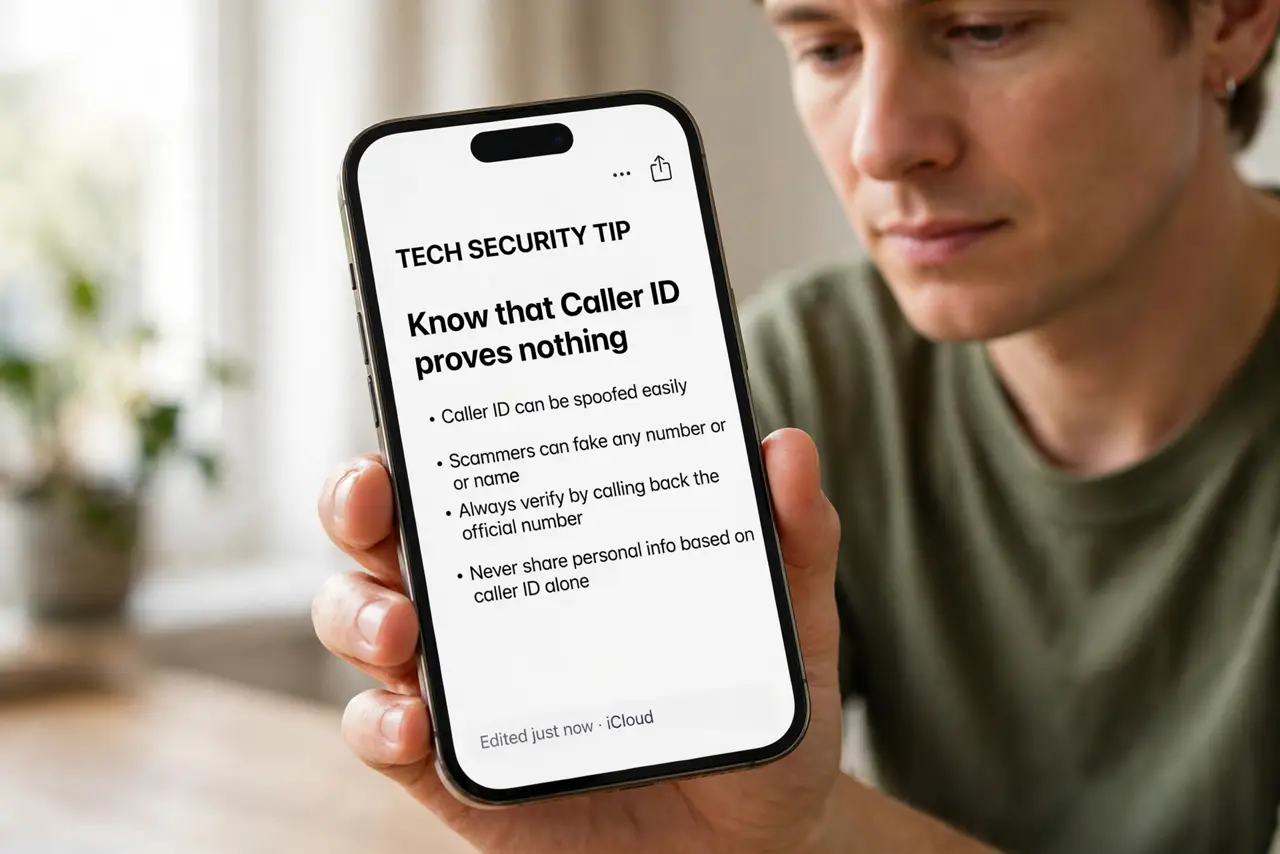
- Know that caller ID proves nothing. Scammers fake the displayed number in seconds with spoofing tools. 'Bank of America' on your screen can be anyone, anywhere.
- Give nothing to an incoming caller. No passwords, no codes, no card numbers — no matter how urgent they sound. A real bank employee will never ask for these by phone.
- Hang up politely. Say you will call back, then end the call. You do not owe a potential scammer an explanation or more of your time.
- Call back on a number you trust. Use the number on the back of your card or inside the bank's official app. If there is a real issue, the bank will confirm it there.
- Ask what the call was about. Describe the incoming call to the real representative. They can tell you whether the bank actually tried to reach you.
- Report the spoofed call. Report the number to your bank's fraud team and to your country's spam-reporting line. Reports help shut these operations down.
What NOT to do
- Do not stay on the line 'just to hear them out.' Every minute gives them another chance to pressure you into slipping.
- Do not call back the number they give you. Scammers answer their own callback numbers with professional-sounding greetings.
- Do not read back any code they text you. That code is the key to your account — handing it over completes the theft.
- Do not assume an automated voice means legitimate. Robocalls with bank-like menus are cheap to fake.
Frequently asked questions
They knew my name and balance — how?
From old data breaches and public records. Knowing a few facts about you is easy; it proves nothing about who is calling.
What if I already gave them information?
Call your bank's fraud line immediately with the number on your card. They can freeze the account and watch for unauthorized activity.
Can my bank really not call me?
Banks do call, but they will never ask for passwords or codes. When in doubt, hang up and call back — a real bank expects this.