Verify a Bank Call With a Callback Rule
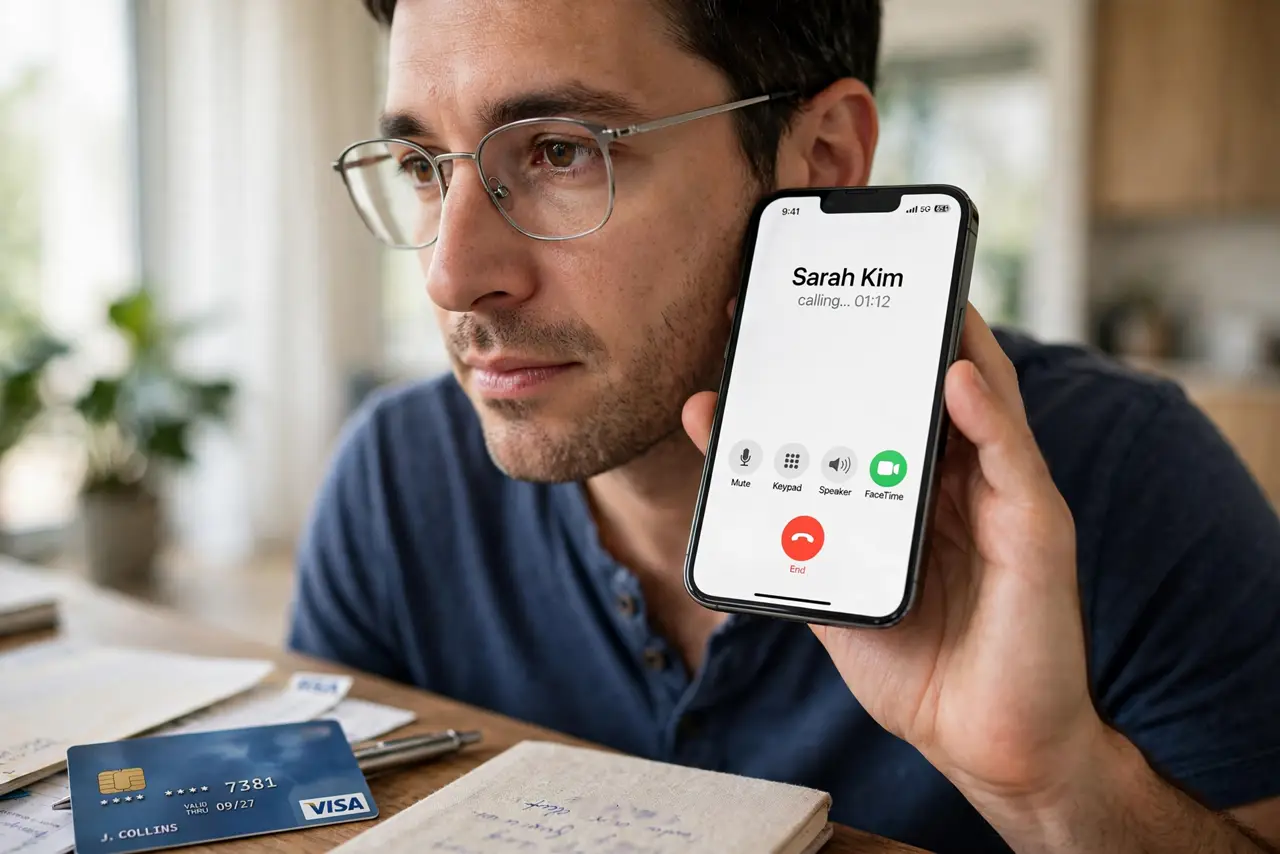
Your bank calls about suspicious activity, and the caller sounds professional and knows your name. Criminals can fake all of that in minutes, so the only safe move is to hang up and call the bank yourself on a number you trust.
TL;DR / Quick Fix
Quick fix: hang up on any unexpected bank call, then dial the number on your card or statement yourself. Never verify yourself to a caller — a real bank will never mind the callback, and a scammer cannot survive it.
Follow these steps
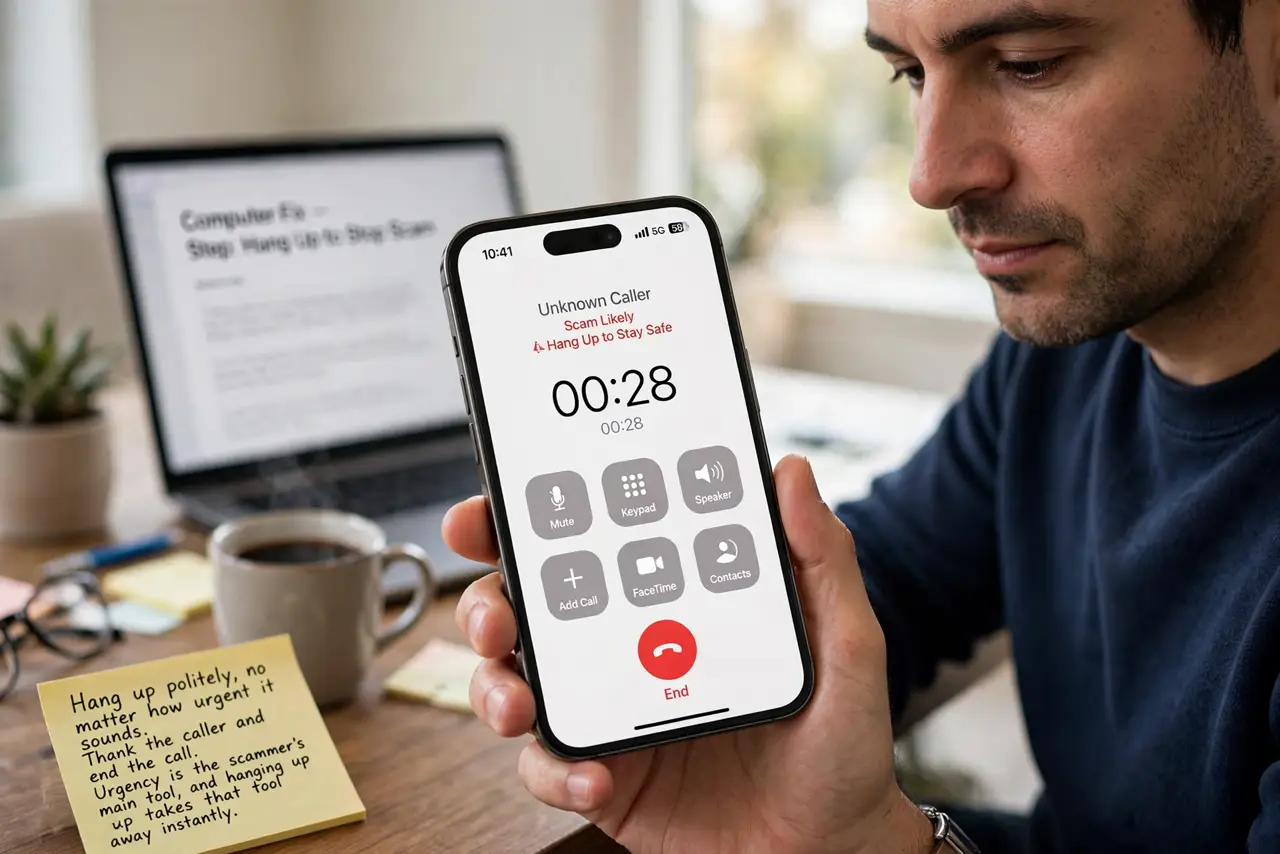
- Hang up politely, no matter how urgent it sounds. Thank the caller and end the call. Urgency is the scammer's main tool, and hanging up takes that tool away instantly.
- Find the bank's number yourself. Use the number on your card, your statement, or the official app. Never use a number the caller gave you or one from a text.
- Call back and ask about the issue. Dial the bank and ask whether the flagged activity is real. If it was genuine, the bank's own records will show it.
- Never verify yourself to an incoming caller. Do not give codes, passwords, or card numbers to someone who called you. Real banks do not ask, and scammers always do.
- Watch for the [[follow-up scam|phishing-email-looks-like-your-bank]]. After a failed call, scammers often send a fake email or text to finish the job. Treat surprise messages after the call with the same suspicion.
- Tell the bank about the attempt. Report the call's number and story to the bank's fraud line. Your report helps them warn other customers.
What NOT to do
- Do not stay on the line to check if it is real. Verification happens on your callback, not during the suspicious call.
- Do not give a code to prove you are you. Codes prove the caller is tricking you, since real banks never ask for them this way.
- Do not trust caller ID. Scammers fake the bank's number routinely, so the display proves nothing.
- Do not feel rude for hanging up. A real bank employee expects callbacks and will never punish you for verifying.
Frequently asked questions
Will my bank mind if I hang up and call back?
No. Banks train staff to expect it, and a genuine representative will welcome the verification.
What if the caller threatens to freeze my account?
That is the pressure tactic. Hang up, call the bank yourself, and ask about your account directly.
Can scammers really fake the bank's number?
Yes, easily. Caller ID is not authentication, which is why the callback rule exists.