Start a Blog
Blogs look effortless from the outside — a clean page, regular posts, readers. From the inside it is a hundred small decisions: platform, topic, design, schedule. Cut through all of it with this: pick a topic, pick a simple platform, and publish useful posts on a schedule. Everything else is optimization.
TL;DR / Quick Fix
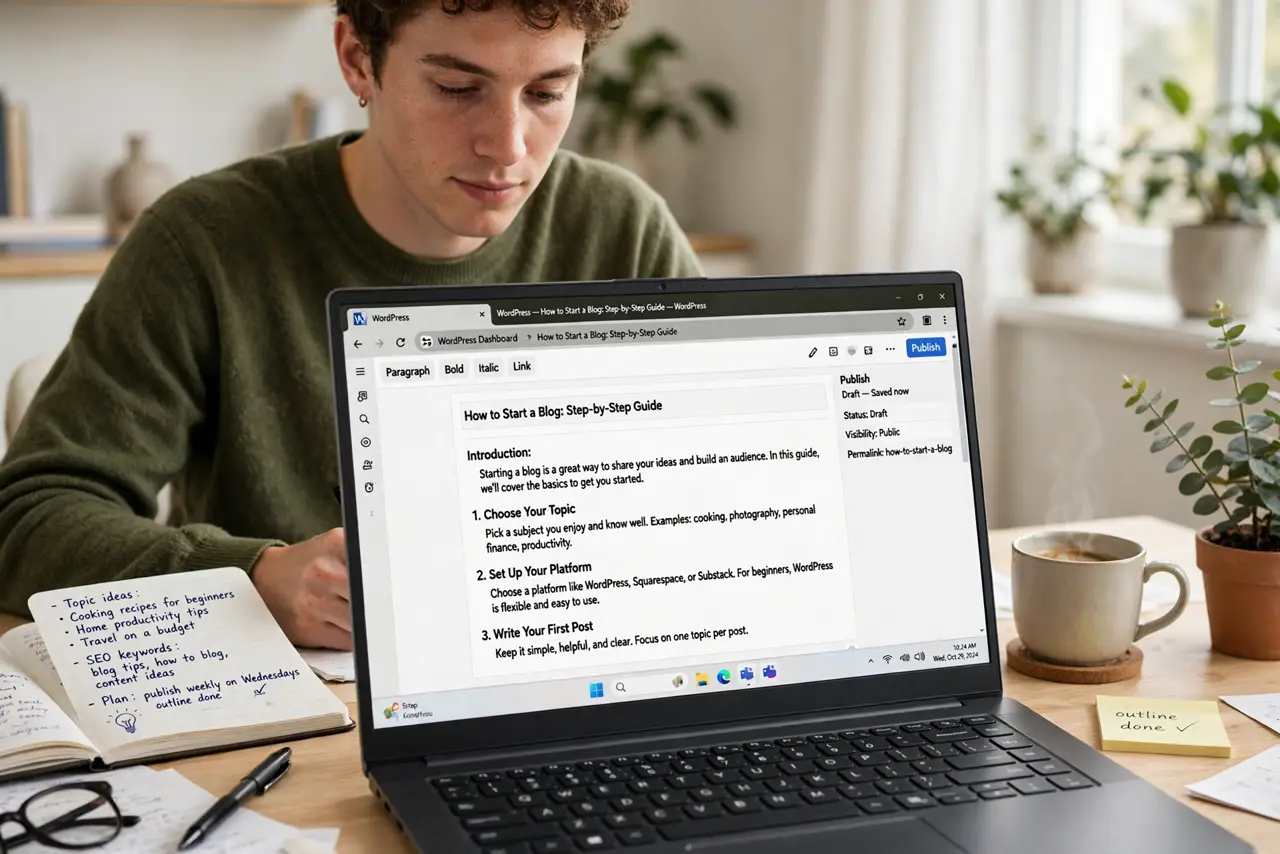
Quick fix: pick one topic you can write about for a year and a simple platform — free hosted options are fine. Publish one solid post a week with a headline that answers a real question. Your first twenty posts are practice; consistency and useful answers bring readers.
Follow these steps
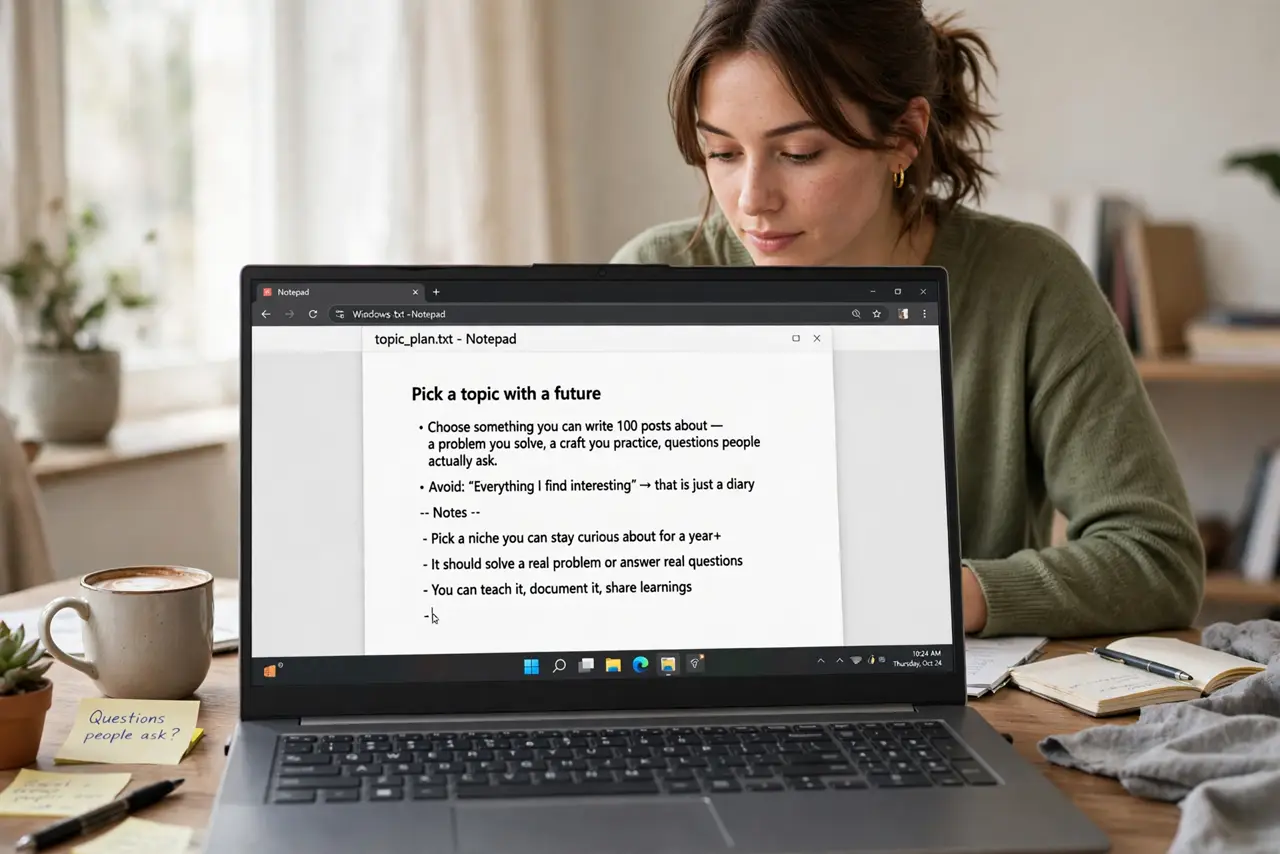
- Pick a topic with a future. Choose something you can write 100 posts about — a problem you solve, a craft you practice, questions people actually ask. ‘Everything I find interesting’ is not a topic; it is a diary.
- Choose a simple platform. Free hosted platforms get you publishing in an afternoon with zero maintenance. Self-hosting adds control and chores — start simple, migrate when the blog earns the effort.
- Write posts that answer questions. The posts that bring readers solve specific problems: how to do X, what Y means, fixing Z. Opinion pieces build voice; answer posts build traffic — you need both, in that order.
- Publish on a schedule. One solid post a week beats five rushed ones a month. Readers and search engines both reward the steady rhythm — put the publishing day on your calendar like an appointment.
- Learn headlines last, not first. A clear headline that states the benefit beats a clever one every time. Write the post, then headline what it delivers — ‘How to’ still works because it promises an answer.
- Repurpose into a newsletter. Your best posts are your first newsletter issues. A newsletter and a blog feed each other — write once, reach two audiences.
What NOT to do
- Do not redesign instead of writing. A plain theme with twenty posts beats a gorgeous theme with three — content first, pixels later.
- Do not write for ‘everyone.’ A specific reader in mind produces sharper, more useful posts than a vague crowd.
- Do not publish irregular bursts. Three posts in a weekend then silence for two months trains readers to stop checking.
- Do not monetize from post one. Ads on a ten-post blog earn pennies and cheapen the experience — build the archive first.
Frequently asked questions
How long should blog posts be?
As long as the answer needs — thorough beats long. A complete 600-word answer outranks a padded 2,000-word one for real readers.
Do people still read blogs?
Yes — billions of searches a day land on blog posts. Social feeds are rented attention; a blog is an asset that compounds.
Should I use my name or a brand?
Your name builds trust and travels with you; a brand name sells better later. Either works — pick one and commit.