Do Blue-Light Glasses Work?
Your eyes burn after late-night screen sessions, and the internet's answer is a pair of amber-tinted glasses promising to block blue light. Do they actually help? The honest answer is nuanced: the glasses do filter blue light, but blue light was probably never the main cause of your eye strain. Here is what the evidence says.
TL;DR / Quick Fix
Quick fix: blue-light glasses filter blue light, but studies show little evidence they reduce eye strain — the real culprits are usually reduced blinking, harsh brightness, and late-night screen time. Try Night Shift or night mode, lower brightness to match the room, and follow the 20-20-20 rule first.
Follow these steps
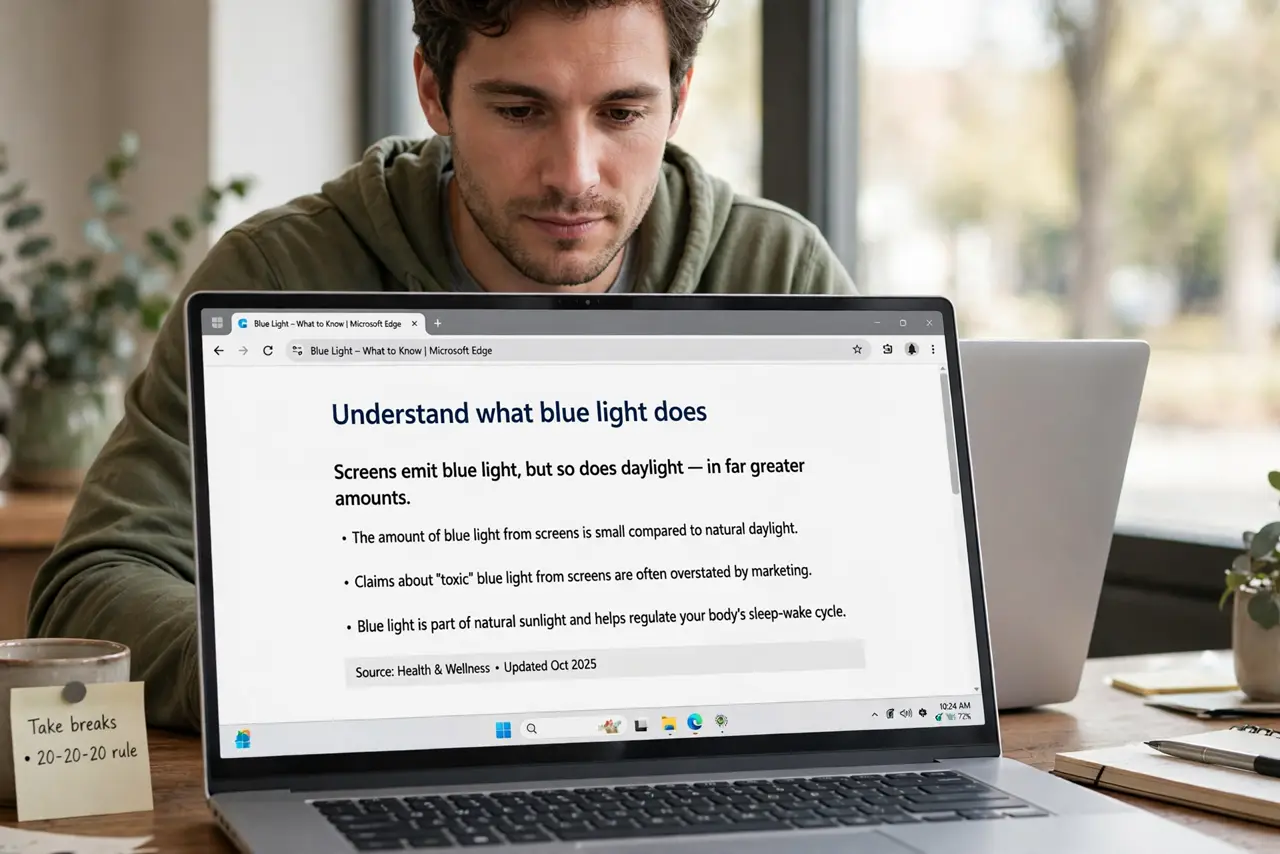
- Understand what blue light does. Screens emit blue light, but so does daylight — in far greater amounts. The amounts from screens are small; the marketing around 'toxic' blue light far outruns the evidence.
- Know what actually causes the strain. Reduced blinking (we blink less staring at screens), brightness mismatched to the room, and tiny text held too close. Fix these and most 'blue light' symptoms vanish without any glasses.
- Try Night Shift first. Your devices already shift color temperature warm at night for free — see the Mac scheduling guide or your phone's night mode. Same idea as the glasses, zero cost.
- Match brightness to the room. A blazing screen in a dark room strains eyes regardless of color. Lower brightness until the screen's white matches a sheet of paper beside it.
- Follow the 20-20-20 rule. Every 20 minutes, look at something 20 feet away for 20 seconds. It relaxes the focusing muscle — the single most effective habit for screen eye strain.
- Buy the glasses only if you like them. They are not harmful, and some people sleep better with less evening blue light. Just do not expect them to fix strain caused by brightness, distance, and blinking.
What NOT to do
- Do not buy glasses expecting a cure for eye strain. The evidence for strain relief is weak — the habits above do the real work.
- Do not crank brightness at night and blame blue light. A dim warm screen beats a bright amber-filtered one every time.
- Do not wear heavy tints for color work. Amber lenses lie about every color — take them off before judging photos or design.
- Do not skip an eye exam for persistent pain. Real vision problems need an optometrist, not an accessory.
Frequently asked questions
Do blue-light glasses help sleep?
Possibly a little — less evening blue light may help melatonin timing. But putting the phone away beats any lens for sleep.
Are they a scam?
Not exactly — they do filter blue light as claimed. The overclaim is that blue light was causing your problems in the first place.
What about computer glasses with magnification?
Different product — mild magnification genuinely helps some people by reducing focusing effort. That is optics, not blue-light filtering.