Charger Gets Very Hot? When to Worry
Chargers always run warm, but yours is getting uncomfortably hot to touch. Some heat is normal physics — converting power always wastes some as heat — but excessive heat signals a problem worth investigating. This guide separates normal warmth from a genuine warning sign.
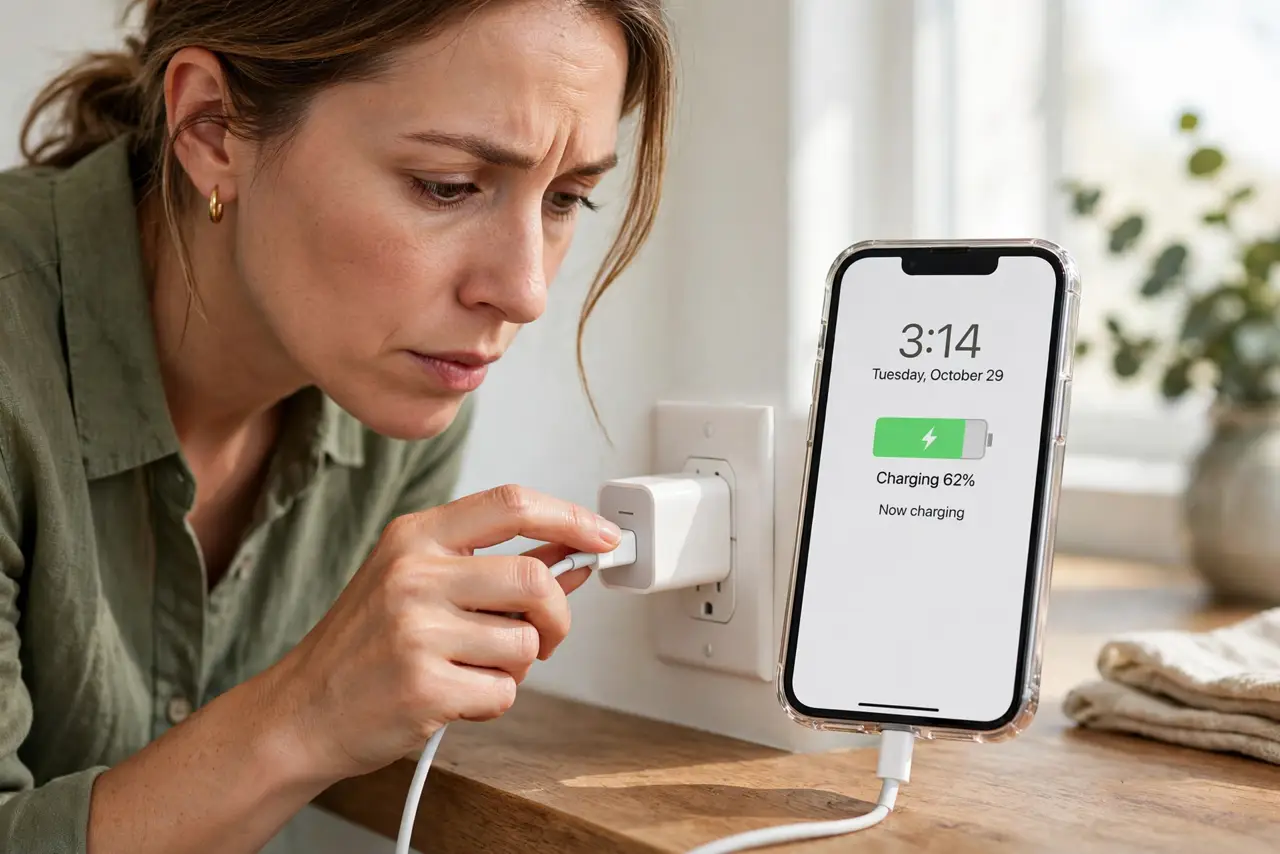
TL;DR / Quick Fix
Quick fix: unplug the hot charger and let it cool, then check that it is the right wattage for your device and not a cheap no-name unit. Charge on a hard surface with airflow — never under a pillow. If it still gets painfully hot, replace it.
Follow these steps
- Unplug it and let it cool. If the charger is too hot to hold comfortably, unplug it now and let it cool completely. A cool-down costs nothing and rules out a one-time overload.
- Confirm it is the right charger. Check the wattage rating against your device's needs. A weak charger straining to fast-charge a big phone or tablet runs far hotter than a properly rated one.
- Inspect the cable and the plug. Look for fraying, bent prongs, or a loose fit in the outlet. A damaged cable forces the charger to work harder and adds heat at the weak point — the same wear as a cable that only works at an angle.
- Give it air, not blankets. Charge on a table or floor, never under pillows, blankets, or in direct sun. Trapped heat turns normal warmth into dangerous heat fast.
- Smell and look for damage. Sniff for a burnt-plastic smell and check for discoloration or warping. Any of these means the charger is done — stop using it immediately.
- Replace cheap or damaged chargers. Buy a certified charger from a reputable brand. No-name chargers skimp on the safety components that keep heat in check, and the savings are not worth the risk.
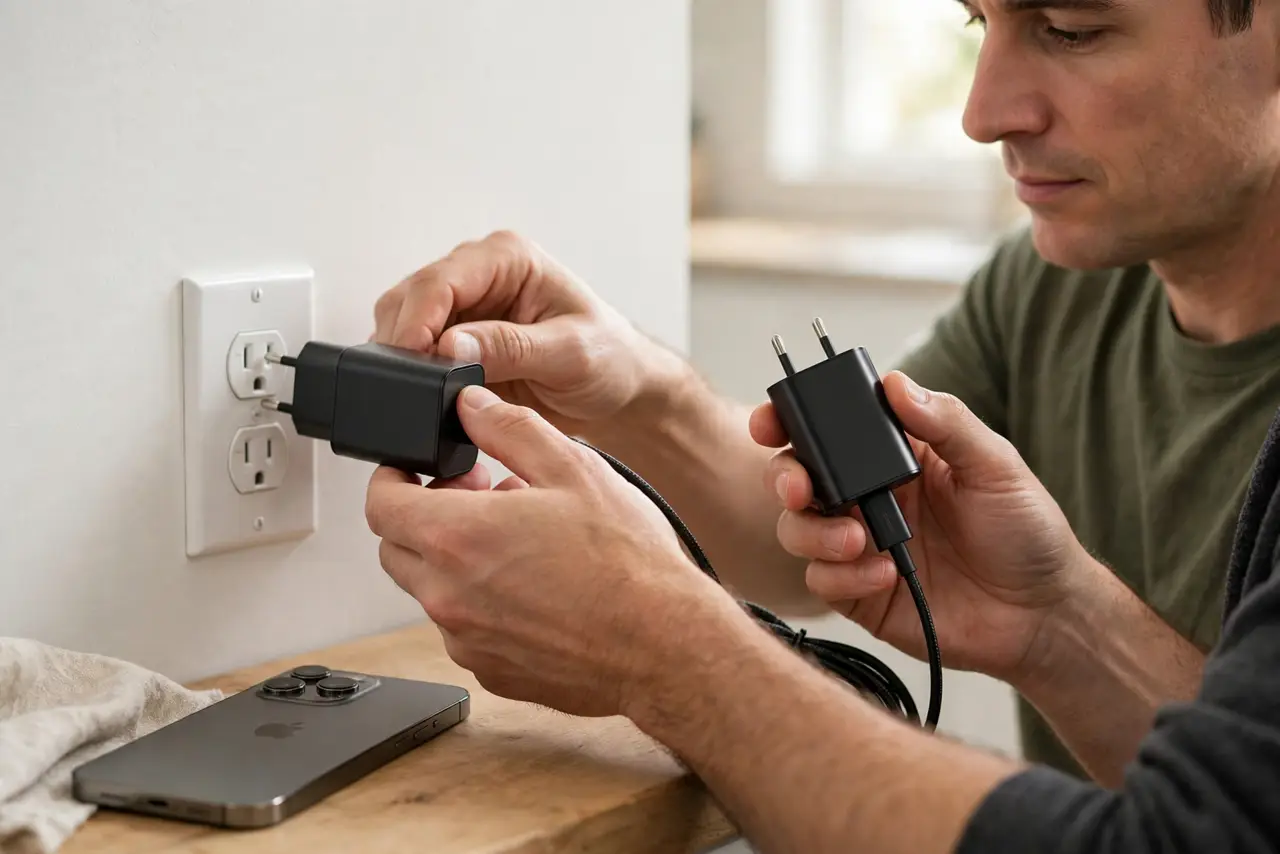
What NOT to do
- Do not charge under a pillow or blanket. Trapped heat is the most common reason a normal charger becomes a dangerous one.
- Do not keep using a charger that smells burnt or looks warped. Heat damage is permanent — cooling it down does not make it safe again.
- Do not use a frayed cable with any charger. Damaged cables add resistance and heat, and they can short.
- Do not ignore a charger that is hot with nothing plugged in. A charger heating up with no load has an internal fault — unplug it and replace it.
Frequently asked questions
Is it normal for a charger to get hot?
Warm is normal; too hot to hold comfortably is not. Fast charging generates more heat, but a good charger stays within safe limits.
Can a hot charger damage my phone?
A failing charger can deliver unstable power, and extreme heat can damage the battery. If the charger runs alarmingly hot, stop using it.
Why does my charger get hotter with a different cable?
Cheap or damaged cables add resistance, forcing the charger to push harder. Use the original or a certified cable.