Spot Charity Scams
After every disaster, fake charities appear within hours — cloned websites, emotional ads, and direct messages asking you to donate now. Real charities do important work, but scammers trade on your generosity. Learn to spot the red flags so your money reaches the people you meant to help.
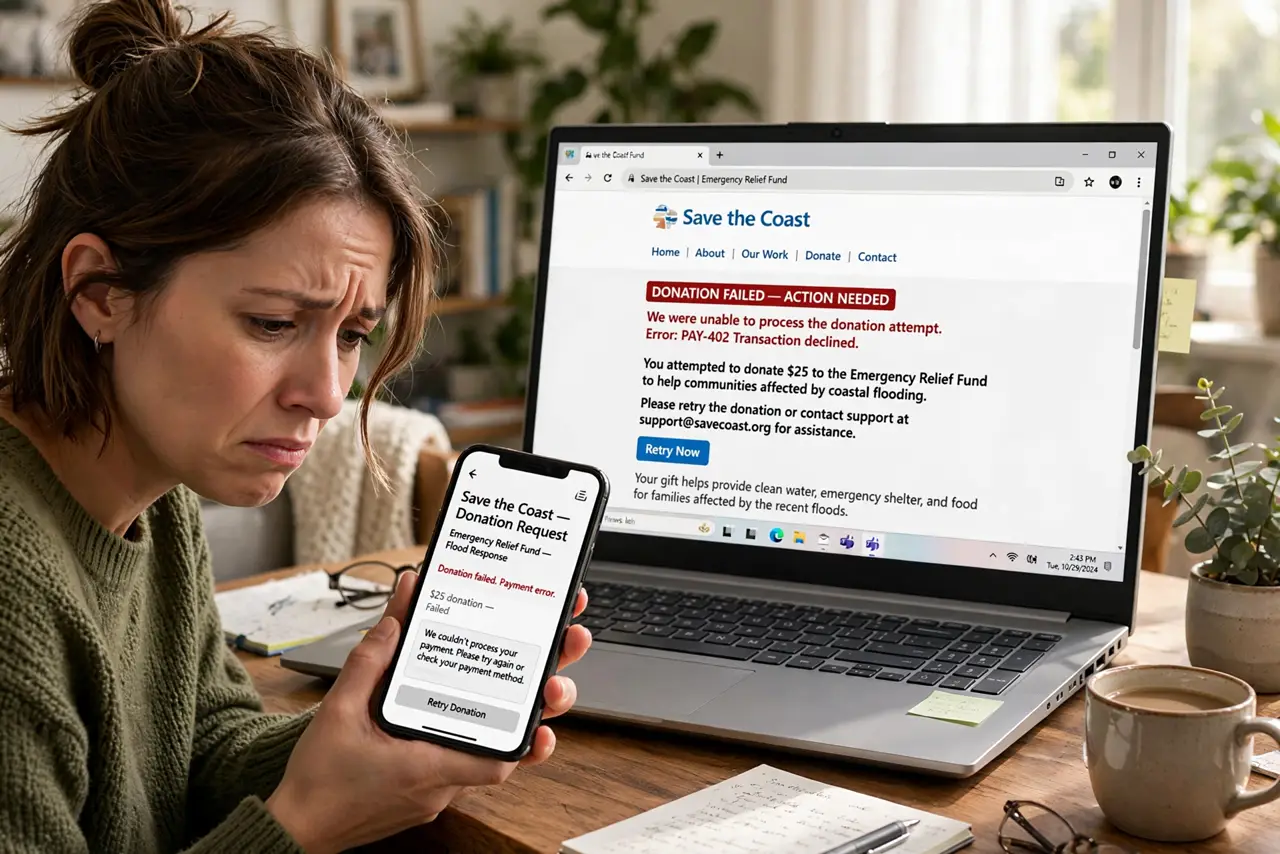
TL;DR / Quick Fix
Quick fix: real charities never pressure you to donate right now and never demand gift cards, wire transfers, or cash apps. After a disaster, fake charity pages multiply overnight. Donate through the charity's official website only — type the address yourself, never tap a link in a message.
Follow these steps
- Pause before any urgent appeal. Scammers manufacture urgency — 'donate in the next hour'. Real charities accept your donation tomorrow too. Urgency is the biggest red flag; treat every rushed ask as suspicious.
- Verify the charity independently. Search the charity's name plus 'scam' or 'reviews' in your browser. Look for a real website, a real address, and a track record — not just a social media page created last week.
- Type the website address yourself. Never tap a donation link in a text, email, or DM. Type the charity's official address into your browser directly — scammers clone real charity sites down to the logo.
- Check how they want payment. Real charities take cards and checks through secure pages. Any demand for gift cards, wire transfers, or crypto is proof of a scam — walk away immediately.
- Watch for emotional manipulation. Stolen photos of suffering children, fake celebrity endorsements, and guilt-trip language are scammer tools. Legitimate charities describe their work plainly and publish financial reports.
- Report the fake. Report fake charity pages to the platform and to your country's consumer protection agency. Reporting takes minutes and protects the next generous person in line.
What NOT to do
- Do not donate through links in unsolicited messages, however moving the story.
- Do not let a caller pressure you into donating on the spot — hang up and verify independently.
- Do not assume a familiar logo means a legitimate site. Cloning a charity's look takes scammers minutes.
- Do not share a charity appeal before verifying it. Well-meaning shares are how fakes go viral.
Frequently asked questions
How can I check if a charity is real?
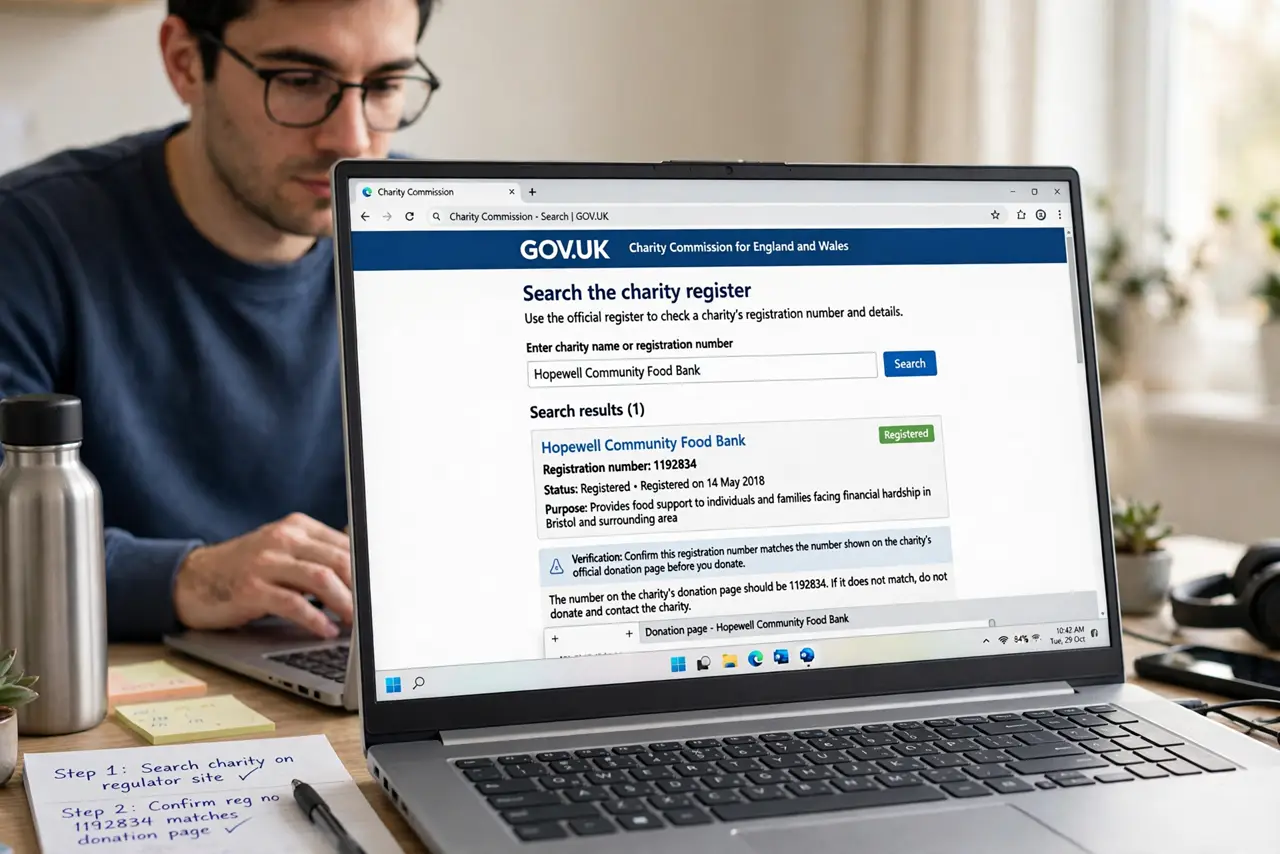
Search for the charity on a charity watchdog or your country's charity registry, and confirm the website address matches exactly. A registered charity with published finances is a good sign.
Someone is collecting door to door. Is that legit?
Sometimes, but ask for ID and the charity's registration details, then verify before donating. Never hand cash to an unverified collector — donate online later instead.
I already donated to a fake charity. What now?
Contact your bank or card issuer about a chargeback, save all evidence, and report it to the platform and authorities. Then watch your accounts — scammers who have your card details may try again.