Cite Sources in an Essay
Nothing deflates a finished essay like realizing the citations are a mess — half in APA, half made up, one link that died in 2019. Citation is just a consistent recipe: who, when, what, where. Pick the required style, gather sources as you read, and format at the end with a tool instead of by hand.
TL;DR / Quick Fix
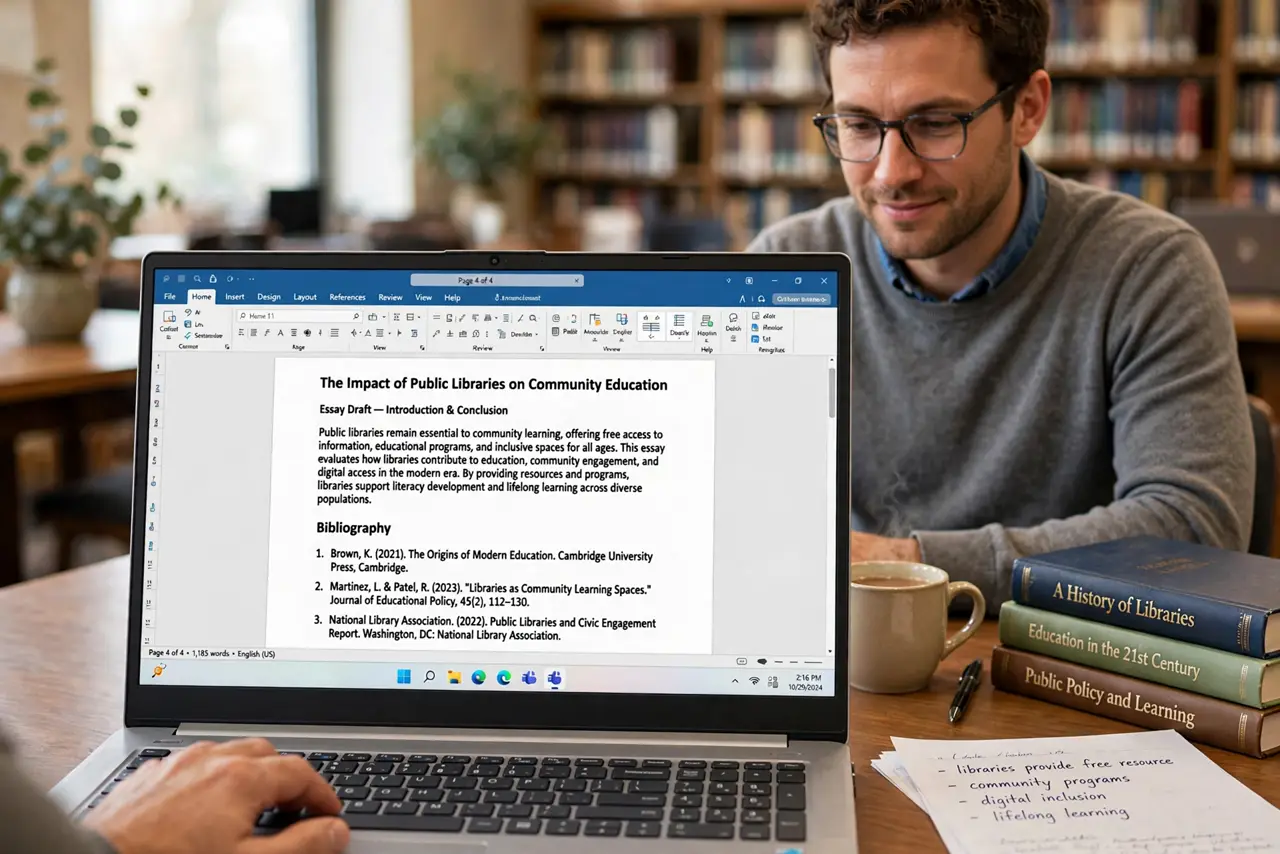
Pick the citation style your instructor requires (APA, MLA, or Chicago), collect full source details as you read, and format everything at the end with a citation tool rather than by hand. Keep in-text citations and the bibliography consistent. The Google Docs citation tool builds them automatically.
Follow these steps
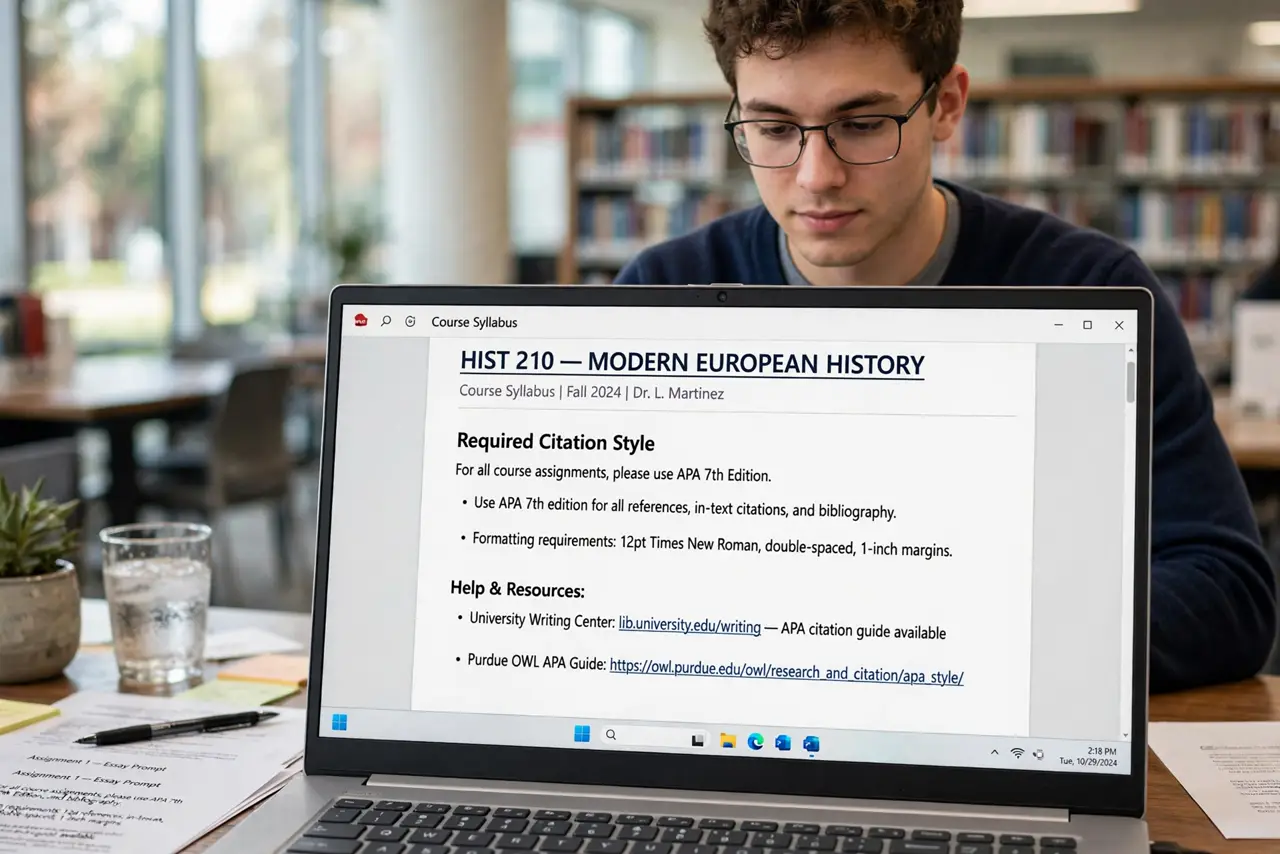
- Find out which style is required. Check the assignment or syllabus — APA, MLA, and Chicago format the same source differently. Guessing the style wrong means reformatting everything later.
- Collect source details while you read. For each source, save author, year, title, publisher or journal, and URL. Gathering this at reading time takes seconds; hunting it down at midnight before the deadline takes hours.
- Use a citation generator for the formatting. Paste the details into a generator or the built-in tool in your word processor. Machines handle commas and italics reliably; humans introduce errors.
- Match in-text citations to the bibliography. Every in-text citation must have a matching bibliography entry and vice versa. Orphan citations in either direction are the most common grading deduction.
- Verify every link and fact. Open each URL to confirm it still works, and double-check quotes against the original. A dead link or misquote undermines an otherwise solid essay.
- Do a final consistency pass. Read through the bibliography alone: same punctuation, same date format, alphabetical order. Consistency is what makes citations look professional.
What NOT to do
- Do not mix citation styles. Half APA and half MLA looks sloppy and costs marks — pick one and apply it everywhere.
- Do not cite sources you have not read. Graders and plagiarism checkers notice when the citation does not match the argument.
- Do not trust a generator blindly. Check its output against the official style examples — generators mis-handle unusual sources like videos or interviews.
- Do not leave citations to the last ten minutes. Rushed bibliographies contain the errors that are easiest for graders to spot.
Frequently asked questions
APA or MLA — which should I use?
Use whichever your instructor assigned. Broadly, APA dominates sciences and social sciences, MLA dominates humanities — but the assignment decides, not tradition.
How do I cite a website with no author?
Most styles fall back to the organization or the page title. A generator handles this if you leave the author field blank and fill in the site name.
Do I need to cite common knowledge?
No — facts everyone knows need no citation. When in doubt, cite; over-citing a little is safer than under-citing.