Do You Need a Headphone Amp?
Your new headphones sound thin and quiet straight from the phone, and forums shout “you need an amp!” Maybe — or maybe not. Whether headphones need an amplifier comes down to two specs (impedance and sensitivity) and one reality check: is it actually too quiet? Its partner question, what a DAC does, is worth reading alongside.
TL;DR / Quick Fix
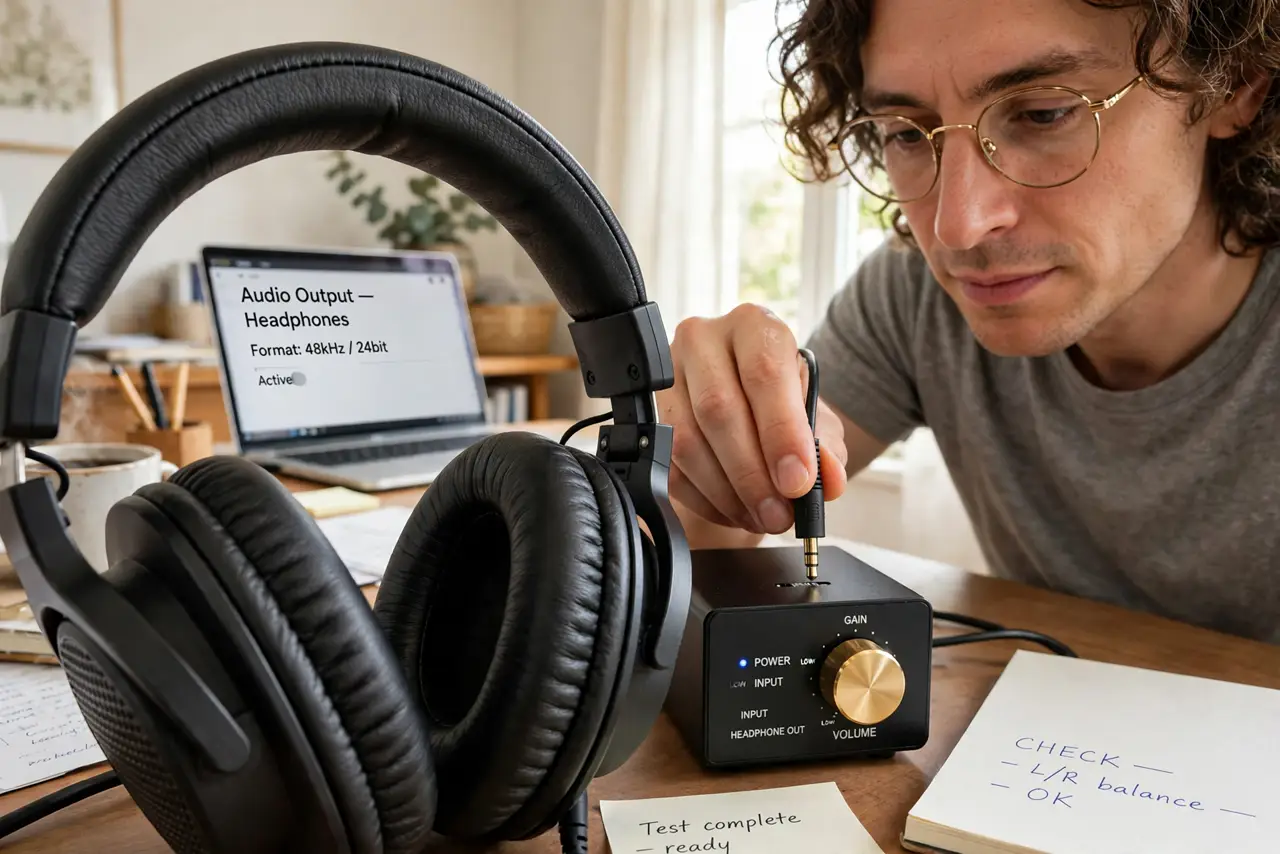
Quick fix: you need a headphone amp only if your headphones are high-impedance or low-sensitivity and your phone or laptop can't drive them loud enough. Most earbuds and mainstream headphones play fine straight from a phone. Buy the amp after the headphones prove too quiet — not before.
Follow these steps
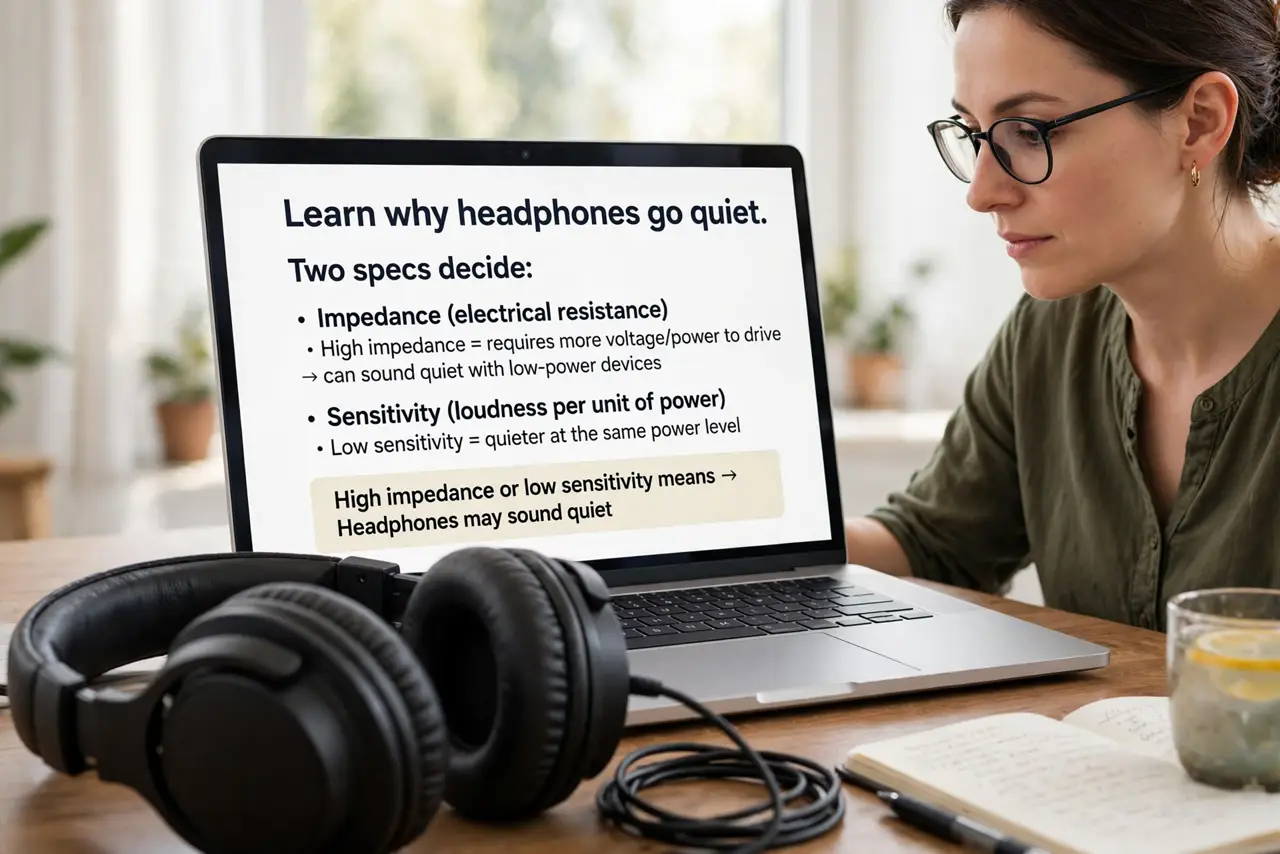
- Learn why headphones go quiet. Two specs decide: impedance (electrical resistance) and sensitivity (loudness per unit of power). High impedance or low sensitivity means the headphone wants more power than a phone comfortably gives.
- Check your headphone specs. Look up impedance and sensitivity. Under ~50 ohms with decent sensitivity: a phone drives them fine. Over ~150 ohms or very low sensitivity: an amp starts making sense.
- Do the reality check first. Plug them into your actual phone or laptop and listen. Loud enough with headroom to spare? You do not need an amp — forums notwithstanding.
- Know what an amp actually fixes. An amp adds clean power: more volume, better control of the drivers, less distortion at high levels. It does not add detail that was never in the recording.
- Start portable and cheap. If the check says yes, a small portable amp/DAC combo is the sensible first step — not a desktop tower. Most listeners never need more.
- Rule out other causes. Quiet can also mean a bad seal on IEMs (see ear tips), a low system volume limit, or a faulty cable — check those before spending.
What NOT to do
- Do not buy the amp before the headphones. Test the actual pairing first — most mainstream headphones never need one.
- Do not expect an amp to transform easy headphones. If your earbuds already play loud, an amp adds nothing audible.
- Do not confuse amp with DAC. The amp powers; the DAC translates — see what a DAC is for the other half.
- Do not crank a weak source to compensate. Maxing a struggling phone output distorts; a proper amp stays clean.
Frequently asked questions
Will an amp make my earbuds sound better?
Almost certainly not — earbuds are efficient by design. Save the money for better earbuds.
Portable or desktop amp?
Portable for phone listening on the move; desktop for a dedicated home setup with demanding headphones.
Can an amp damage headphones?
Only if you drive them far past sane volumes. Normal use with matched gear is completely safe.