Filament Types Explained
PLA, PETG, ABS, TPU — the filament aisle looks like alphabet soup, and picking wrong means failed prints, toxic fumes, or parts that melt in a hot car. Each plastic has a personality: the easy beginner, the tough workhorse, the demanding pro, the flexible oddball. Here is which to buy for what, in plain terms.
TL;DR / Quick Fix
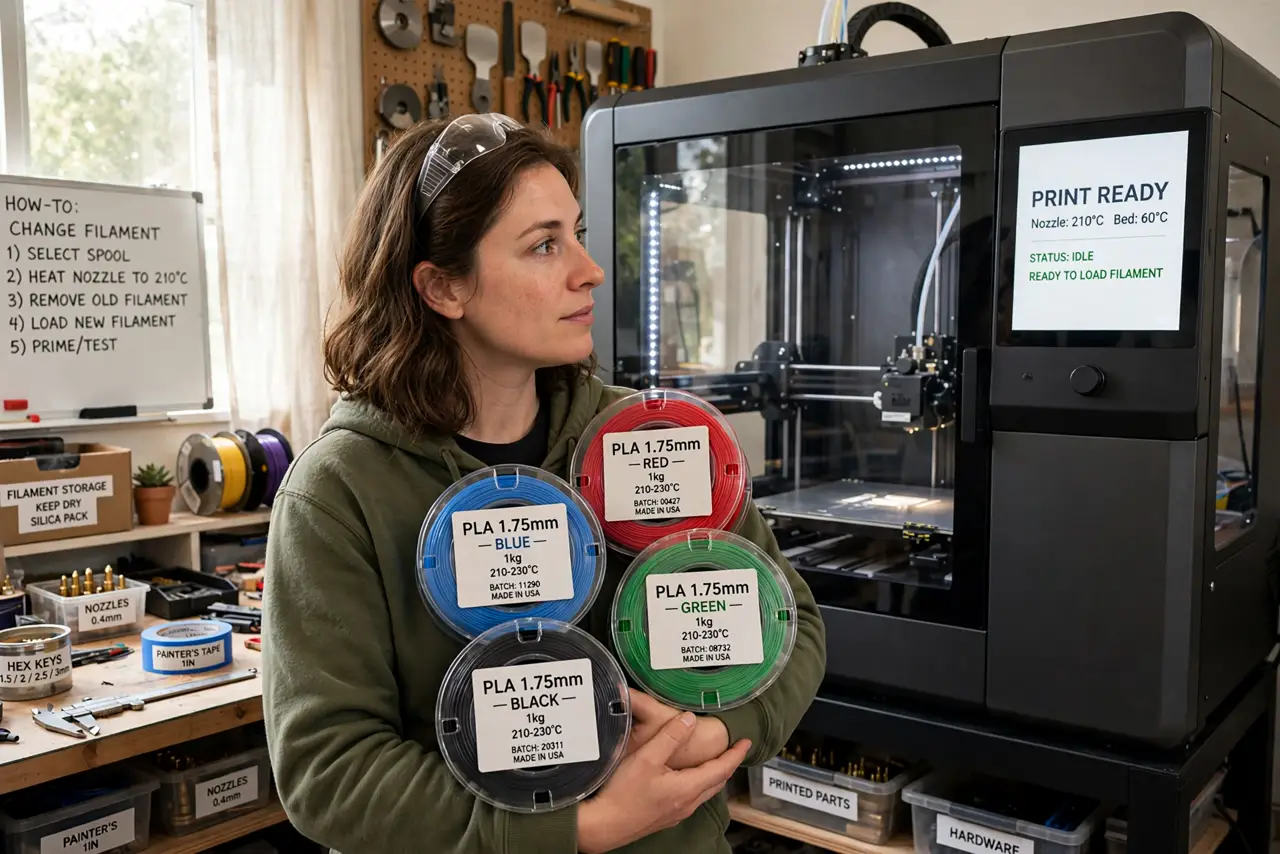
Quick fix: start with PLA — the easiest, most forgiving filament. Move to PETG for tougher, weather-resistant prints, and TPU for flexible parts. Skip ABS until you have ventilation and an enclosure. Match the filament to the job: PLA for prototypes, PETG for functional parts, TPU for anything bendy.
Follow these steps
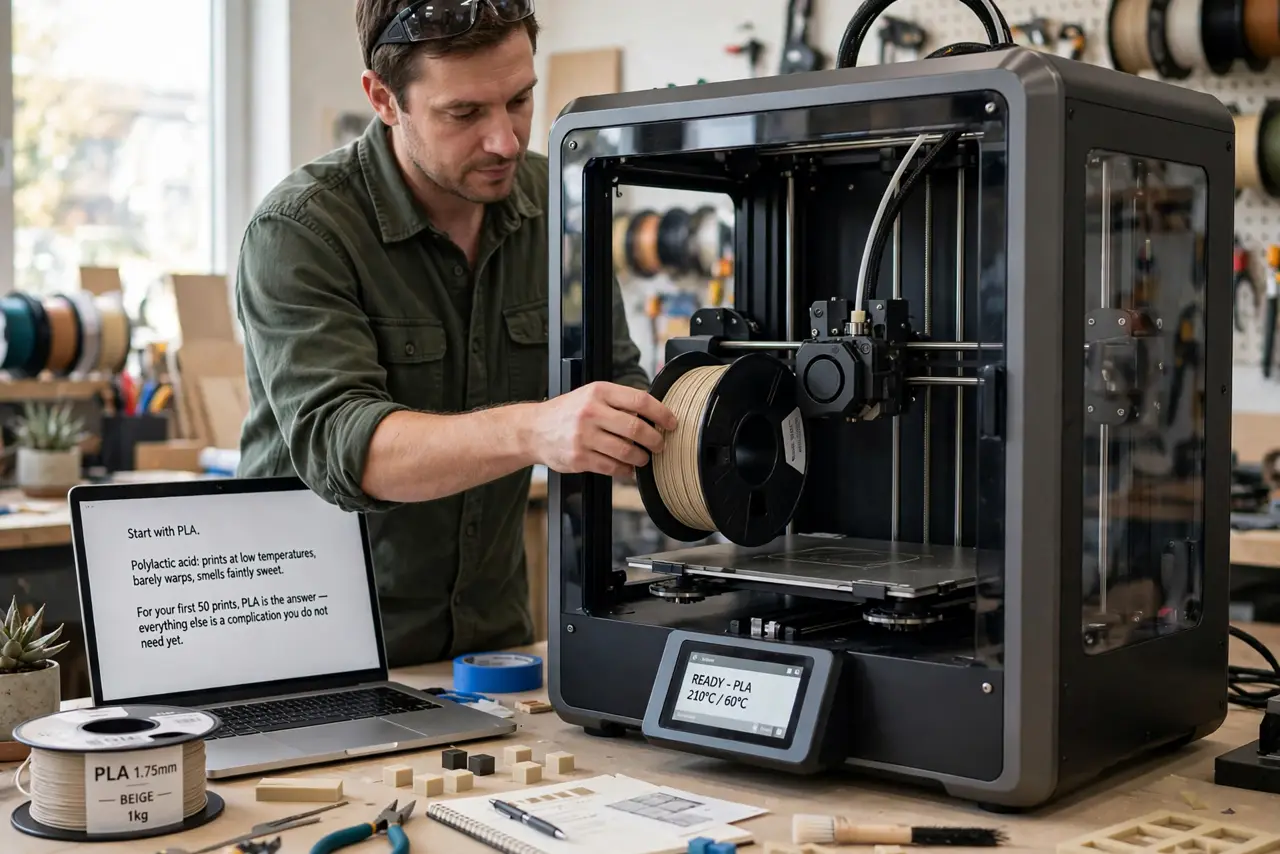
- Start with PLA. Polylactic acid: prints at low temperatures, barely warps, smells faintly sweet. For your first 50 prints, PLA is the answer — everything else is a complication you do not need yet.
- Move to PETG for strength. Tougher, more heat-resistant, survives outdoors. Slightly trickier to print (stringing), but it is the workhorse for functional parts that actually get used.
- Use TPU for flexible parts. Thermoplastic polyurethane: rubber-like. Phone cases, gaskets, feet for furniture — anything that needs to bend. Print it slowly; fast TPU jams.
- Understand ABS's demands. Strong and heat-resistant, but warps badly without an enclosure and releases fumes needing ventilation. It is the later filament — respect it, do not start with it.
- Store filament dry. Filament absorbs moisture from the air, causing popping, stringing, and weak prints. Sealed bags with desiccant, or a dry box — wet filament is the silent killer of print quality.
- Match filament to the printer. Check your printer's max nozzle temperature before buying exotic materials. A basic printer tops out where the fancy filaments begin — the hardware sets the menu.
What NOT to do
- Do not start with ABS or nylon. The warping and fumes will make you hate the hobby before you have printed anything good — earn the hard materials.
- Do not leave filament out for months. An open spool in a humid room degrades steadily — you will blame the printer for what the air did.
- Do not print TPU at PLA speeds. Flexible filament needs slow, gentle handling — rushing it causes jams that take an hour to clear.
- Do not mix up filament diameters. 1.75mm vs 2.85mm is not interchangeable — buying the wrong size for your printer wastes the whole spool.
Frequently asked questions
Which filament is strongest?
Nylon and polycarbonate top the strength charts, but need serious printers. For normal machines, PETG is the practical strong choice.
Is PLA biodegradable?
Industrially compostable, not backyard-biodegradable — do not toss prints in the garden expecting them to vanish. It is plant-based, not magic.
Why are my prints suddenly stringy?
Usually wet filament or wrong retraction settings. Dry the spool first — it is the cause more often than settings.