Place a Fraud Alert
You spot a credit application you never made, or your wallet goes missing with your ID inside. A fraud alert tells lenders to verify your identity before opening new accounts — a speed bump that stops most identity thieves cold. One call to one bureau alerts all three, and it is free.
TL;DR / Quick Fix
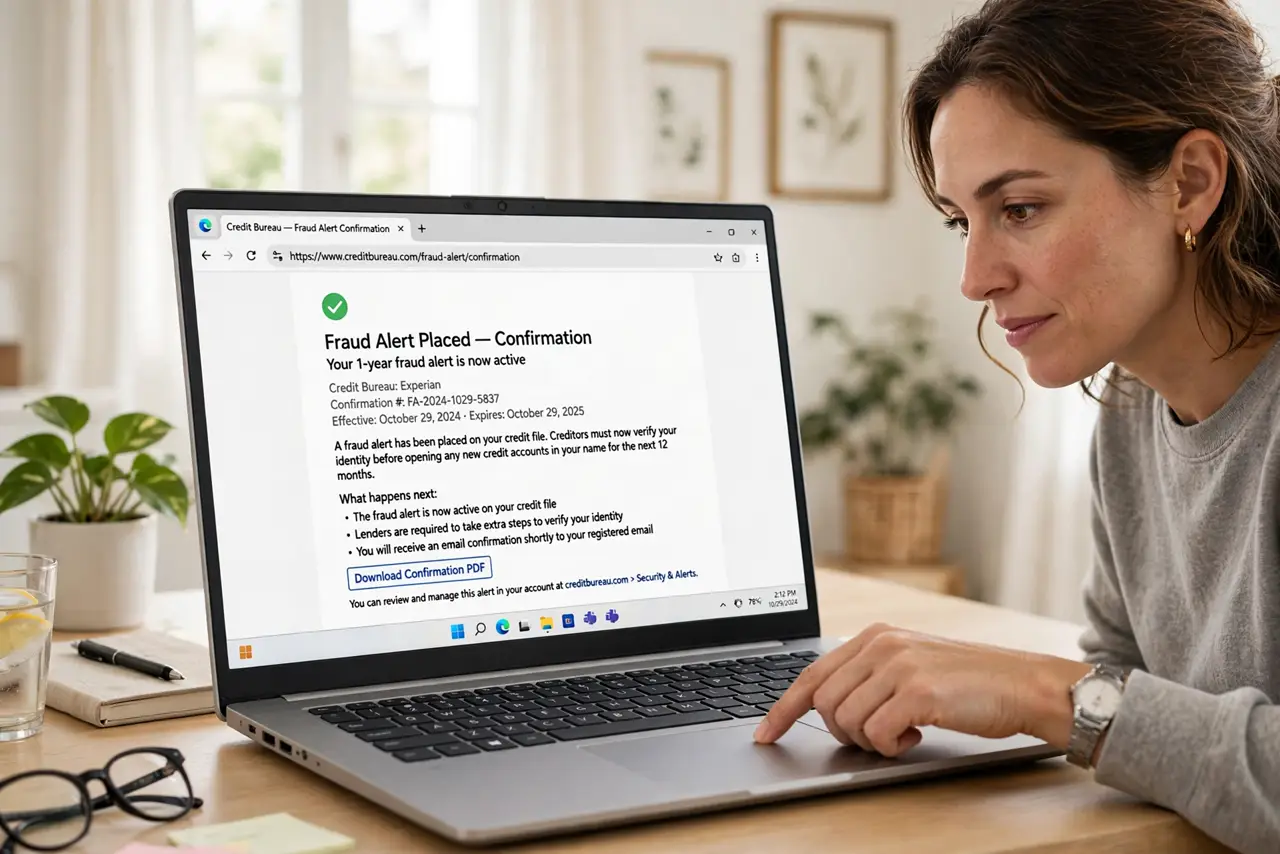
Quick fix: contact one of the three credit bureaus — online or by phone — and request an initial fraud alert. It lasts one year and notifies the other two bureaus automatically. Lenders must then take extra steps to verify you before granting credit.
Follow these steps
- Choose your bureau. Pick any one of Equifax, Experian, or TransUnion — the alert propagates to the other two by law. Online is fastest; phone works if you prefer talking.
- Request the initial alert. Ask for an initial fraud alert, explaining the trigger — suspicious application, lost wallet, breach notice. It lasts one year and is free.
- Confirm the propagation. The bureau notifies the other two, but verify within a week — check each bureau's site for the alert status. Trust, then verify.
- Expect verification calls. With the alert active, lenders call you to verify applications. Keep your phone reachable during any credit application — the alert's protection depends on you answering.
- Renew or escalate yearly. Initial alerts last one year; renew if the risk persists. Identity-theft victims can place extended seven-year alerts with a police report.
- Pair with a freeze for max protection. An alert adds verification; a freeze blocks access entirely. Together they are the complete defense — alert for flexibility, freeze for lockdown.
What NOT to do
- Do not assume the alert notifies you. It alerts lenders, not you — keep monitoring your own credit separately.
- Do not skip verifying propagation. The bureaus usually notify each other, but a missing link leaves a bureau unprotected — check all three.
- Do not use an alert as a substitute for a freeze. Alerts add a step; freezes add a wall — for serious risk, do both.
- Do not forget it expires. One year passes fast; calendar the renewal or escalate to the extended alert.
Frequently asked questions
How is this different from a credit freeze?
An alert asks lenders to verify your identity — a speed bump. A freeze blocks credit-file access entirely — a wall. Use both for maximum protection.
Will it slow my own applications?
Slightly — lenders take extra verification steps, usually a phone call. That friction is the protection working.
Is it really free?
Yes — initial and extended fraud alerts are free by law at all three bureaus. Anyone charging is selling something else.