Free VPNs: What's the Catch? Plainly
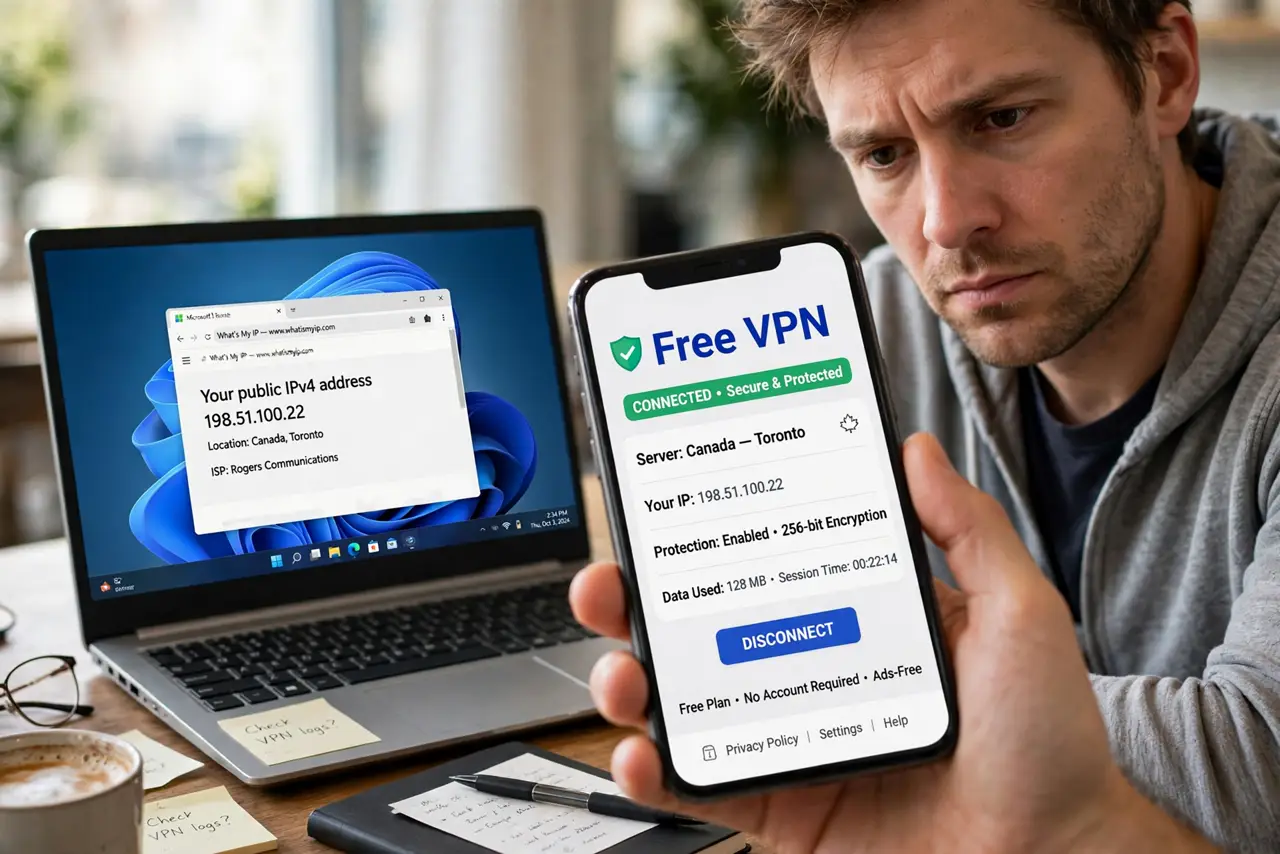
A free VPN promises privacy at no cost — but servers and bandwidth are never free to run. If you are not paying, the business model is usually your data. This guide explains the catch in plain terms.
TL;DR / Quick Fix
Quick fix: avoid free VPNs for anything sensitive — many log your browsing, inject ads, or sell your data. If you need a VPN regularly, use a reputable paid one; for occasional public Wi-Fi, your phone's hotspot is safer. Read the privacy policy before trusting any VPN.
Follow these steps
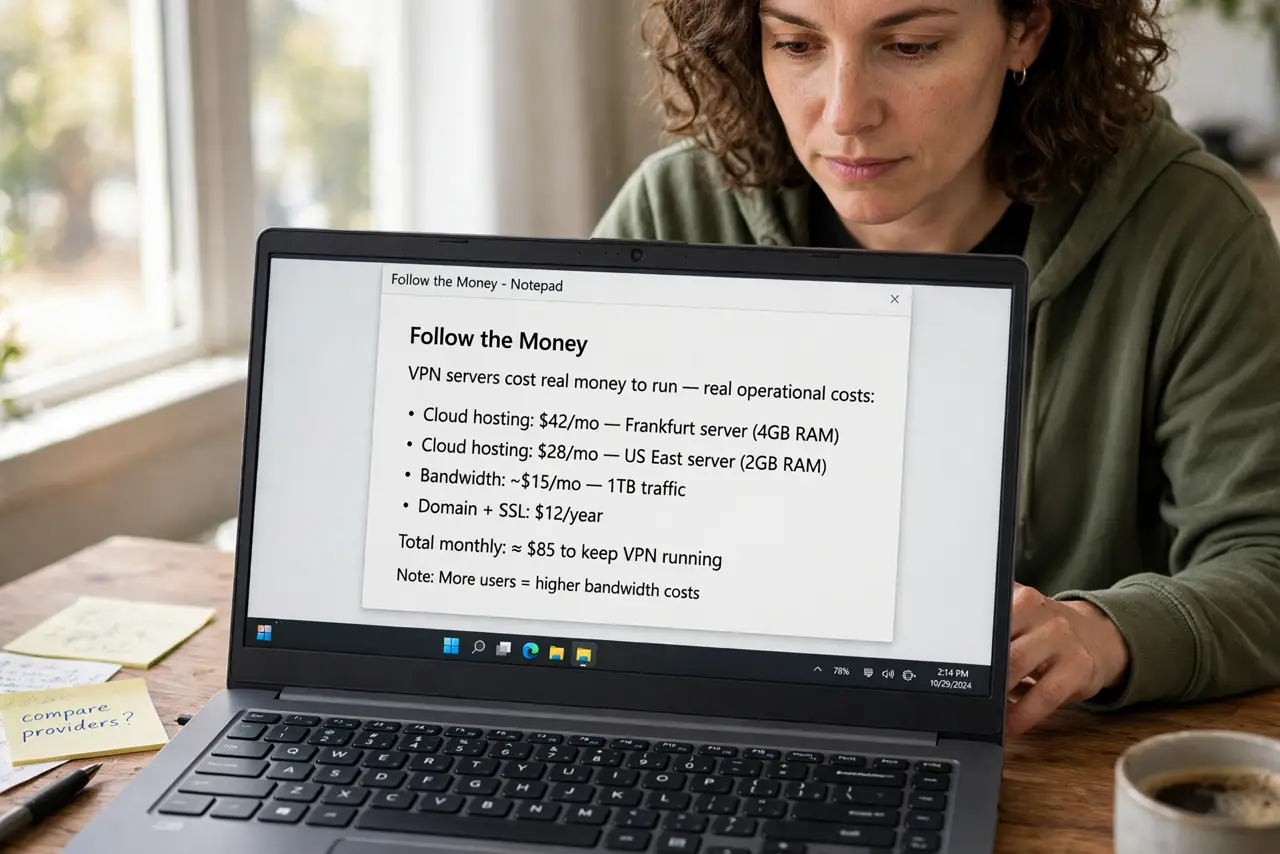
- Follow the money. VPN servers cost real money to run. A free service pays for them somehow — usually with ads, data sales, or selling your bandwidth to others.
- Compare with paid options. Reputable paid VPNs publish audits and clear no-logs policies. Read a free vs paid comparison before deciding the savings are worth it.
- Read the privacy policy. Search it for 'log,' 'share,' and 'third parties.' If it is vague about what is collected, assume the worst — clarity is a feature of trustworthy services.
- Check the permissions it wants. A VPN app asking for contacts, location, or SMS access is a red flag. A VPN needs network permission and little else.
- Use safer alternatives for casual needs. For occasional public Wi-Fi, your phone's hotspot or just waiting beats a shady free VPN. Save VPN use for when you have one you trust.
- Remove the ones you tried. Delete free VPN apps you no longer use, and revoke their VPN profile in your phone's settings. A forgotten VPN can keep routing your traffic.
What NOT to do
- Do not assume 'no logs' marketing is true. Free services have been caught logging despite the claim — only independent audits mean anything.
- Do not do banking or enter passwords through a free VPN. The VPN sees all your traffic, so a shady one is worse than no VPN at all.
- Do not install five free VPNs to compare. Each one is another company with access to your traffic; pick one trustworthy option instead.
- Do not confuse a free VPN with real anonymity. A VPN hides traffic from your Wi-Fi owner, not from the VPN company itself.
Frequently asked questions
Are all free VPNs bad?
Not all, but the trustworthy free ones are rare and usually limited versions of paid services. Random free VPNs from app stores are the risky ones.
What is the worst that can happen?
Logged browsing sold to advertisers, injected ads and malware, or your connection resold to strangers. All three have happened with real free VPNs.
Is my phone's hotspot really safer?
For casual use, yes. Your carrier already sees your traffic, and adding a shady middleman only increases who can watch.