Gaming Chat Safety
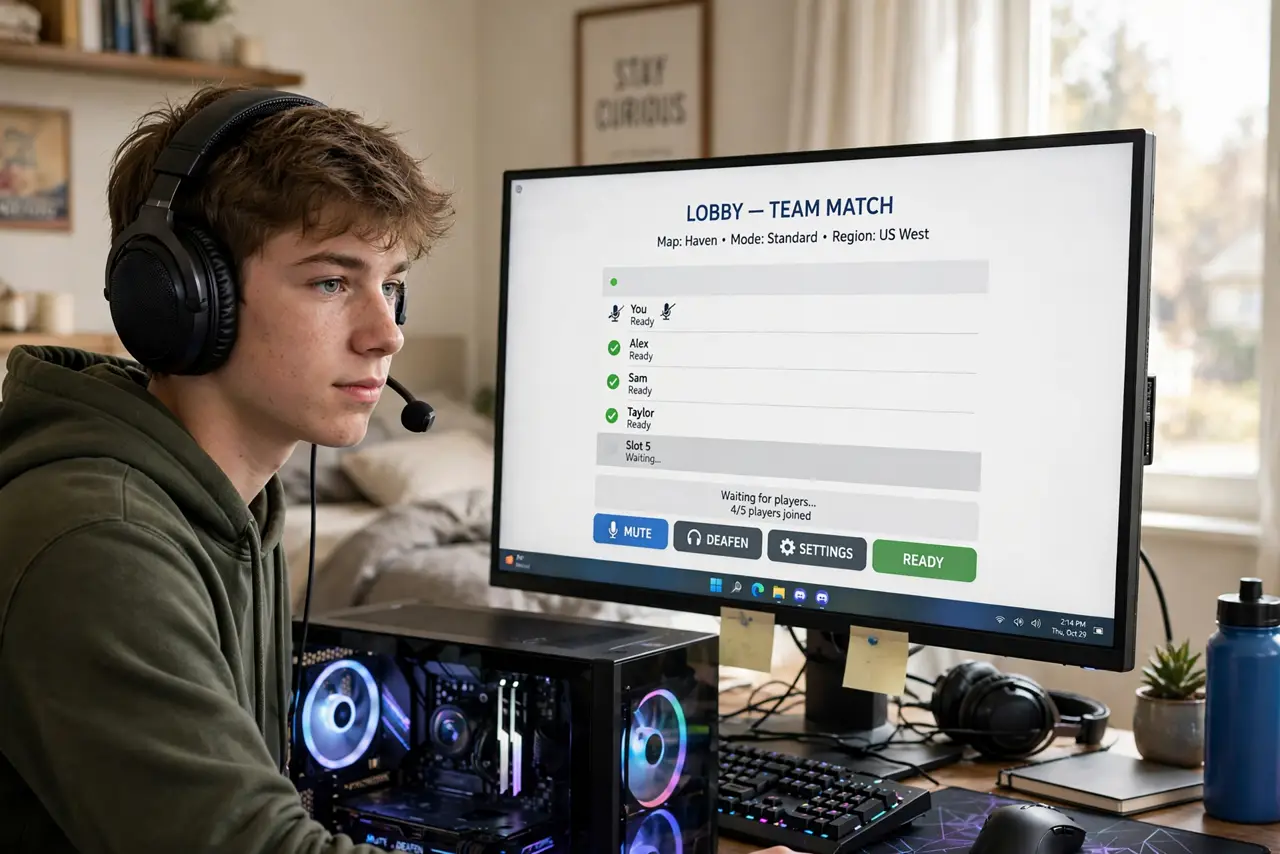
Voice chat in games can turn toxic fast — slurs, screaming, and strangers who take losing personally. For kids especially, unmoderated voice with strangers is the riskiest corner of gaming. The fix is layered: platform controls, party-only chat, mute reflexes, and the confidence to leave. Nobody owes a lobby their evening.
TL;DR / Quick Fix
Quick fix: set voice chat to friends or party only, teach the instant-mute reflex for toxic players, and disable voice entirely for young kids. Report abuse instead of engaging — engagement is what trolls feed on. The best lobby is the one you control.
Follow these steps
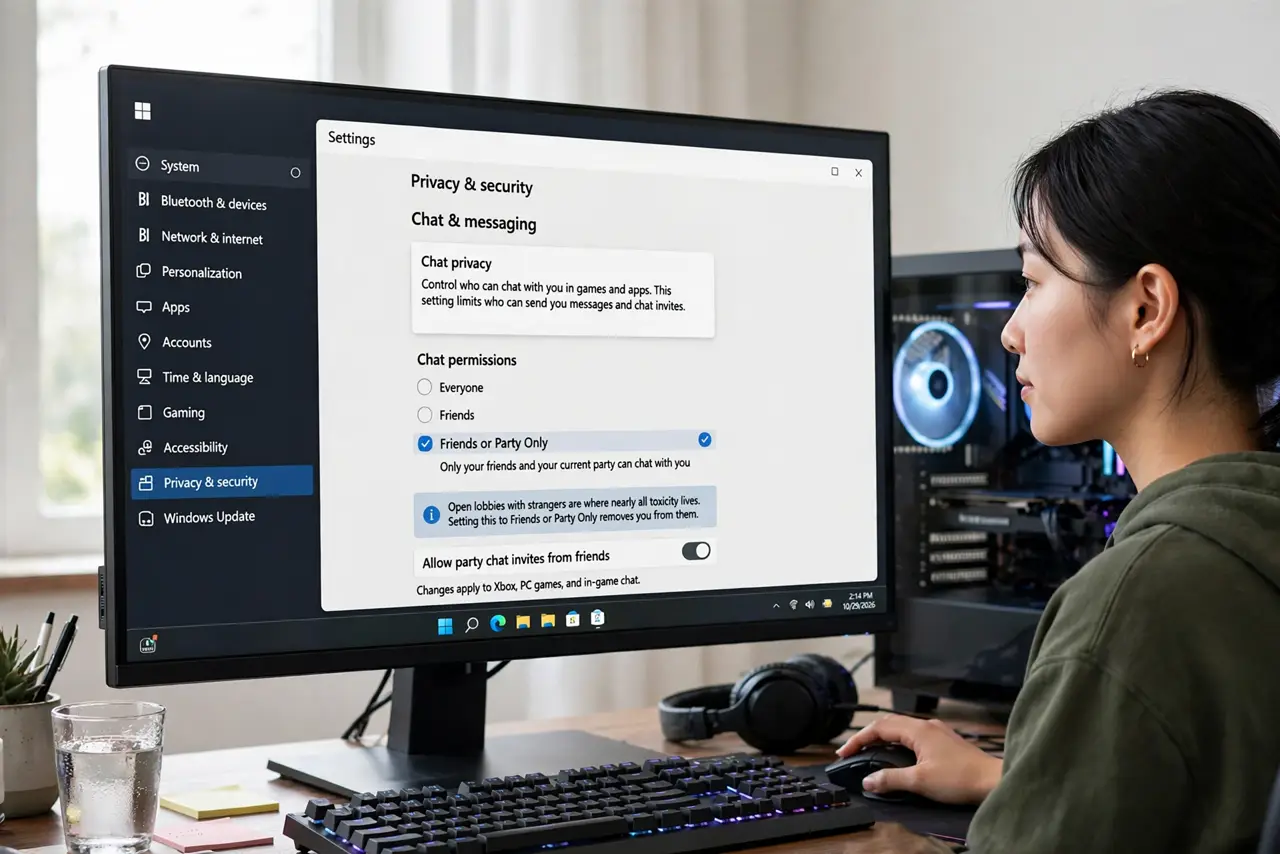
- Set chat to friends or party only. Every major platform offers this — console, PC, and in-game. Open lobbies with strangers are where nearly all toxicity lives; the setting removes you from them.
- Teach the mute reflex. Toxic voice gets muted in two seconds, no debate, no farewell. Kids should practice this like a fire drill — the teen chat guidance reinforces the same reflex for Discord.
- Disable voice for young kids. Under-12s do not need stranger voice chat, period. Text with approved friends or no chat at all — the game is still fun.
- Use party chat with known friends. A private party with real-life friends keeps the social fun and drops the stranger risk to zero. This is the healthy default.
- Report, do not retaliate. In-game reporting tools exist on every platform. Reporting removes trolls; retaliating becomes a second report — against you.
- Talk about what they hear. Kids will encounter slurs and rage eventually. A calm debrief — that is not okay, here is why — inoculates better than any filter.
What NOT to do
- Do not let kids voice-chat with strangers. Friends and party only — strangers add nothing but risk.
- Do not engage with trolls. Any response is a reward; mute and report in silence.
- Do not share personal info over voice. Real names, schools, locations — voice feels private and is not.
- Do not assume the games filter catches voice. Text filters do not hear audio — voice moderation lags far behind.
Frequently asked questions
Is voice chat safe for kids?
With friends only, yes. With strangers, no — the risks are harassment and grooming, and filters barely touch voice.
What age for open voice chat?
Teens with good judgment and mute reflexes; younger kids stay in party-only. Maturity matters more than the birthday.
Should I listen in sometimes?
Occasional check-ins are reasonable parenting. Constant surveillance teaches hiding — trust with verification.