Why GaN Chargers Rule
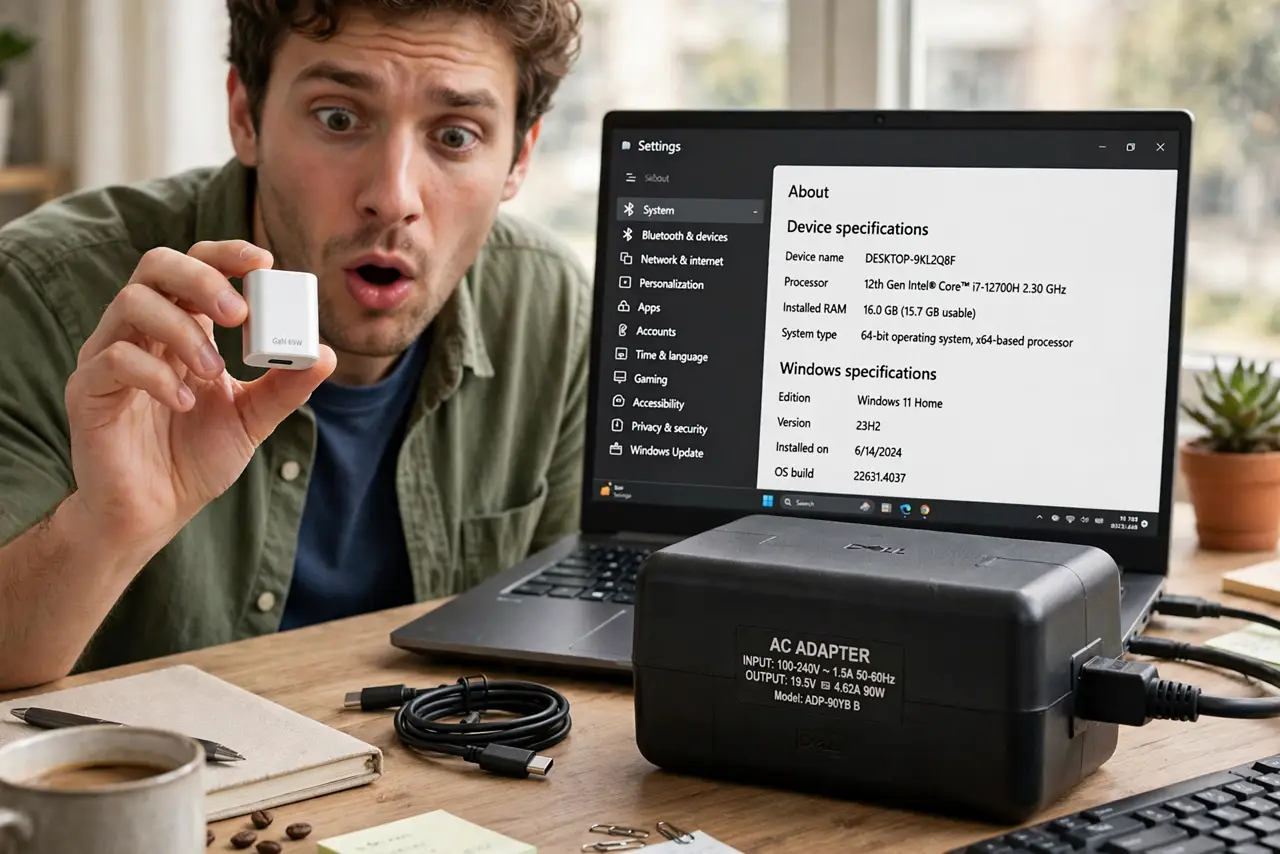
Chargers used to be bricks — heavy, hot, and barely faster than a trickle. GaN (gallium nitride) chargers changed that: smaller, cooler, and far more powerful than the silicon chargers they replace. One compact GaN charger can now replace the laptop brick, the phone charger, and the tablet plug. This guide explains why, what to buy, and the wattage math that matters. For the cable half of the equation, learn to read USB-C cable ratings.
TL;DR / Quick Fix
Quick fix: GaN chargers are smaller, cooler, and more powerful than old silicon chargers — one 65W or 100W unit replaces several old bricks. Match the wattage to your hungriest device and pair it with a properly rated cable. Reputable brands with safety certifications are worth the small premium.
Follow these steps
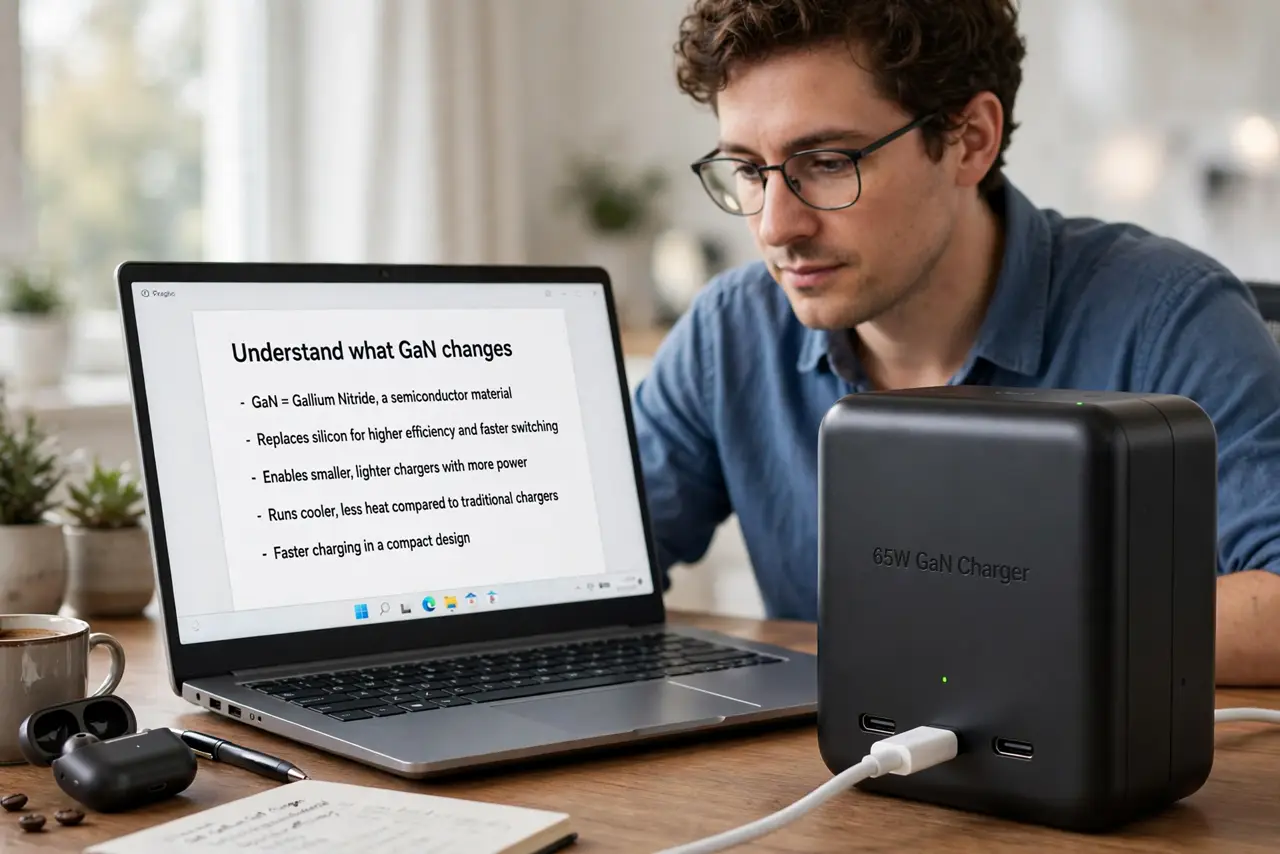
- Understand what GaN changes. Gallium nitride switches faster and wastes less energy as heat than silicon. The result: chargers half the size with equal or greater power — physics, not marketing.
- Size the wattage to your laptop. Check your laptop's original charger wattage — 65W is the common sweet spot, 100W for bigger machines. The GaN charger should match or exceed it for full-speed charging.
- Count your ports. Multi-port GaN chargers charge phone, tablet, and earbuds from one brick. Check how the wattage splits across ports — simultaneous full-speed charging needs headroom.
- Pair with a rated cable. A 100W charger needs a 100W-rated cable — the chain is only as strong as its weakest link. See the USB-C cable ratings guide before blaming the charger.
- Buy certified brands. Cheap no-name chargers skimp on safety circuitry. Look for UL/CE certification and reputable brands — a charger is not where you save five dollars.
- Retire the old bricks. Once the GaN charger proves itself for a week, recycle the old bricks. One charger for the bag beats three — that is the whole point.
What NOT to do
- Do not buy an underpowered charger for a hungry laptop. A 30W charger on a 90W laptop charges at a crawl or not at all under load.
- Do not trust no-name chargers without certifications. Uncertified chargers are a fire risk — the savings are not worth it.
- Do not forget the cable rating. The best GaN charger in the world underperforms on a thin 60W cable.
- Do not expect one charger to fast-charge everything simultaneously. Multi-port wattage splits — read the per-port specs.
Frequently asked questions
Will a GaN charger work with my old devices?
Yes — USB charging is backward compatible. Old devices simply draw what they need; nothing is forced.
Do GaN chargers get hot?
Warm, not hot — that is the point. They waste far less energy as heat than old silicon bricks.
Can I bring it on a plane?
Yes, chargers have no battery restrictions. It is power banks with big batteries that face limits.