Recycle Batteries? Basics
Your junk drawer holds a dozen dead AA batteries, an old phone battery, and a laptop pack that barely holds a charge — and none of them belong in the trash. Batteries contain heavy metals and corrosive chemicals, and lithium ones can start fires in garbage trucks. This guide sorts which batteries go where and how to store them safely until drop-off.
TL;DR / Quick Fix
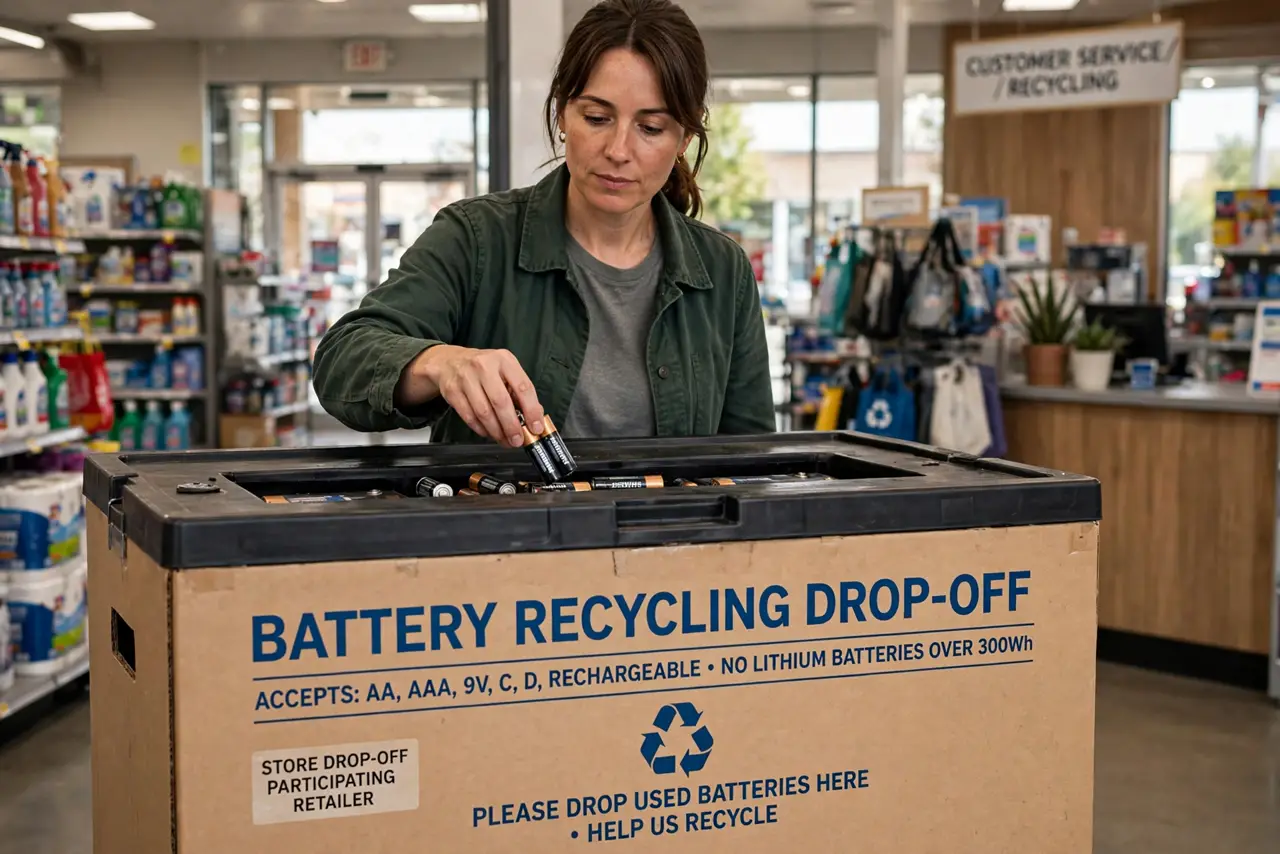
Quick fix: never put any battery in regular trash or recycling bins. Tape the terminals of lithium and 9V batteries to prevent shorts, store them cool and dry, and drop them at a battery collection point — most electronics stores have one. A swollen battery needs careful handling before transport.
Follow these steps
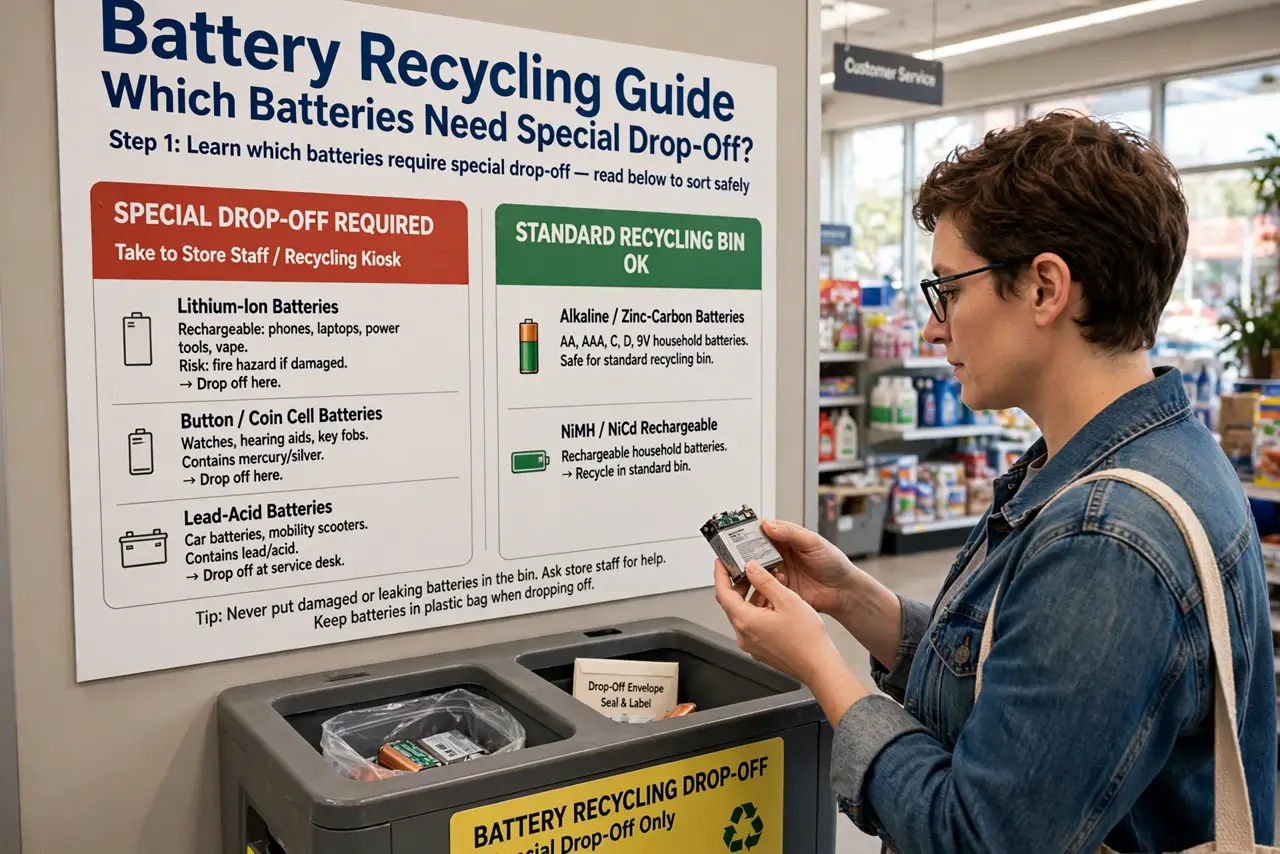
- Learn which batteries need special drop-off. All of them: alkaline, lithium, NiMH, lead-acid, button cells. Regular trash is wrong for every chemistry — recyclers separate and process each type properly.
- Tape the terminals. Put tape over the ends of lithium, 9V, and button batteries. Terminals touching metal — keys, coins, other batteries — can short, heat, and ignite. Thirty seconds of taping prevents fires.
- Store them safely until drop-off. Keep used batteries in a non-metal container, cool and dry, away from flammable stuff. Do not stockpile huge quantities — drop them off within a few months.
- Handle swollen batteries carefully. A puffy battery is damaged and more dangerous. Do not puncture or bend it — place it in a fire-safe container and take it to a recycler promptly, following the swelling guide.
- Find a drop-off point. Electronics retailers, hardware stores, and municipal hazardous-waste events all take batteries free. Many offer a small bin right by the entrance — no appointment needed.
- Keep car batteries separate. Lead-acid car batteries go to auto shops or scrap dealers, who usually pay a core refund. Never put them with household batteries.
What NOT to do
- Do not throw batteries in the trash. Every chemistry is wrong for landfill — heavy metals leach and lithium cells ignite.
- Do not toss loose 9V or lithium batteries in a drawer. Terminals short against metal objects and start fires — tape them.
- Do not puncture a swollen battery. Puncturing a damaged lithium cell can cause thermal runaway — fire, instantly.
- Do not hoard dead batteries for years. Corrosion and degradation increase risk over time — drop them off this month.
Frequently asked questions
Can I recycle regular AA batteries?
Yes — alkaline AAs are recyclable at battery drop-offs, though some areas allow them in trash. Recycling is still the better choice.
Why tape the terminals?
To prevent short circuits. A shorted battery heats up fast, and lithium ones can catch fire — tape is cheap insurance.
What do recyclers do with batteries?
They shred them safely and recover metals like lithium, cobalt, nickel, and lead for new batteries — closing the loop.