Fake Capacity Cards? Test Them
The 1 TB microSD card cost less than lunch — and it is lying. Fake-capacity cards are hacked to report enormous sizes while physically holding a fraction; your files write happily until the real space runs out, then everything corrupts silently. They are everywhere on marketplaces. The defense is a free test that takes minutes.
TL;DR / Quick Fix
Quick fix: test every cheap or marketplace-bought SD card before trusting it — free tools write data across the full claimed capacity and verify it, exposing fakes in one run. If the card fails, return it immediately. Never store important photos on an untested bargain card.
Follow these steps
- Understand the scam. The card's controller is reprogrammed to lie about its size — a 16 GB card reports 1 TB. Writes past the real capacity loop back and overwrite earlier data, corrupting everything silently.
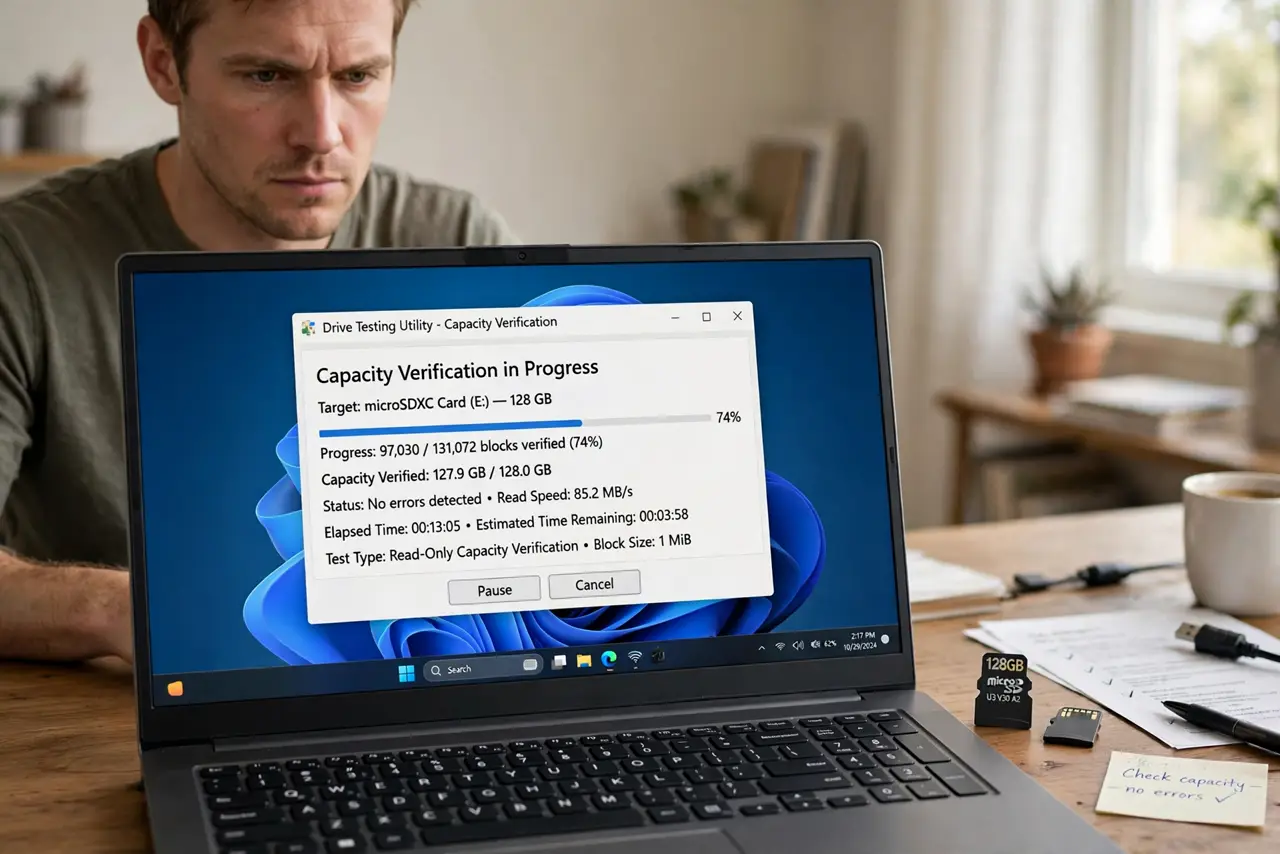
- Test before you trust. Free verification tools write test data across the entire claimed capacity and read it back. A genuine card passes; a fake fails at its real size — usually within the hour.
- Test the full capacity, not a sample. Quick format-and-copy tests miss fakes because the first gigabytes work fine. Only a full-surface write-and-verify catches the lie — let it finish.
- Buy from reputable sellers. Authorized retailers rarely sell fakes; random marketplace sellers do routinely. If the price is far below every legitimate listing, it is not a deal.
- Keep the packaging until tested. Test the day it arrives, within the return window. A failed test plus the original packaging makes the return painless — waiting months voids your leverage.
- Reformat after testing. The test fills the card with junk data. Format it in the device that will use it afterward — fresh, verified, and ready.
What NOT to do
- Do not trust a bargain card with irreplaceable photos. Wedding shoots and vacations deserve a tested, reputable card — the savings are never worth the risk.
- Do not skip testing because the first files worked. Fakes work perfectly until the real capacity fills — the failure always comes later, at the worst moment.
- Do not buy storage from sellers with no return policy. No returns plus too-good pricing is the fake-card business model in one sentence.
- Do not 'fix' a failed card by partitioning it smaller. The controller is still lying and the flash is still garbage — return it, do not rehabilitate it.
Frequently asked questions
How common are fake cards?
Extremely common on marketplaces and from unknown sellers — a large share of impossibly cheap high-capacity cards are fake. From authorized retailers, rare.
Can the test damage a good card?
No — it is just writes and reads, normal flash operations. It consumes a small fraction of the card's write lifespan, negligible for a genuine card.
What capacities get faked most?
The implausible ones: 1–2 TB microSD at bargain prices. If the capacity seems ahead of what major brands sell at that price, be suspicious.