Mini-LED? What It Is
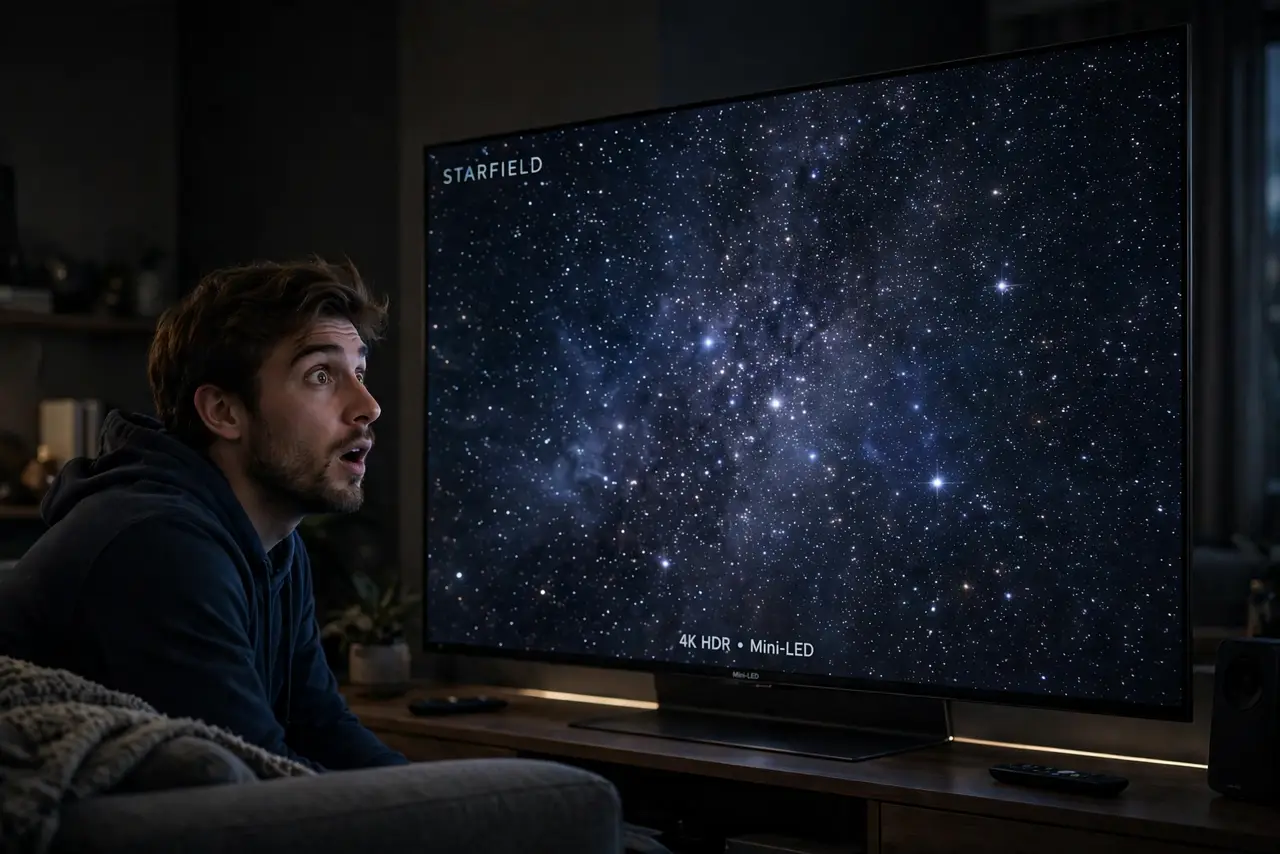
Mini-LED sits in the awkward middle of TV marketing: pricier than regular LED, cheaper than OLED, promising 'near-OLED' blacks. The name describes the backlight, not the pixels — thousands of tiny LEDs behind a normal LCD panel, dimming in zones. Understanding that one fact cuts through all the hype.
TL;DR / Quick Fix
Quick fix: Mini-LED is an LCD with thousands of tiny backlight zones instead of a few dozen, giving deeper blacks and brighter highlights than regular LED TVs. It is not true OLED — blacks are excellent but not perfect. It costs more than standard LED but less than OLED.
Follow these steps
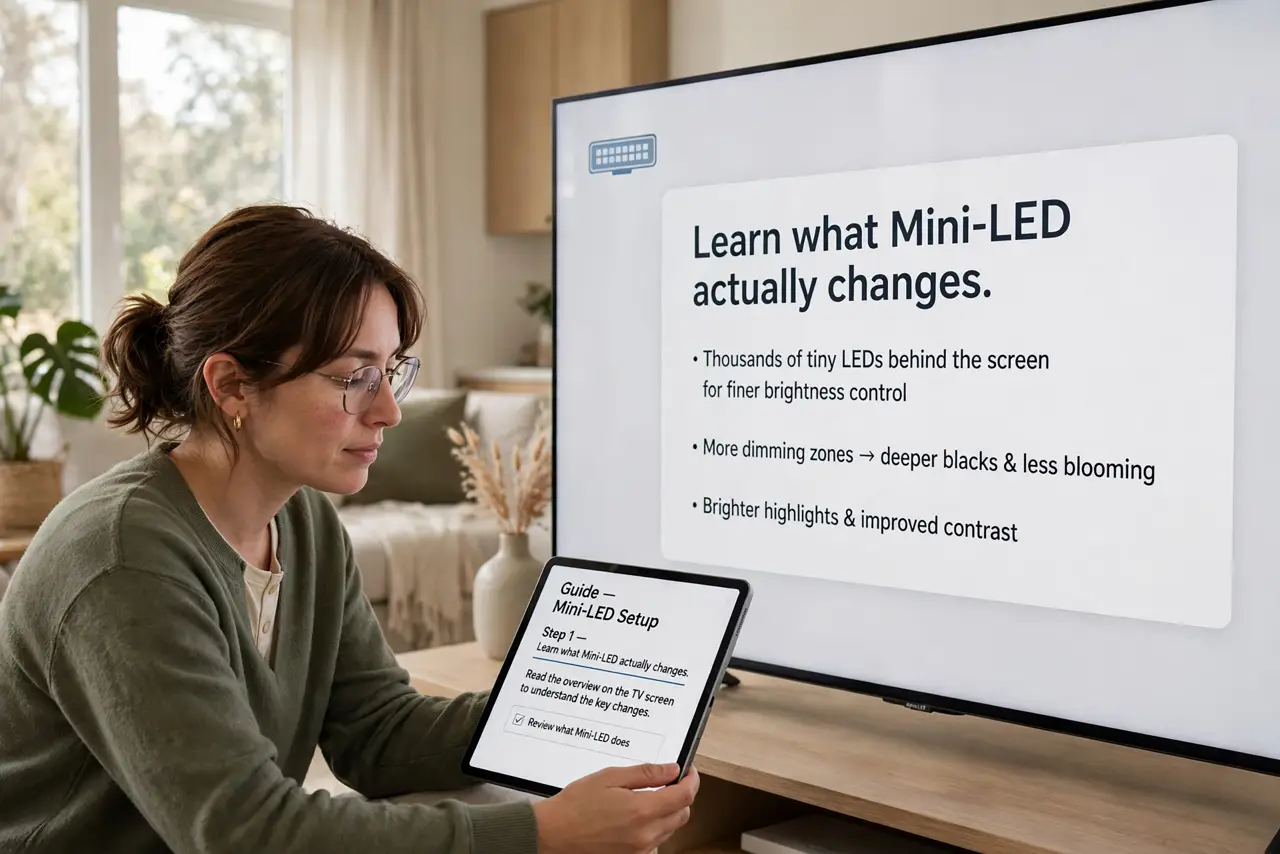
- Learn what Mini-LED actually changes. A regular LED TV backlights the LCD with a few dozen zones. Mini-LED uses thousands of much smaller LEDs, so dark and bright areas can be controlled far more precisely — that is the entire trick.
- Understand the OLED comparison honestly. Mini-LED blacks are dramatically better than regular LED but still not pixel-perfect like OLED — bright objects on black can show a faint halo (blooming). No burn-in risk though, ever.
- Know where Mini-LED shines brightest. Bright rooms: Mini-LED gets much brighter than OLED, so daylight viewing is superb. Mixed daytime TV watching is its home turf.
- Count the dimming zones in reviews. More zones mean finer control and less blooming. Makers rarely advertise the count honestly — reviewers measure it. Zone count is the spec that matters most.
- Do not confuse it with Micro-LED. Micro-LED is a different, far pricier technology where each pixel is its own LED. Mini-LED is an improved backlight for LCD — good, but not that.
- Pair it with the right panel. Most Mini-LED TVs use VA panels for contrast. The combo is excellent for movies; just know viewing angles stay VA-narrow.
What NOT to do
- Do not expect pixel-perfect OLED blacks. Blooming around bright objects on dark backgrounds is the known tradeoff.
- Do not buy Mini-LED for a dark dedicated theater over OLED. In a dark room OLED's perfect blacks win outright.
- Do not assume all Mini-LEDs are equal. A few hundred zones and a few thousand are very different TVs at very different prices.
- Do not confuse Mini-LED with QLED. QLED describes the color layer; Mini-LED describes the backlight — a TV can be both.
Frequently asked questions
Is Mini-LED better than OLED?
For bright rooms, yes — it gets brighter with zero burn-in risk. For dark-room movie watching, OLED's perfect blacks still win. Different strengths.
Does Mini-LED suffer burn-in?
No. It is still an LCD panel, so static images cannot burn in. That is its biggest practical advantage over OLED.
Is it worth the premium over regular LED?
If you watch in a bright room or want strong HDR, yes — the contrast jump is visible. For a bedroom TV watched casually, regular LED is fine.