Protect Health Data
Your steps, heart rate, sleep, and cycle data are worth money — to data brokers who buy and sell health profiles built from app data. Most of it flows out through permissions you granted once and forgot. Protecting health data means treating every health app like a stranger asking personal questions. Start with the health sharing basics and the Google activity audit.
TL;DR / Quick Fix
Quick fix: health data is valuable to data brokers, so treat every health app like a stranger asking personal questions. Share the minimum, deny what is not needed, and audit permissions twice a year. Your steps and heart rate are yours — do not let them become someone else's product.
Follow these steps
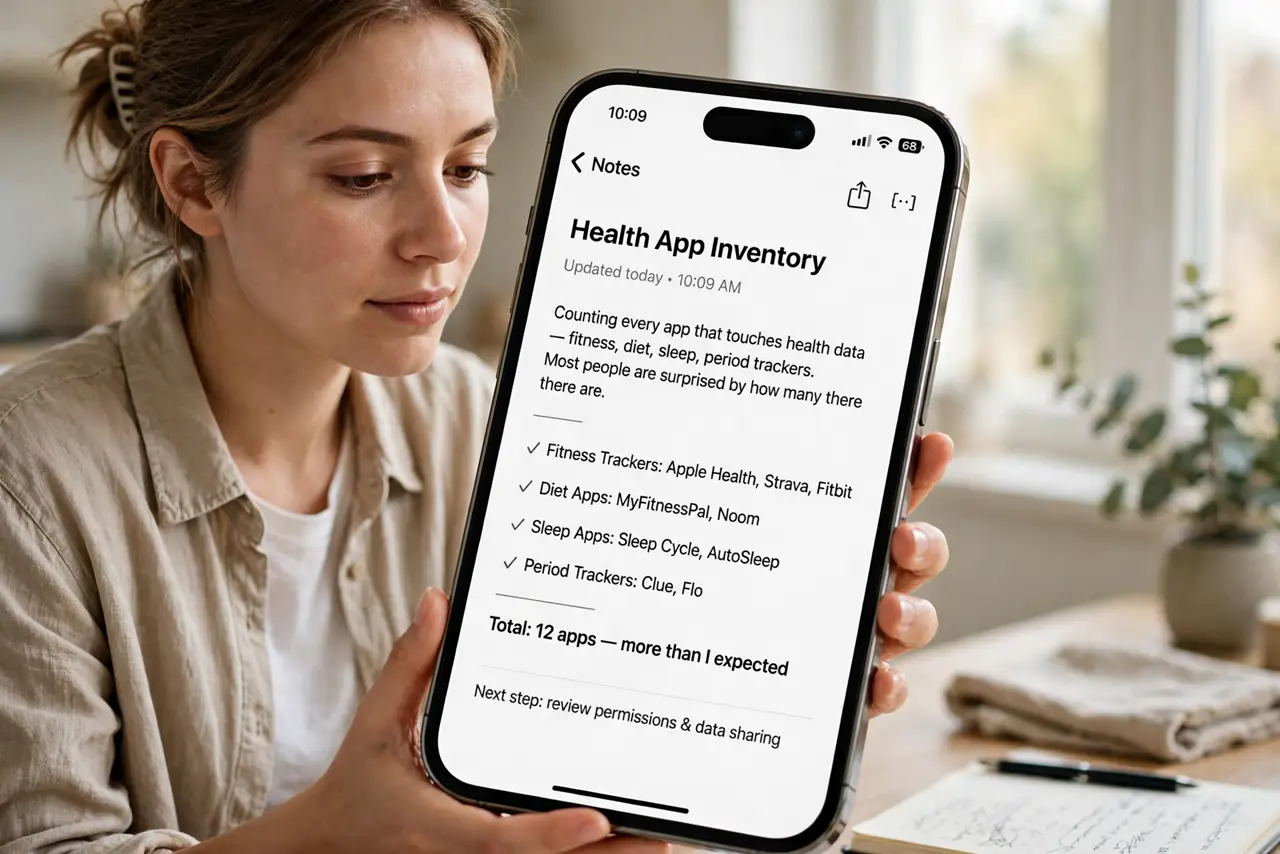
- Inventory your health apps. List every app that touches health data: fitness trackers, diet apps, sleep apps, period trackers. Most people are surprised by how many there are.
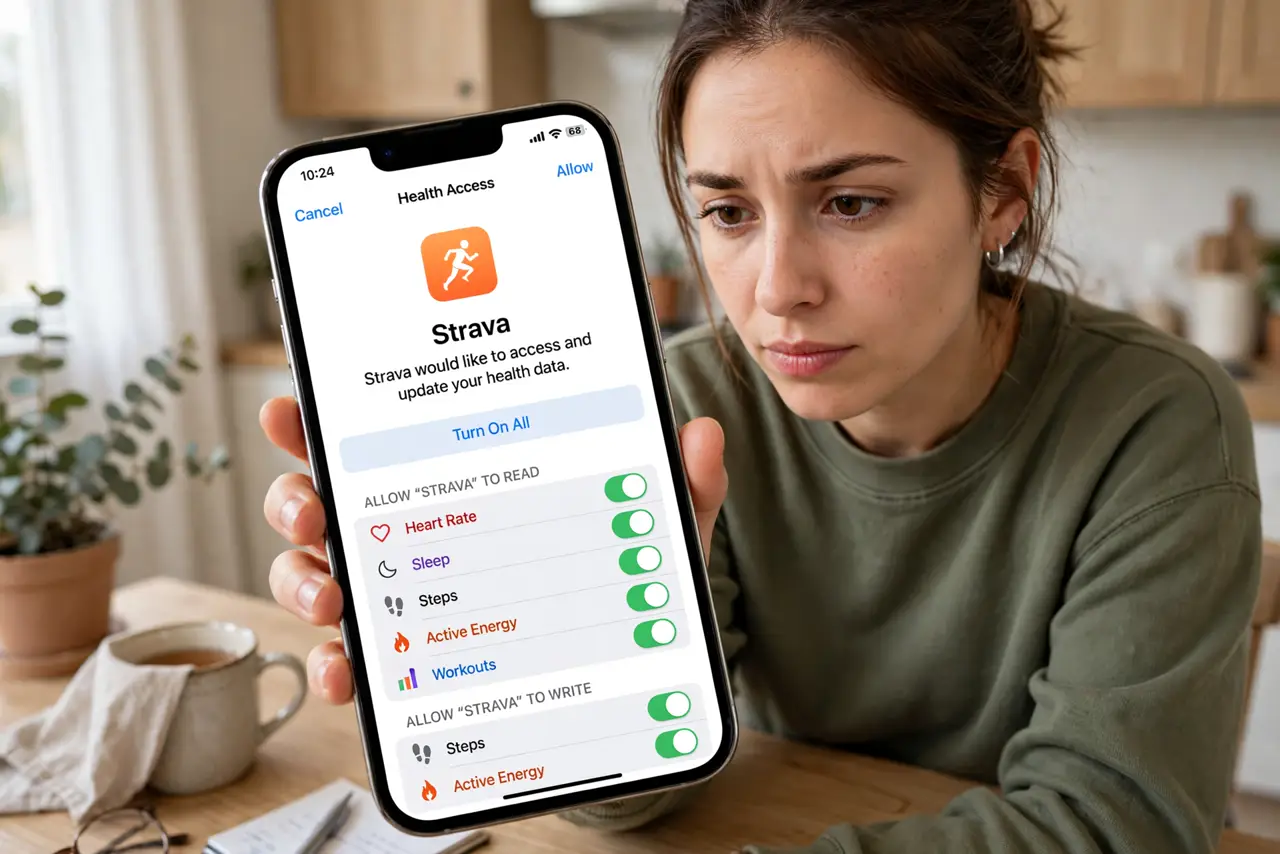
- Check what each one collects. Open each app's privacy settings or your phone's health permissions screen. Note which data types — steps, heart rate, sleep, location — each app can read.
- Deny what is not needed. A step counter does not need your sleep data; a diet app does not need your location. Trim every permission to the minimum the app truly needs to function.
- Delete apps you abandoned. Old apps with live permissions are the worst offenders. If you have not opened it in months, delete it and revoke its access.
- Read the data-sharing policy. Look for sharing with third parties, advertisers, or data brokers in the privacy policy. If the app sells or shares health data, consider switching to one that does not.
- Audit twice a year. Permissions creep back with updates and new installs. A ten-minute review every six months keeps your health data yours.
What NOT to do
- Do not grant health permissions to feel-good apps casually. Every permission is a door — open only the ones you need.
- Do not assume free apps are free. With health data, you are often the product being sold to brokers.
- Do not ignore the account deletion option. If you quit an app, delete the account and request data deletion, not just the app icon.
- Do not share health data on social features. Public leaderboards and shared workouts broadcast more than you think.
Frequently asked questions
Can apps really sell my health data?
Some do, through fine print that permits sharing with partners and brokers. Reading the policy is the only way to know for a given app.
Is my data safe with big-name health apps?
Bigger companies have more to lose, but they still collect broadly. Narrow permissions protect you regardless of the brand.
What about period tracking apps?
They hold especially sensitive data. Choose one with clear privacy commitments, minimal permissions, and data stored on your device.