IEMs vs Headphones?
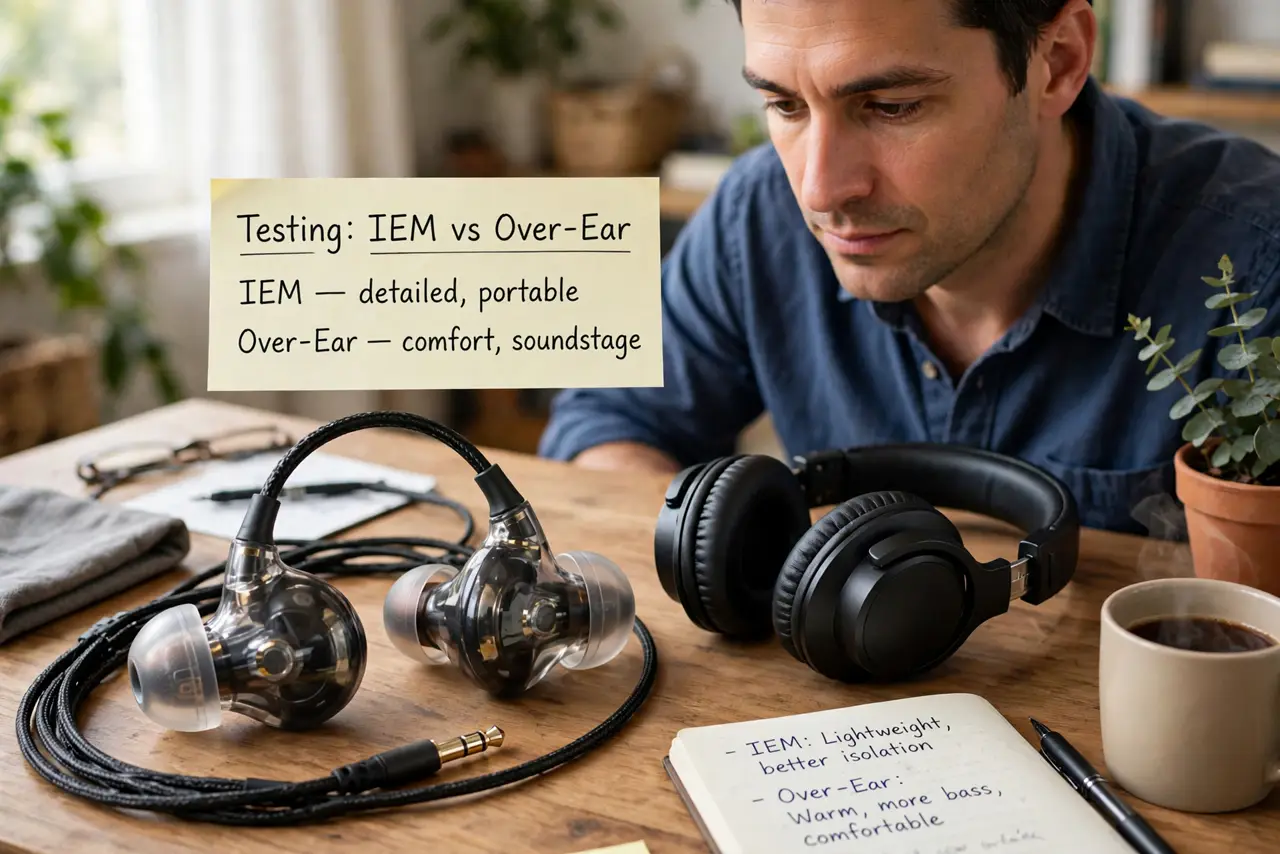
Earbuds that seal into your ear canal or big cans that wrap around it — which actually sounds better, and which should you buy? IEMs (in-ear monitors) and over-ear headphones solve the same problem with opposite tradeoffs: portability and isolation versus comfort and soundstage. (Open vs closed is a separate choice — see open vs closed headphones.)
TL;DR / Quick Fix
Quick fix: pick IEMs for commuting and travel — tiny, great isolation, pocketable. Choose over-ear headphones for long home sessions, where comfort and soundstage win. If earbuds hurt or fall out, fix the fit first: most 'bad sound' is a bad seal.
Follow these steps
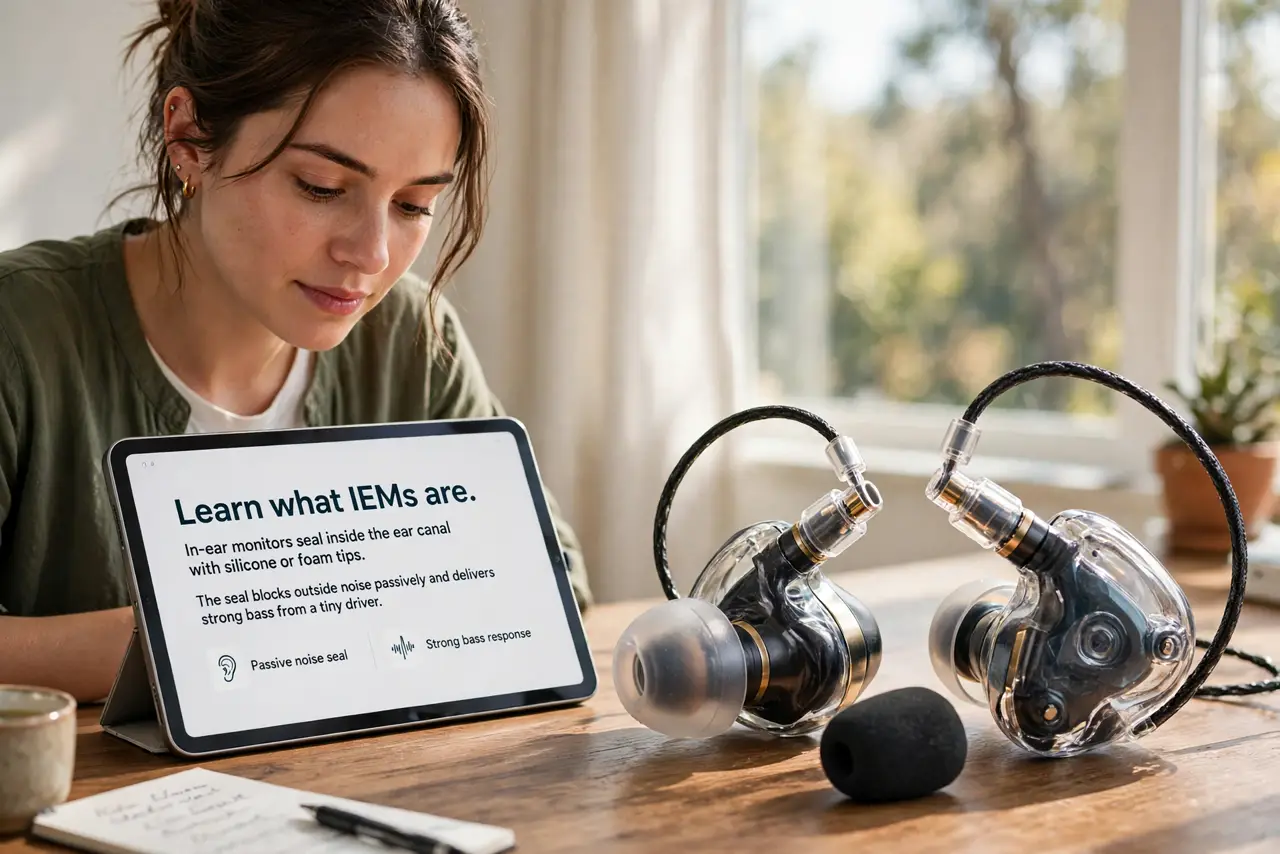
- Learn what IEMs are. In-ear monitors seal inside the ear canal with silicone or foam tips. The seal blocks outside noise passively and delivers strong bass from a tiny driver — that is why commuters love them.
- Learn what over-ears do differently. Over-ear headphones enclose the whole ear with cushioned cups. No pressure inside the canal, a bigger sense of space, and comfort for hours — at the cost of bulk.
- Weigh portability. IEMs vanish into a pocket; over-ears need a bag and a case. If your listening happens on trains, planes, and walks, portability is not a minor perk — it decides whether you bring them.
- Weigh isolation and fit. A good IEM seal isolates as well as basic noise cancelling. But fit is personal: the wrong ear tips mean pain, falling out, and thin sound.
- Compare the sound honestly. Good examples of both sound excellent. Over-ears generally offer a wider soundstage; IEMs offer intimacy and detail. Either beats a bad example of the other — type matters less than quality.
- Decide by where you listen. Mostly moving: IEMs. Mostly at a desk or couch: over-ears. Many people eventually own both, each for its home turf.
What NOT to do
- Do not buy IEMs and wear the default tips unquestioningly. Most fit complaints are tip-size complaints — try them all.
- Do not buy over-ears for the gym. Sweat destroys cushions, and bulk bounces — IEMs own workouts.
- Do not assume bigger drivers mean better sound. Tuning beats driver size; a well-tuned IEM embarrasses a sloppy over-ear.
- Do not crank the volume to compensate for a bad seal. Fix the fit instead — your hearing will thank you.
Frequently asked questions
Which is better for calls?
Over-ears usually win — boom or cup-mounted mics pick up your voice better than tiny IEM mics in wind.
Do IEMs damage hearing more?
Not inherently. The risk is volume: a bad seal tempts you to crank it. Fix the seal, keep volume moderate.
Can one pair do everything?
Almost: good IEMs travel anywhere and work at a desk too. Over-ears cannot shrink for the commute.