Invoice Payment Terms That Actually Get Paid
Late payments often come from vague invoices, not bad clients: no due date, no payment method, no consequence. Clear terms on every invoice remove the excuses and make paying you the easiest option.
TL;DR / Quick Fix
Quick fix: put clear payment terms on every invoice — amount due, due date, and how to pay — and send it the day the work ends. Follow up politely the day after the due date, since most late payments are forgetfulness, not refusal.
Follow these steps
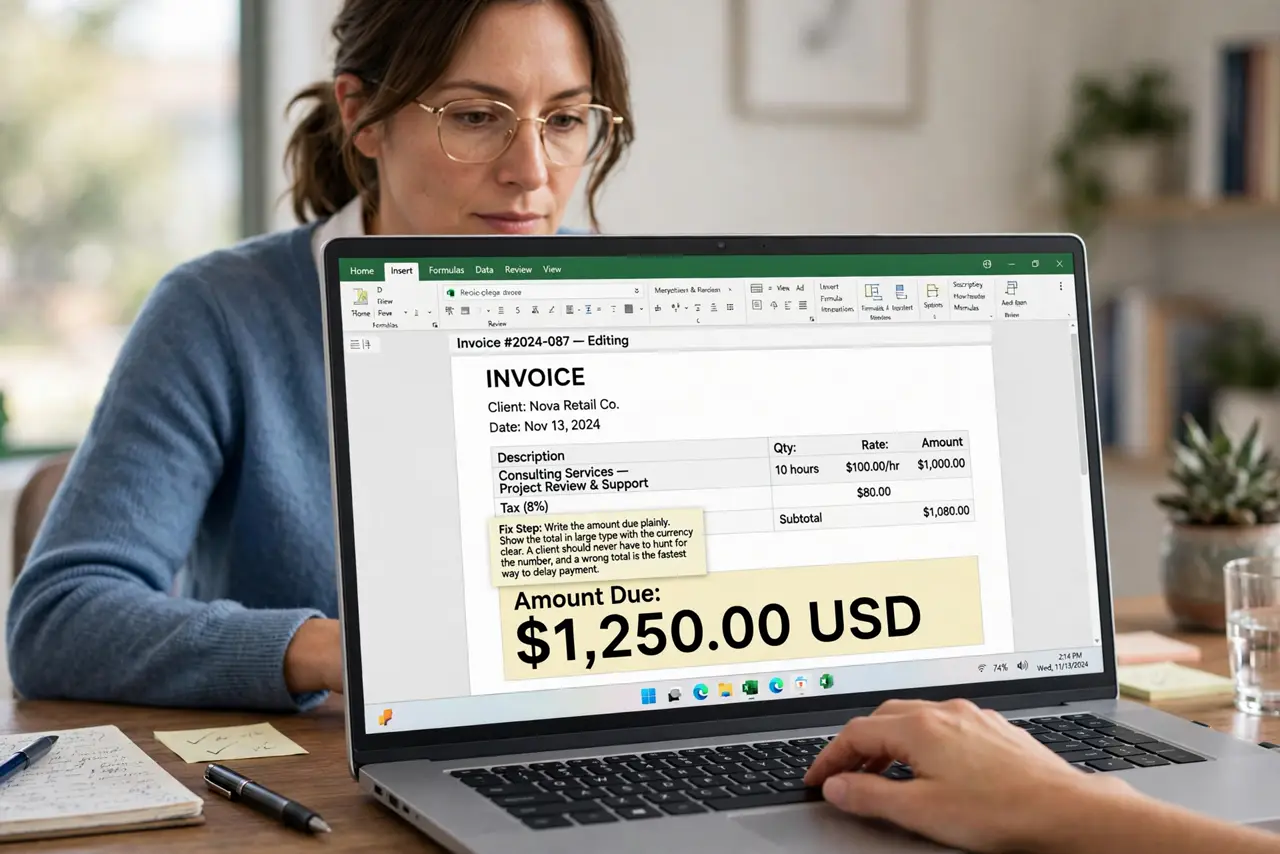
- Write the amount due plainly. Show the total in large type with the currency clear. A client should never have to hunt for the number, and a wrong total is the fastest way to delay payment.
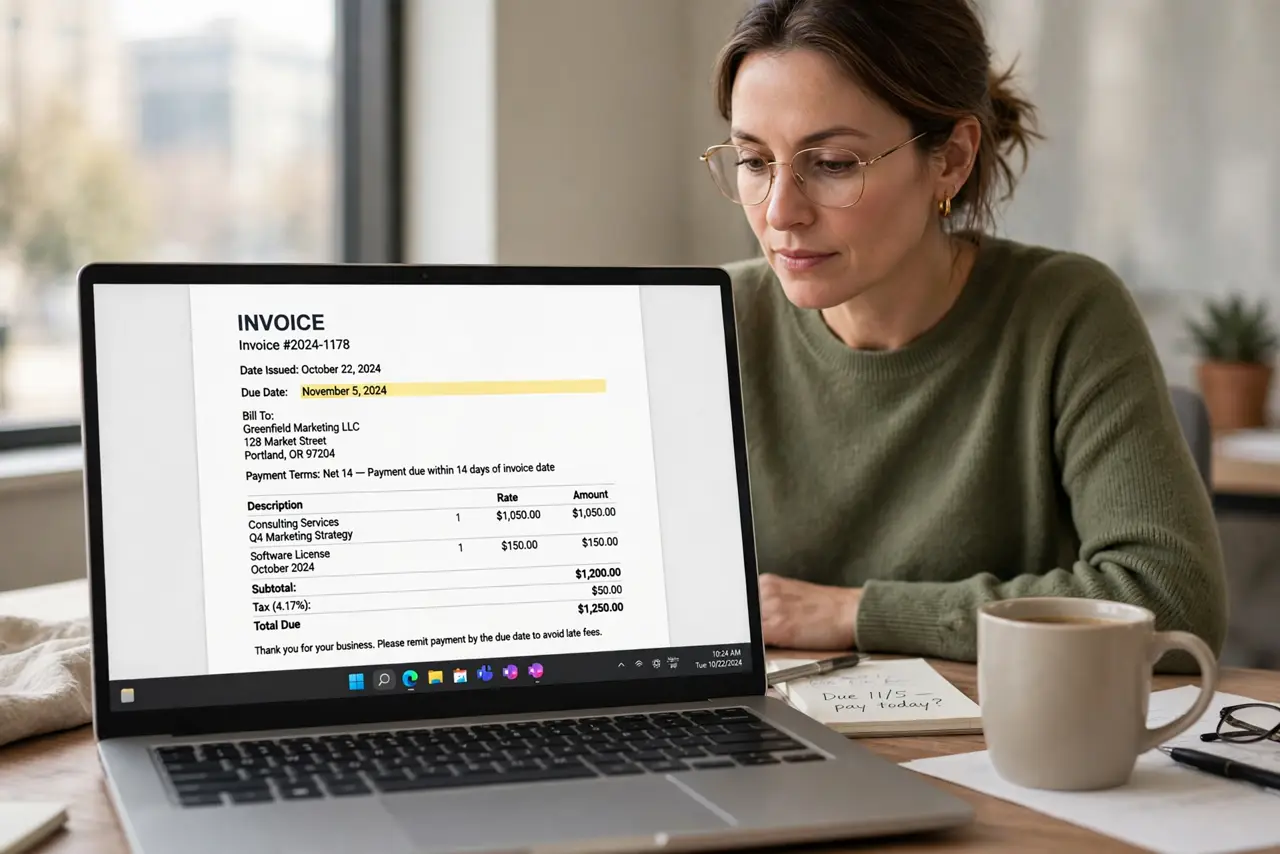
- Set a real due date, not just terms. Write Due March 15 instead of only Net 30. A calendar date is harder to misread, and it gives your follow-up a concrete anchor.
- Say exactly how to pay. List the accepted methods with the details: bank transfer info, payment link, or check address. Every extra step the client must ask about adds days.
- Send the invoice the day work ends. Send it while the work is fresh in the client's mind. An invoice sent three weeks later feels optional, while a same-day invoice feels due.
- Follow up the day after the due date. Send a short polite reminder the morning after. Most late payments are forgetfulness, and a gentle nudge collects faster than a stern one later.
- Add a late fee policy in writing. State a modest late fee in the terms from the first invoice. You may never charge it, but its presence makes the due date feel real.
What NOT to do
- Do not hide the due date in fine print. Buried terms get missed honestly, and then the late payment is partly your doing.
- Do not accept vague payment promises instead of terms. Send the invoice with written terms anyway, since a verbal promise has no date attached.
- Do not wait a month to follow up. A reminder sent the day after the due date is routine; one sent after a month feels like a confrontation.
- Do not change terms mid-project without telling the client. New terms need a conversation first, or the surprise sours the relationship.
Frequently asked questions
What payment terms get paid fastest?
Clear ones: a visible total, a calendar due date, and simple payment instructions, sent the day the work finishes.
Should I charge a late fee?
A modest written late fee is fair and effective, even if you rarely enforce it. It turns the due date from a suggestion into a term.
What if a client always pays late?
Shorten their terms, require a deposit, or pause new work until the balance clears. Chronic lateness is a policy problem, not a reminder problem.