Spot Fake Job Offers
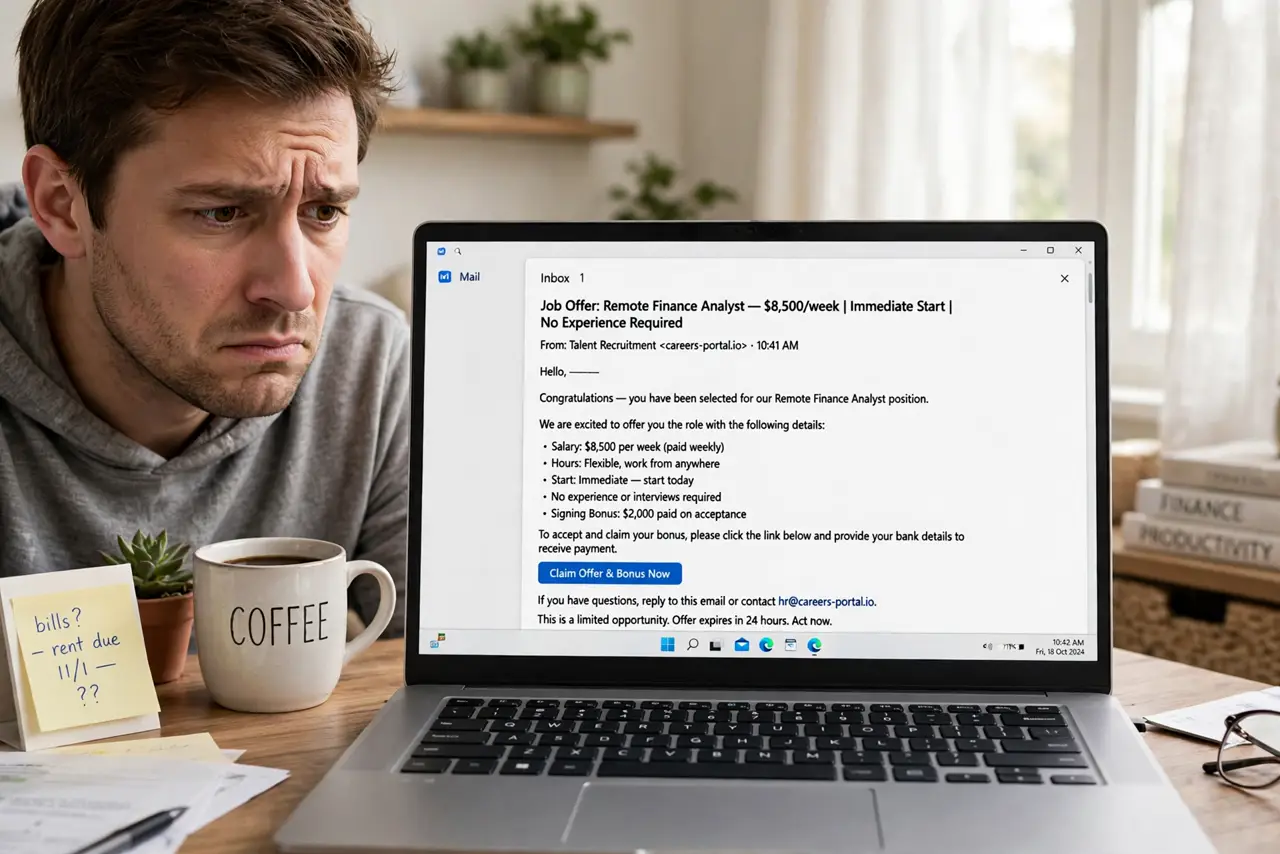
The message promises great pay for easy remote work — no interview, just a quick task to start. Then comes the catch: a fee to unlock the job, a check to deposit, equipment to buy from their vendor. Fake job offers are among the fastest-growing scams, targeting job seekers exactly when they are most hopeful. Here is how to spot them.
TL;DR / Quick Fix
Quick fix: real employers never ask you to pay fees, cash checks, or buy equipment upfront. Verify the company through its official site — not links in the message — and be wary of interviews held only over text chat. If the pay sounds amazing for vague work, walk away.
Follow these steps
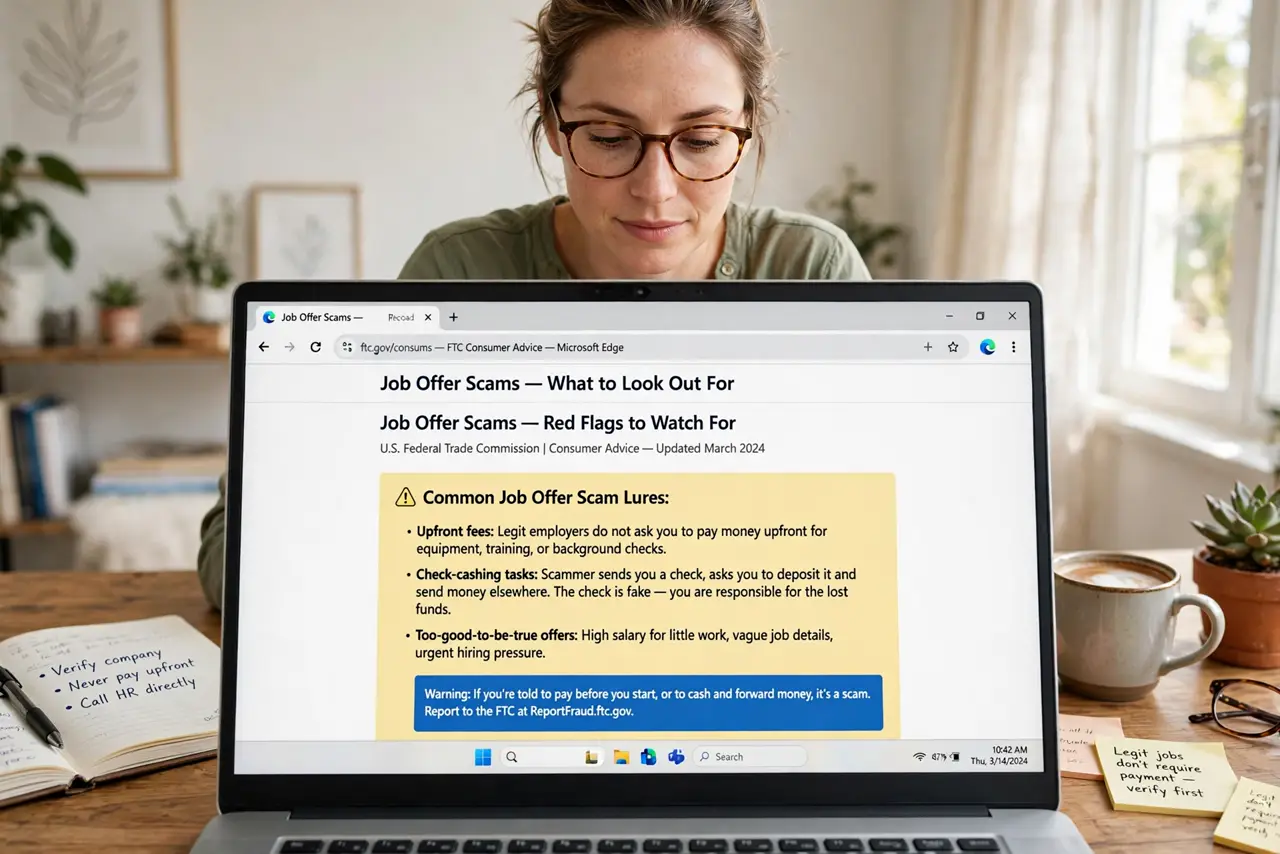
- Know the classic lures. Upfront fees, check-cashing tasks, reshipping packages, and crypto payments for simple work. The upfront fee warning pattern is the most reported variant — any job that costs money to start is not a job.
- Verify the company independently. Search the company name plus scam, check its official site, and confirm the recruiter's email domain matches. Do not trust links in the message — look everything up yourself.
- Be wary of text-only interviews. Real hiring involves real conversations — video or phone at minimum. An interview conducted entirely over chat apps, especially with instant offers, is a fake interview setup.
- Never cash their checks. The check bounces days later, after you have forwarded the money. You owe the bank the full amount — this is the oldest job-scam engine there is.
- Never pay for equipment. Real employers provide equipment or reimburse through payroll. Being directed to a specific vendor with a deadline is a payment trap, not onboarding.
- Trust the pay-to-work ratio. Amazing pay for vague, easy tasks does not exist in legitimate hiring. If the offer would make no business sense, it is not a business — it is bait.
What NOT to do
- Do not pay any fee to get a job. Application fees, training fees, equipment deposits — legitimate employers do not charge to hire you.
- Do not deposit checks from strangers. They will bounce, and the bank holds you responsible for the full amount.
- Do not share bank details early. Account numbers come after a signed offer and verified onboarding — never in the first chat.
- Do not move the conversation off-platform. Scammers push to encrypted chat apps to dodge the job site's fraud detection.
Frequently asked questions
Are all remote job offers scams?
No — remote work is real and huge. But its popularity makes it prime scam territory, so verify every offer, especially unsolicited ones.
What if I already paid a fee?
Stop all contact, report to the job platform and fraud authorities, and monitor your accounts. Recovery is unlikely — prevention was the moment.
Can a real company hire over text chat?
Extremely rarely, and never with instant offers plus fees. Treat text-only hiring as guilty until proven innocent.