Spot Job Scams
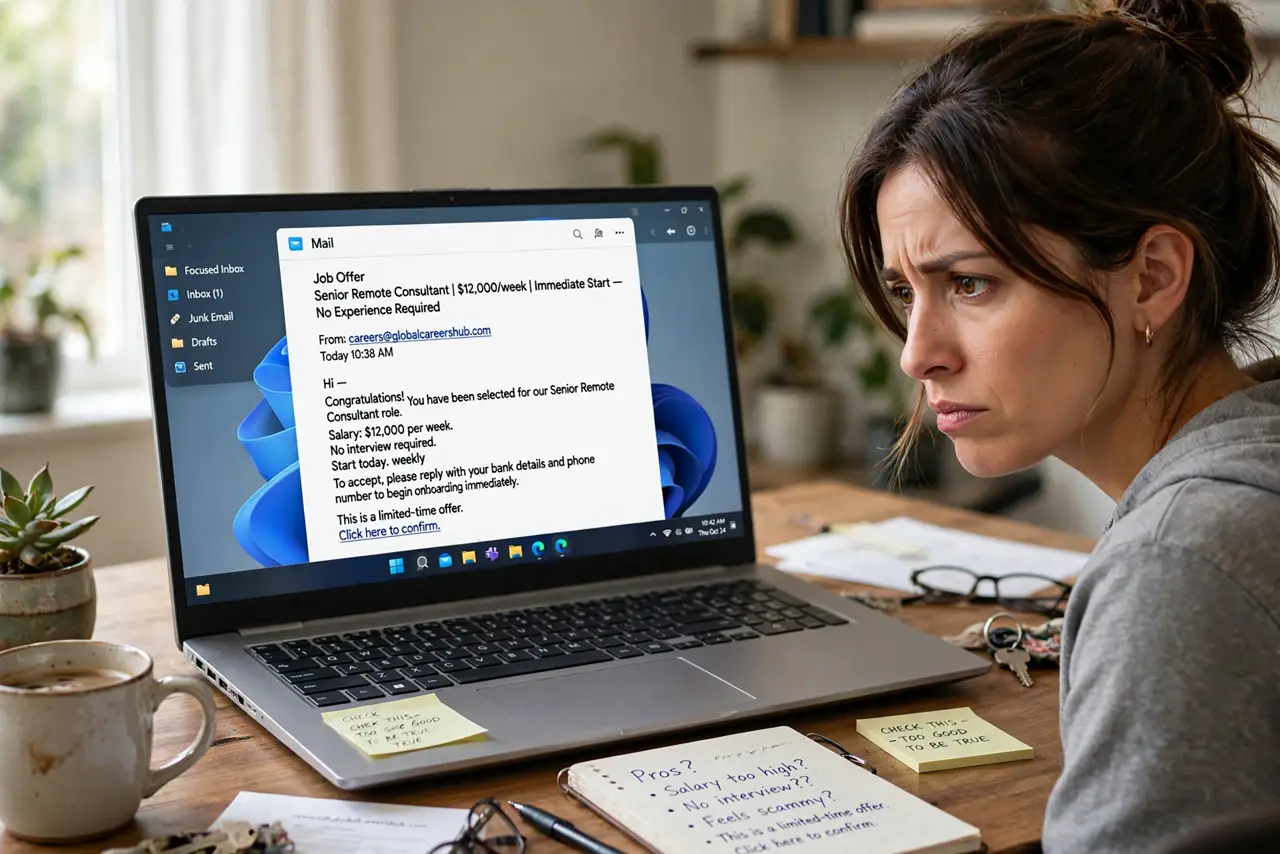
The job offer arrived out of nowhere: great pay, work from home, no interview — just pay a small fee for training or equipment first. Or the 'employer' sends a check to buy supplies and asks you to forward the remainder. Job scams exploit hope, and they have professionalized: fake recruiters, fake companies, fake onboarding portals. This guide lists the red flags and the verification steps. For the invoice version of employment fraud, learn to spot fake invoices.
TL;DR / Quick Fix
Quick fix: real employers never ask you to pay for the job — any fee for training, equipment, or background checks is the scam. Verify the company independently: real website, real phone number, real online presence. Never cash a check and forward money; that makes you the money mule.
Follow these steps
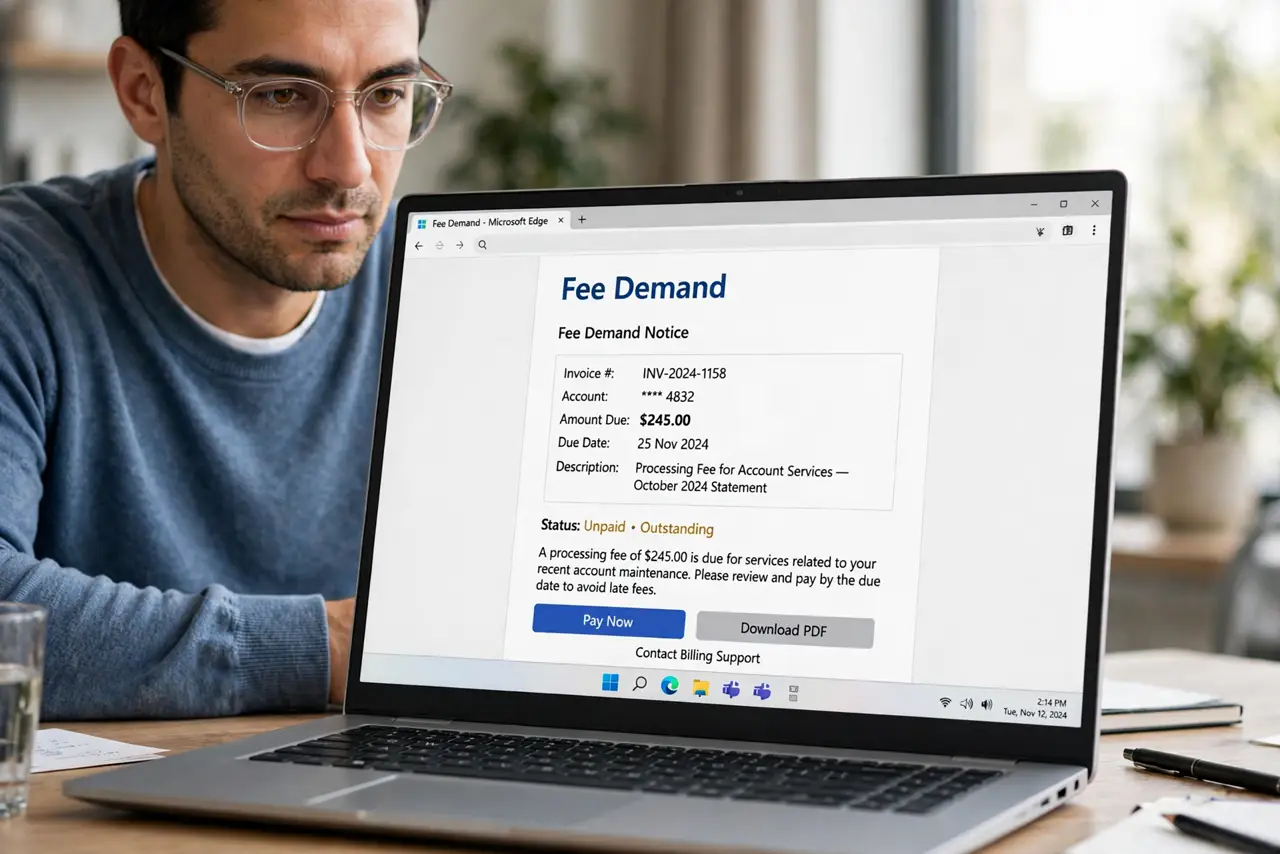
- Spot the fee demand. Any job requiring you to pay — for training, equipment, visas, background checks — is fraudulent. Real employers absorb hiring costs; they do not invoice candidates.
- Never do the check trick. A 'paycheck' arrives, you deposit it, buy supplies, and forward the remainder — then the check bounces and you owe the bank everything. This is the classic employment scam; the check is always fake.
- Verify the company exists. Search the company independently — not via links in the email. Real address, real phone number, real employees on professional networks. Scammers clone all of it shallowly; depth checks expose them.
- Check the interview process. No real job hires with zero interview, or by text message alone. A process with no human conversation is not a process — it is bait.
- Guard your personal data. Do not send ID scans, bank details, or Social Security numbers to 'start onboarding' before you have verified the employer six ways. Identity theft is the second harvest of job scams.
- Report it. Report to the job platform, the FTC, and the impersonated company. Fake listings get removed faster when candidates report instead of just moving on.
What NOT to do
- Do not pay anything to get a job. Equipment fees, training deposits, and background-check payments from candidates are always scams.
- Do not cash checks from 'employers' and forward money. You become the money mule, and the bank holds you responsible when it bounces.
- Do not send identity documents before verifying the company. A 'quick onboarding form' is often an identity-theft harvest.
- Do not trust a professional-looking website alone. Scammers build convincing sites in an afternoon — verify through independent channels.
Frequently asked questions
The recruiter contacted me on LinkedIn — is it real?
Maybe, maybe not — fake recruiter profiles are common. Verify through the company's official careers page and phone number.
What about mystery shopper jobs?
The legitimate ones never ask you to forward money or cash checks first. The check-forwarding version is always a scam.
I already sent money — can I recover it?
Wire transfers and gift cards are usually gone. Report to police and the FTC immediately; then treat every follow-up 'recovery' offer as a second scam.