Use a Portable Jump Starter
Dead battery in a parking lot, no second car in sight — a portable jump starter is a power bank with the guts to crank an engine, and it's rescued millions of drivers. But hooking it up wrong can spark, fry electronics, or worse. The order of the clamps is the whole safety story.
TL;DR / Quick Fix
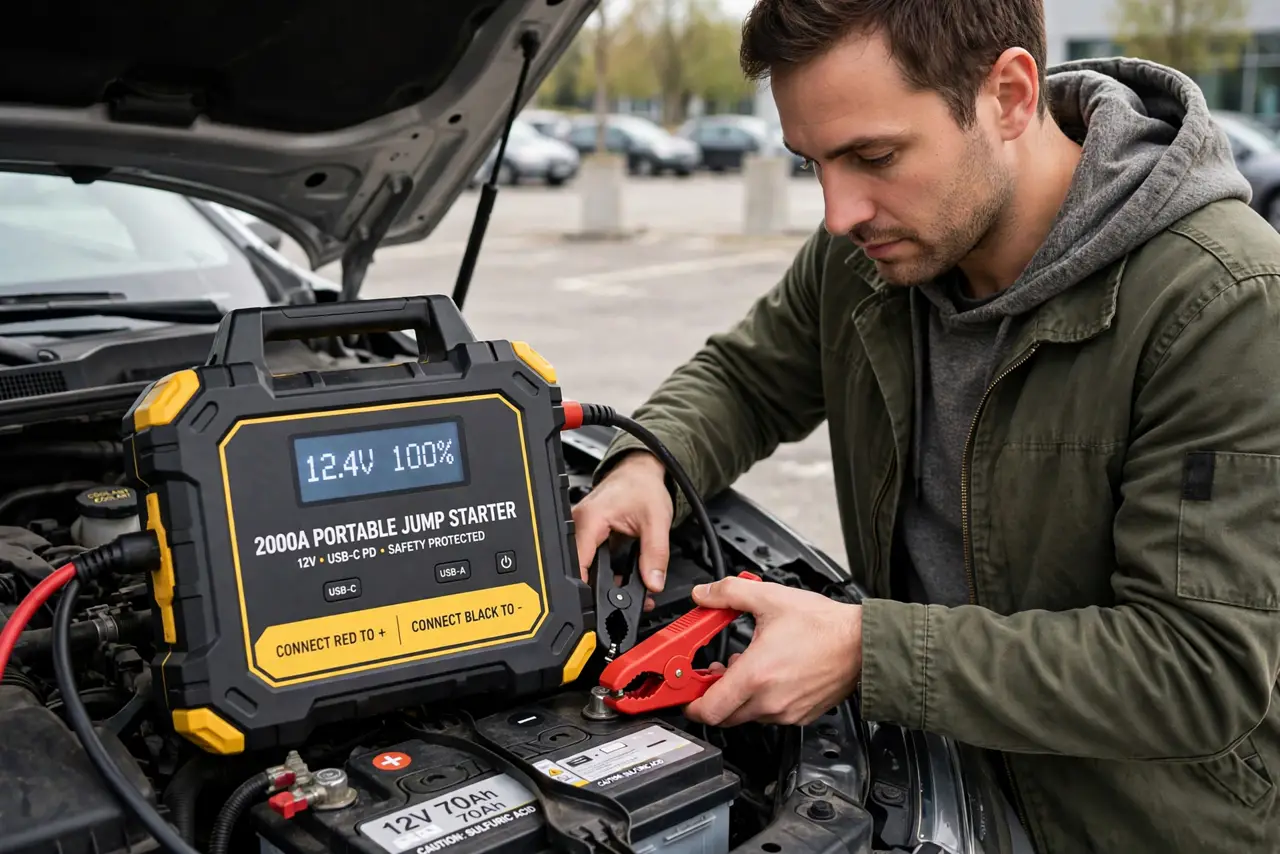
Quick fix: connect red clamp to the dead battery's positive terminal, black to unpainted metal away from the battery, then turn on the pack and start the car. Remove clamps in reverse order. Charge the pack every few months — a dead jump starter helps no one.
Follow these steps
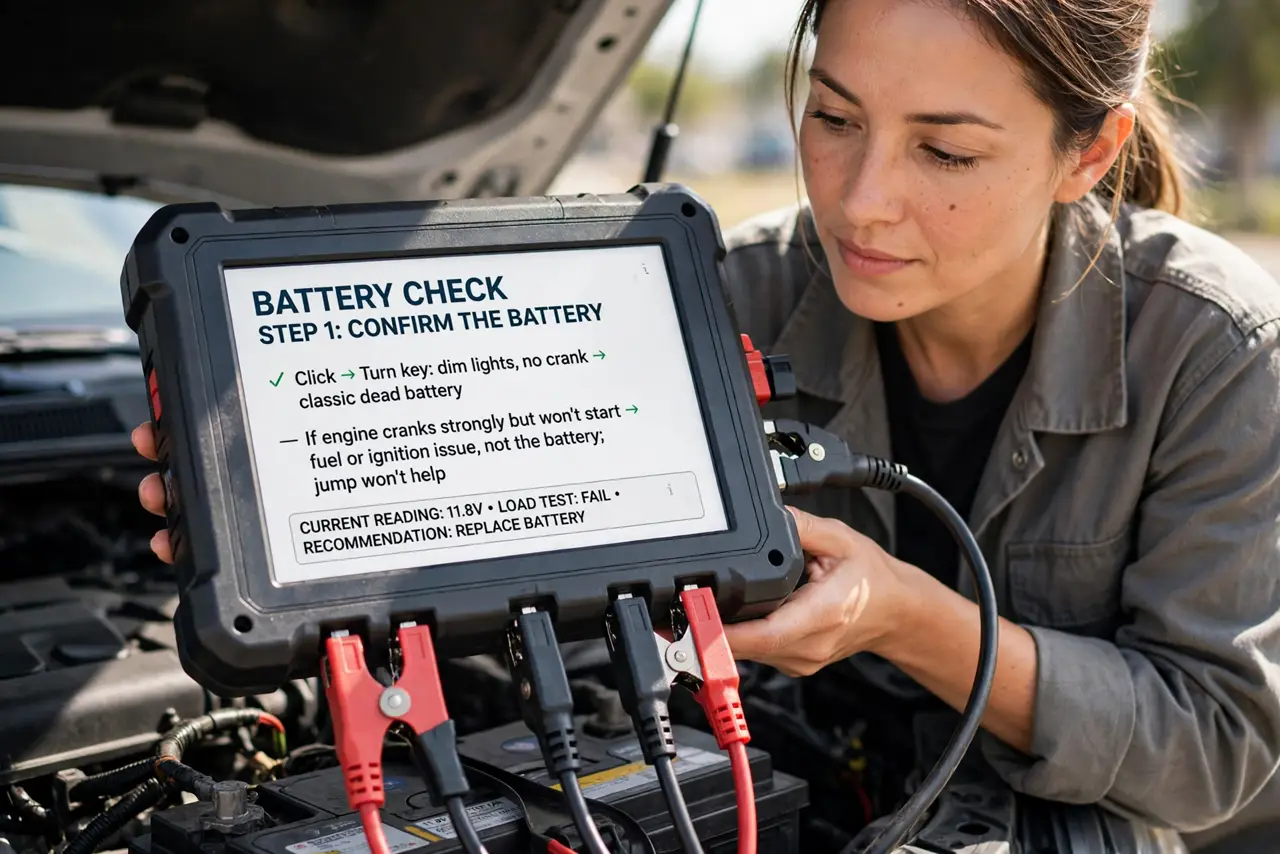
- Confirm it's actually the battery. Clicking on turn, dim lights, no crank — classic dead battery. If the engine cranks strongly but won't start, that's fuel or ignition, not the battery; a jump won't help.
- Position and prep. Turn everything off — lights, radio, hazards if safe. Put the pack where its cables reach comfortably without stretching across the engine.
- Connect red to positive (+). Red clamp to the dead battery's positive terminal — marked +, usually red. Solid bite on bare metal, not on corrosion.
- Connect black to ground. Black clamp to unpainted metal on the engine block or chassis, away from the battery. Never to the negative terminal — ground-away keeps sparks from battery gases.
- Power on, then start. Turn on the jump starter, wait a few seconds, then crank the car. If it doesn't start in a few seconds, stop — rest a minute and retry rather than cooking the starter.
- Remove in reverse, then drive. Black off first, then red. Drive at least 20-30 minutes so the alternator recharges the battery — and get the battery tested soon.
What NOT to do
- Do not reverse the clamps. Red-to-negative can spark violently and damage electronics — double-check polarity before powering on.
- Do not crank endlessly. Long cranking overheats the starter and the pack; short attempts with rests between are the safe pattern.
- Do not use a swollen or damaged pack. Puffed lithium is a fire risk — retire damaged packs properly, don't gamble.
- Do not assume one jump fixed it. A battery that needed jumping usually needs testing or replacing — the next cold morning will prove it.
Frequently asked questions
How often should I recharge the pack?
Every 3-4 months, plus a check before winter. Lithium self-discharges; a neglected pack is dead exactly when you need it.
Can it damage my car's electronics?
Correctly connected, no — modern packs have reverse-polarity and surge protection. Incorrectly connected, yes — which is why clamp order matters.
Gas or diesel — does it matter?
Yes — diesels need more cranking amps. Check the pack's rating against your engine; an underpowered pack just clicks helplessly.