Place Water Leak Detectors
A washing machine hose bursts at 2 AM, and you discover it at 7 AM — five hours of water across the floor, into the walls, under the cabinets. A ten-dollar sensor would have screamed in minute one. Leak detectors are the cheapest insurance in your house; placement is the entire game.
TL;DR / Quick Fix
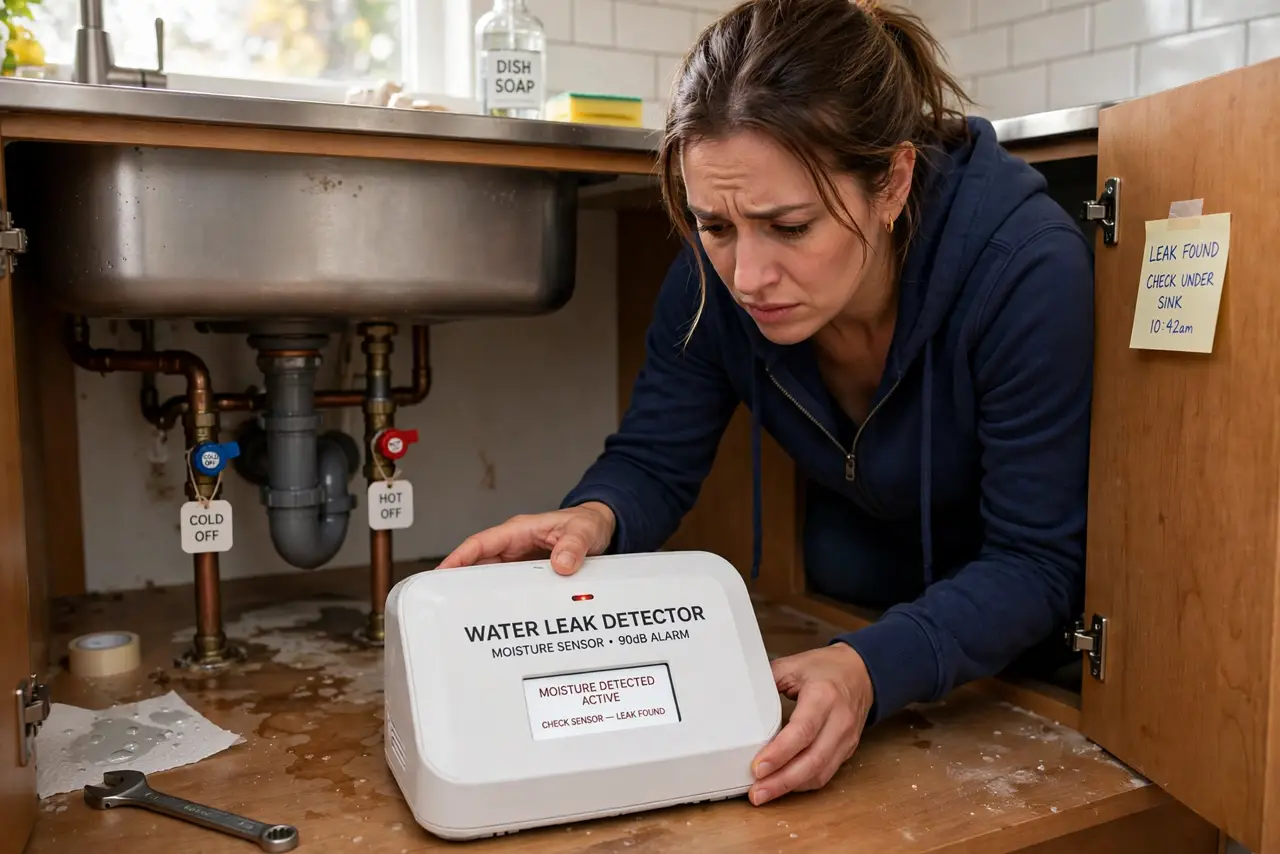
Quick fix: place water leak detectors under sinks, behind toilets, next to the water heater, and by the washing machine — anywhere water hides before you notice. Put the sensor on the floor where water would pool first. Test each one yearly by touching the probes with a damp finger.
Follow these steps
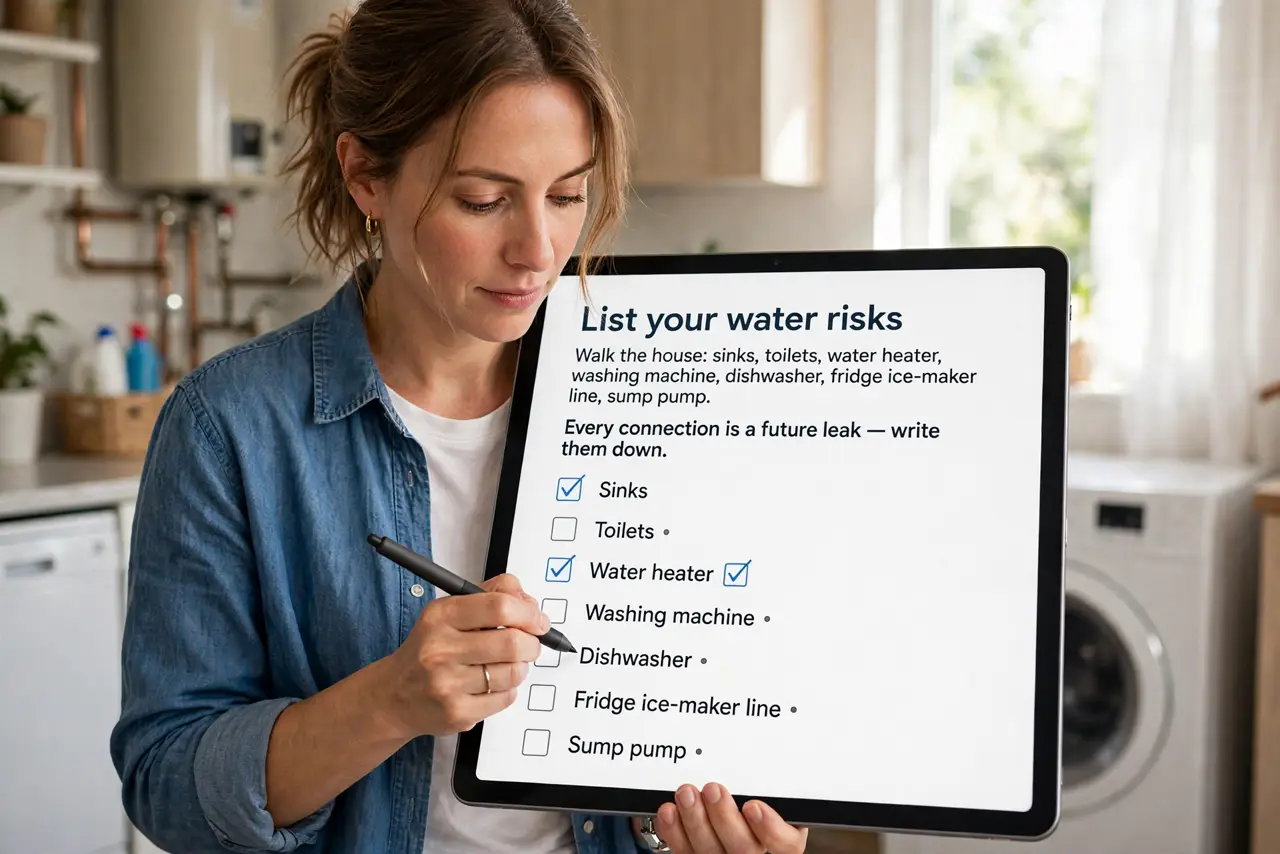
- List your water risks. Walk the house: sinks, toilets, water heater, washing machine, dishwasher, fridge ice-maker line, sump pump. Every connection is a future leak — write them down.
- Place sensors at floor level. Water pools downward. Put each sensor flat on the floor directly under or beside the risk — not on a shelf, not on top of the appliance.
- Prioritize the big three. Water heater, washing machine, and upstairs bathrooms cause the most damage. If you buy three sensors, they go here first.
- Choose connected sensors. Wi-Fi or hub-connected detectors alert your phone anywhere. A sensor that only beeps helps only if you are home to hear it.
- Test yearly. Touch the sensor probes with a damp finger — it should alarm immediately. Dead batteries in a leak detector are worse than none, because of the false confidence.
- Replace batteries on schedule. Most last a year or two. Tie battery swaps to a memorable date — smoke alarm day works, and see smart smoke detectors for the companion system.
What NOT to do
- Do not place sensors where water cannot reach them. On a shelf above the washer, the sensor stays dry while the floor floods.
- Do not buy beep-only sensors for a vacation home. Remote alerts are the whole point when nobody is there to hear.
- Do not ignore the first alert as a false alarm. Check immediately, every time — the one you dismiss is the real one.
- Do not forget the fridge water line. Ice-maker connections leak slowly for months behind the fridge, rotting the floor silently.
Frequently asked questions
How many detectors do I need?
Start with the big three (water heater, washer, upstairs bath), then add sinks and dishwasher. Most homes are covered with five to eight.
Do they detect slow drips?
Yes — the probes alarm on any water contact, including slow seepage. That is their main advantage over noticing damage.
Batteries or plug-in?
Battery sensors place anywhere; plug-in ones never need batteries but need outlets. Battery is the flexible default.