Map Skills to Learn
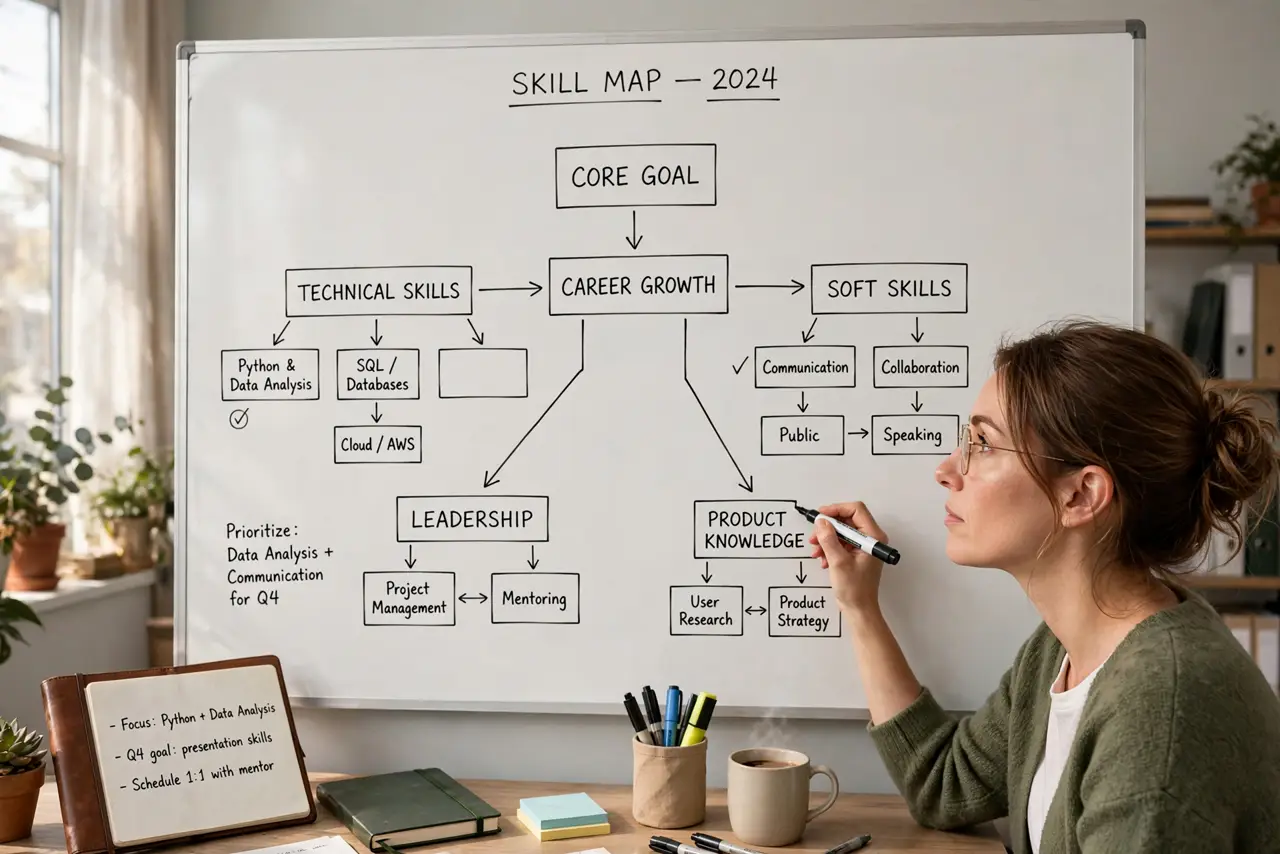
Your learning feels random — a tutorial here, a video there, no sense of direction, and the nagging feeling you are missing the important parts. A skill map fixes that: a simple visual of where you are, where you are going, and what connects to what. It turns a fog of topics into a route you can actually walk.
TL;DR / Quick Fix
Quick fix: write your end goal at the top of a page, list the skills it requires underneath, and mark each as known, learning, or unknown. Learn the unknowns in dependency order — foundations before advanced topics. Review the map monthly and update your progress.
Follow these steps
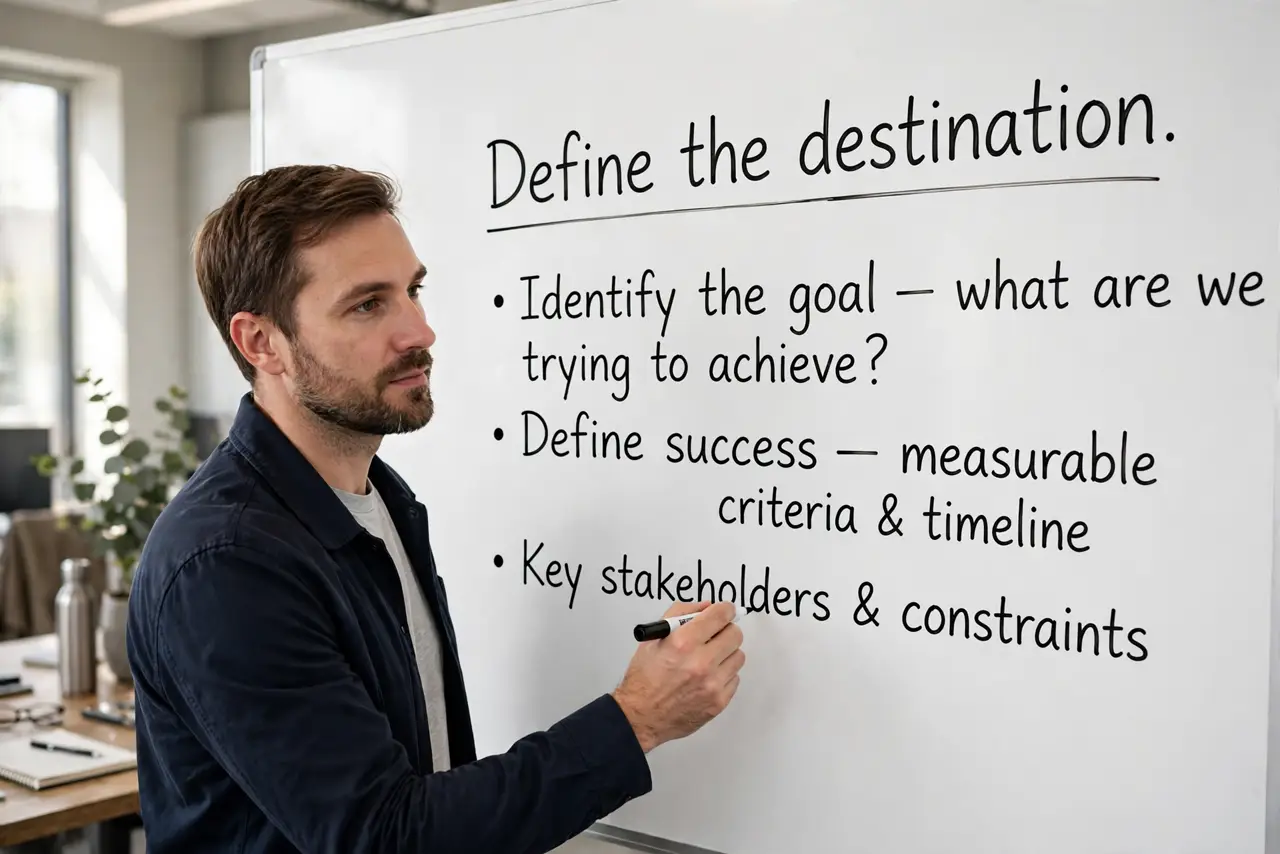
- Define the destination. Write one concrete goal: build a website, pass an exam, hold a conversation. Vague goals produce vague maps — the destination decides which skills matter.
- List the required skills. Break the goal into its component skills. Be specific: not learn programming but variables, loops, functions. Small, named skills are mappable; blobs are not.
- Order them by dependency. Some skills need others first — you cannot learn frameworks before the language. Arrange the map so foundations come first and advanced topics build on them.
- Mark your current position. Label each skill: known, shaky, or unknown. Honest marking matters — the map is a planning tool, not a resume. Unknowns adjacent to knowns are your next targets.
- Learn in map order. Work through the unknowns following the dependencies, one skill at a time. The map prevents the classic trap of advanced tutorials built on missing foundations.
- Review and update monthly. Revisit the map: mark new knowns, add discovered sub-skills, prune irrelevant branches. A living map stays useful; a frozen one becomes decoration.
What NOT to do
- Do not map everything at once. A map with two hundred nodes paralyzes — map the next few months, not the next five years.
- Do not skip the dependency ordering. Learning out of order feels productive until the missing foundation collapses under you.
- Do not confuse collecting resources with mapping skills. A folder of bookmarks is not a plan — the map is about skills, not links.
- Do not leave the map in a drawer. Check it weekly when choosing what to study, or it was just a pleasant afternoon activity.
Frequently asked questions
How detailed should the map be?
Detailed enough to pick tomorrow's task from it, no more. If you cannot choose the next step by looking at it, add detail.
What if I don't know the required skills?
Ask practitioners or check curricula for your goal — syllabi and roadmaps are skill maps made by others. Adapt one instead of inventing from zero.
Should I map soft skills too?
If the goal needs them, yes — communication or time management belong on the map as honestly as technical skills.