Practice Deliberately
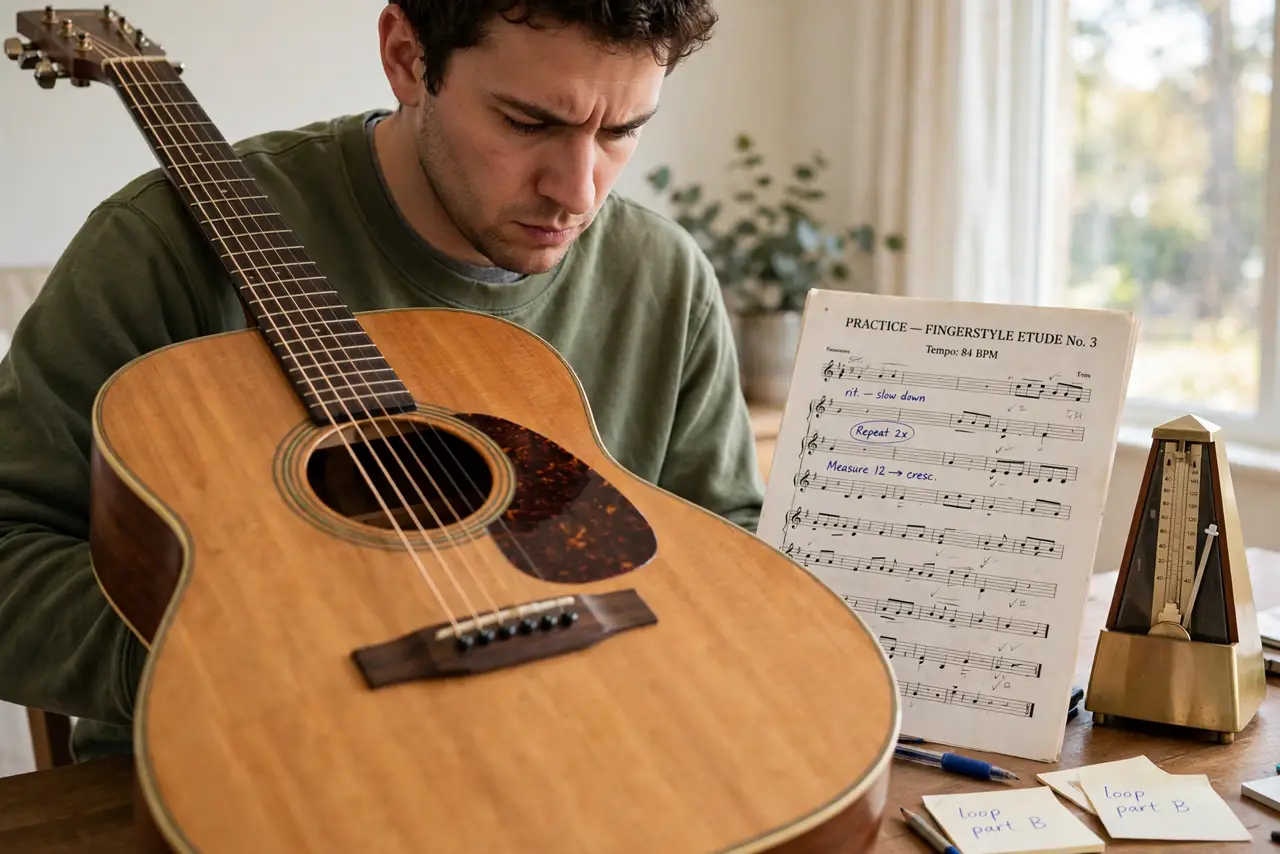
You have practiced for months and plateaued — the same mistakes, the same level, the same frustration. Hours alone do not build skill; deliberate practice does. It is practice designed around your specific weaknesses, with immediate feedback and full concentration — the opposite of comfortable repetition. Plateaus break when practice gets uncomfortable on purpose.
TL;DR / Quick Fix
Quick fix: identify one specific weakness, design a short exercise targeting exactly that, practice it with full focus for 20 to 30 minutes, and get feedback on each attempt. Repeat it daily. Comfortable repetition maintains skill; targeted discomfort builds it.
Follow these steps
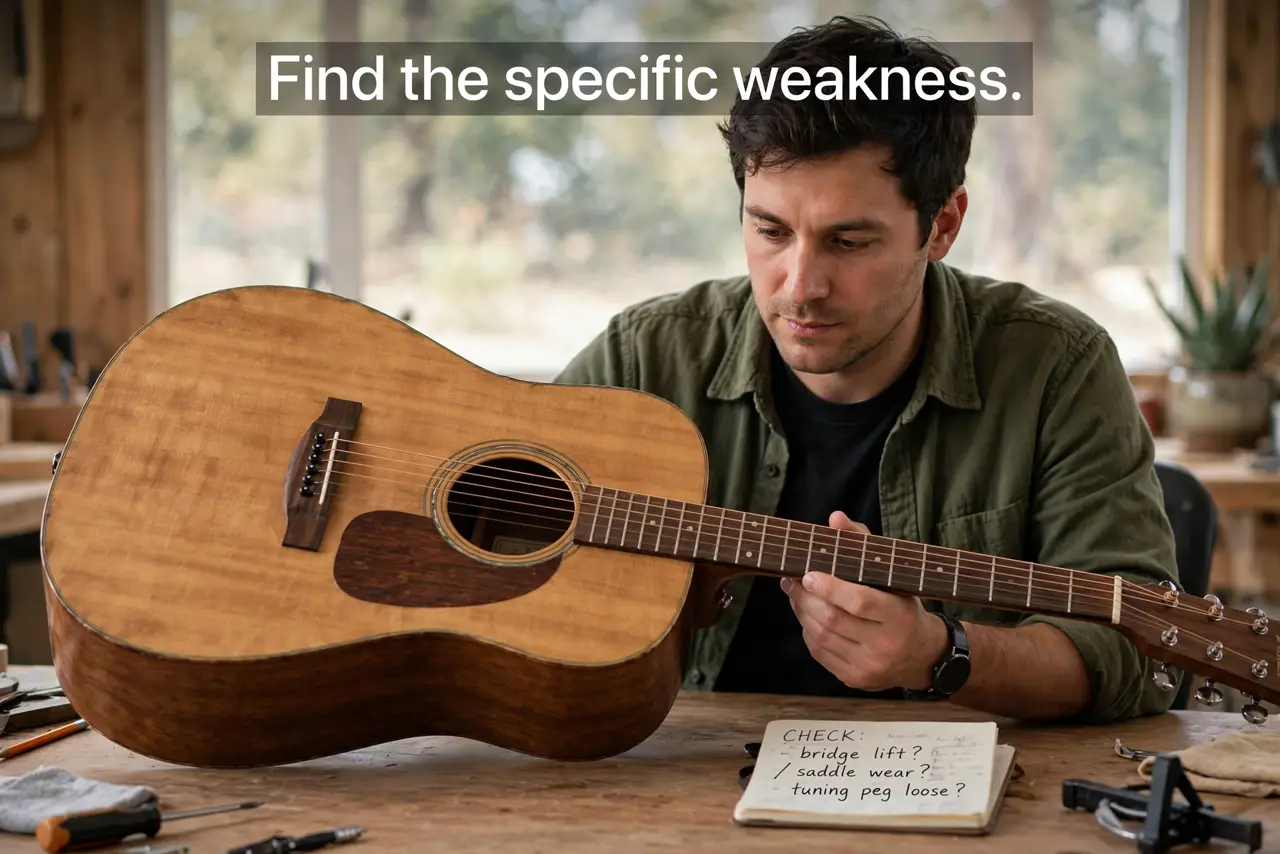
- Find the specific weakness. I need to get better is not a target. Slow chord changes, shaky free throws, fumbling formulas — name the exact failure. Diagnosis is half the practice.
- Design a tiny drill. Build an exercise that isolates the weakness and nothing else: the two chords, the one shot, the one formula type. Small drills allow massive repetition where it counts.
- Practice at the edge. Work at a difficulty where you fail sometimes — not always, not never. The edge of ability is where adaptation happens; comfort zones maintain, edges improve.
- Get immediate feedback. Record yourself, use a mirror, ask a coach, check answers instantly. Delayed feedback lets errors fossilize — the loop must be tight.
- Keep sessions short and focused. Twenty to thirty minutes of true concentration beats two hours of noodling. Deliberate practice is exhausting by design — that fatigue is the signal it worked.
- Track the weakness over weeks. Log the drill and the failure rate. Watching the specific weakness shrink is both motivating and diagnostic — plateaus become visible before they become permanent.
What NOT to do
- Do not practice what you already do well. Comfortable repetition feels productive and changes nothing — the weakness is the workout.
- Do not practice distracted. Half-watching a show while drilling builds half a skill — full attention or reschedule.
- Do not skip feedback. Practice without correction engraves errors deeper — every rep without feedback is a gamble.
- Do not marathon it. Exhausted practice is sloppy practice — stop while the reps are still clean.
Frequently asked questions
How is this different from regular practice?
Regular practice repeats what you know; deliberate practice attacks what you cannot do yet, with feedback. One maintains, the other improves.
How long until the plateau breaks?
Weeks of daily targeted drills, typically — faster than the months of comfortable practice that built the plateau.
Can I do this without a coach?
Yes — recordings, mirrors, and answer keys provide feedback. A coach accelerates it but is not required.