A Meeting Notes Template That Gets Used
Most meeting notes templates die because they ask for too much — and nobody fills in twelve fields after a call. A template that gets used has four sections and takes two minutes. This guide shows the minimal template that actually works.

TL;DR / Quick Fix
Use four sections: decisions, action items with owners and dates, key discussion points, and next meeting. Fill it during the meeting, not after. Share the notes within an hour while the context is fresh. Keep one running document per recurring meeting so history stays in one place.
Follow these steps
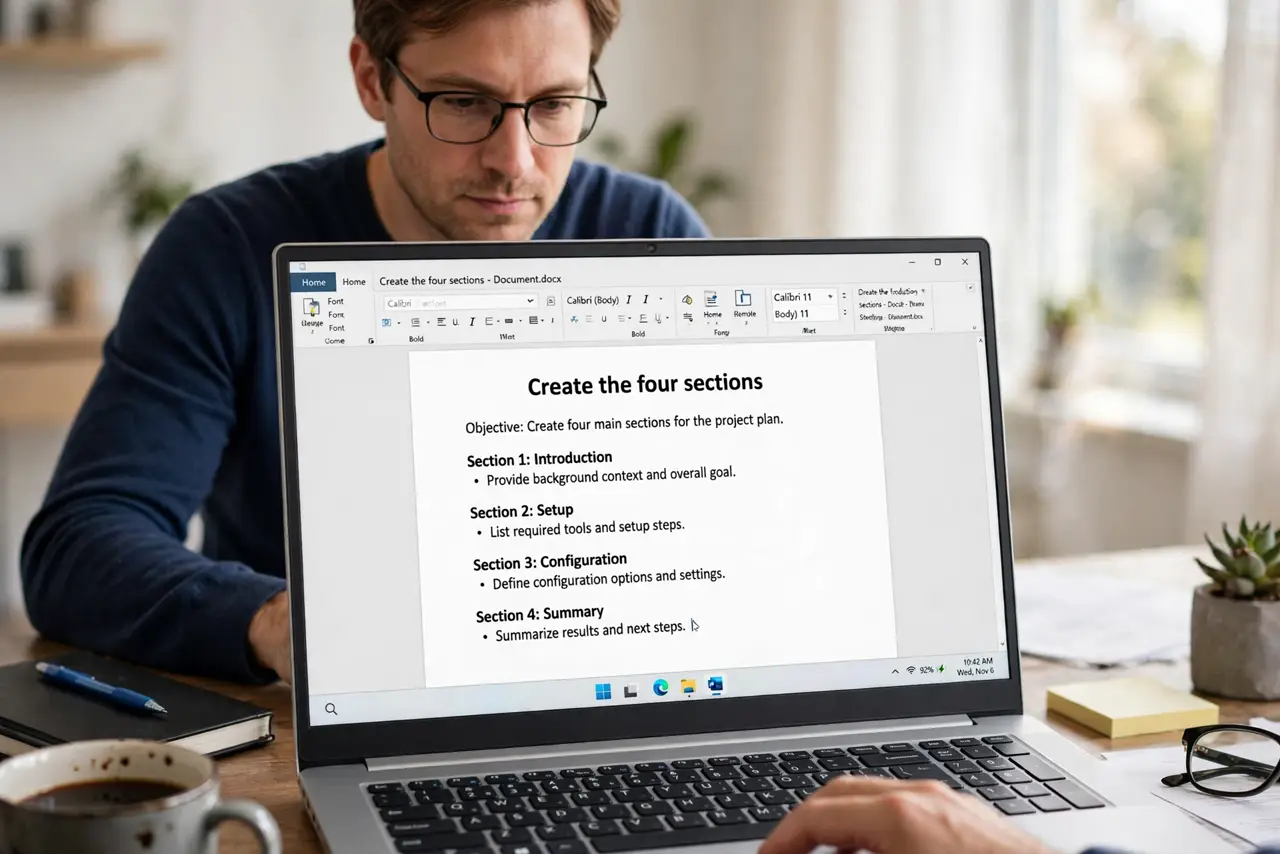
- Create the four sections. Decisions, Action items, Key points, Next meeting. Four sections fit on one screen and take two minutes — the Cornell method is the deeper alternative when you need full study-style notes.
- Assign every action item. Each action item gets an owner and a date, no exceptions. An action item without an owner is a wish.
- Take notes during, not after. Fill the template live in the meeting. Memory after the meeting is a creative writer, not a reporter.
- Record decisions verbatim. Write decisions in exact words, with who decided. Paraphrased decisions get re-debated next week.
- Share within the hour. Send the notes while context is fresh. Same-day notes get read; next-week notes get archived unread.
- Keep one doc per series. Use one running document per recurring meeting with dated sections. Scattered notes across twelve files are notes nobody can find.
What NOT to do
- Do not build a twelve-section template. Complexity is why templates die.
- Do not take notes without owners on action items. Ownerless actions never happen.
- Do not wait until tomorrow to write notes. Tomorrow you will remember the vibe, not the decisions.
- Do not keep notes private. Unshared notes help only the note-taker.
Frequently asked questions
What should meeting notes include?
Decisions, action items with owners and dates, key discussion points, and the next meeting date. Four sections, two minutes.
Should I take notes during or after the meeting?
During. Notes written after rely on memory, which edits generously.
Where should I keep meeting notes?
One running document per recurring meeting, shared with attendees, with dated sections.