Adjust Your Office Chair
Your office chair has levers you have never touched, and they are the difference between ending the day fine and ending it aching. Five minutes of adjustment — height, backrest, armrests — turns an average chair into a genuinely comfortable one. Here is the order to do it in.

TL;DR / Quick Fix
Quick fix: set chair height so feet rest flat with thighs level, adjust the backrest to support your lower back, and set armrests so shoulders stay relaxed. Do height first, then back, then arms. A well-adjusted cheap chair beats a pricey one left on factory settings.
Follow these steps
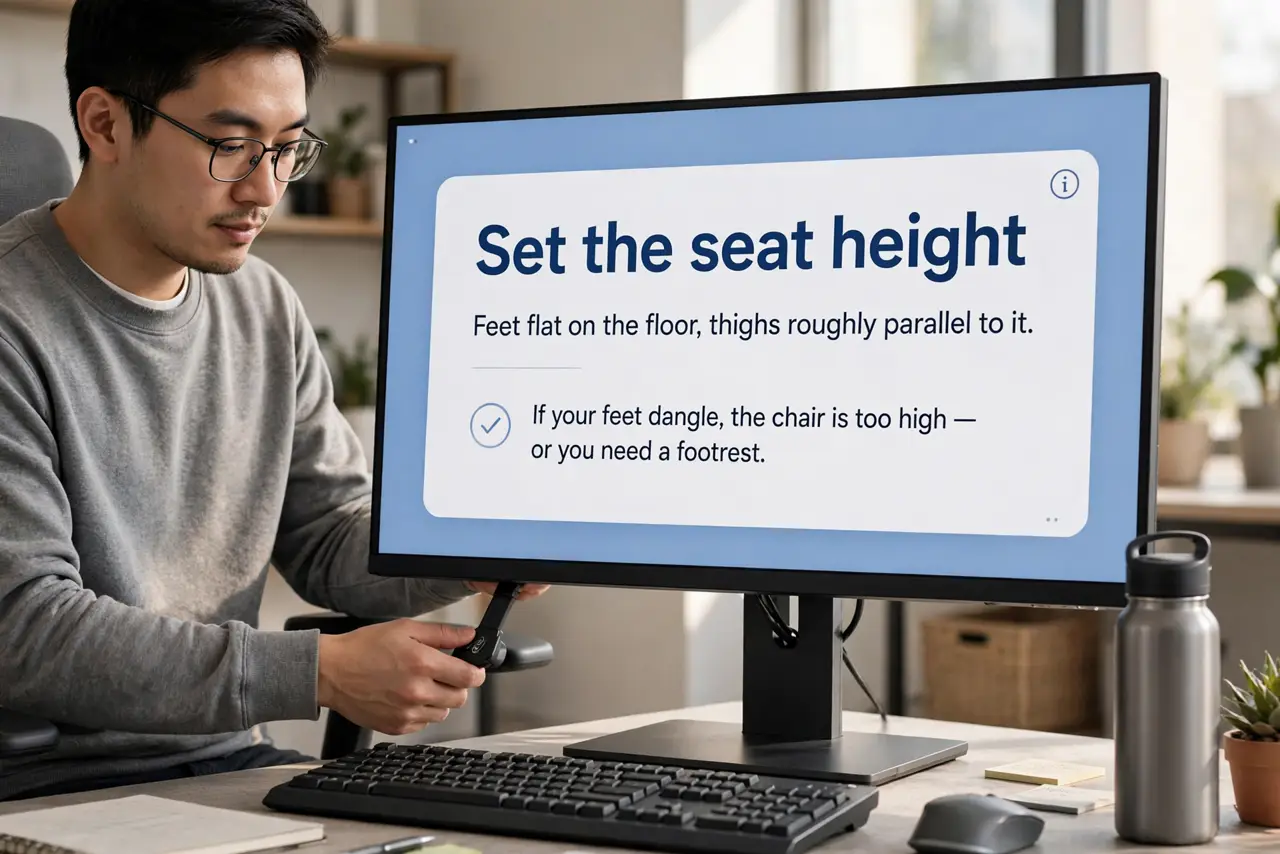
- Set the seat height. Feet flat on the floor, thighs roughly parallel to it. If your feet dangle, the chair is too high — or you need a footrest.
- Adjust seat depth. You want two to three fingers of space between the seat edge and the back of your knees. Too deep and it cuts circulation; too shallow and thighs get no support.
- Dial in lumbar support. The backrest's lumbar bump should sit in the curve of your lower back. Move it up or down until your lower back feels held, not pushed.
- Set the backrest angle. Slightly reclined — around 100 to 110 degrees — beats bolt upright for most people. Lock it where your back feels supported without slouching.
- Position the armrests. Height so shoulders stay down and relaxed, elbows near 90 degrees. Armrests that shove your shoulders up are worse than none.
- Test it for a full day. Sit through a real workday before declaring victory. Small tweaks after real use beat perfect first guesses — pair it with a proper desk setup.
What NOT to do
- Do not skip the lumbar adjustment. It is the most impactful lever and the most commonly ignored.
- Do not set armrests too high. Hunched shoulders all day is a fast track to neck pain.
- Do not leave the tilt locked bolt-upright. A slight recline reduces spinal pressure.
- Do not expect the chair to fix a bad desk. Chair and desk work as a system — height mismatches undo good chair setup.
Frequently asked questions
How do I know the height is right?
Feet flat, thighs level, and you are not shrugging to reach the keyboard. If your desk is fixed, adjust the chair to the desk, not the other way around.
Are expensive chairs worth it?
Adjustability is what you pay for. A mid-range chair with full adjustments, set correctly, outperforms a premium chair left untouched.
Why does my back still hurt?
Check seat depth and lumbar position first — the two most common misses. Persistent pain despite good setup deserves a professional look.