Spot Package Scams
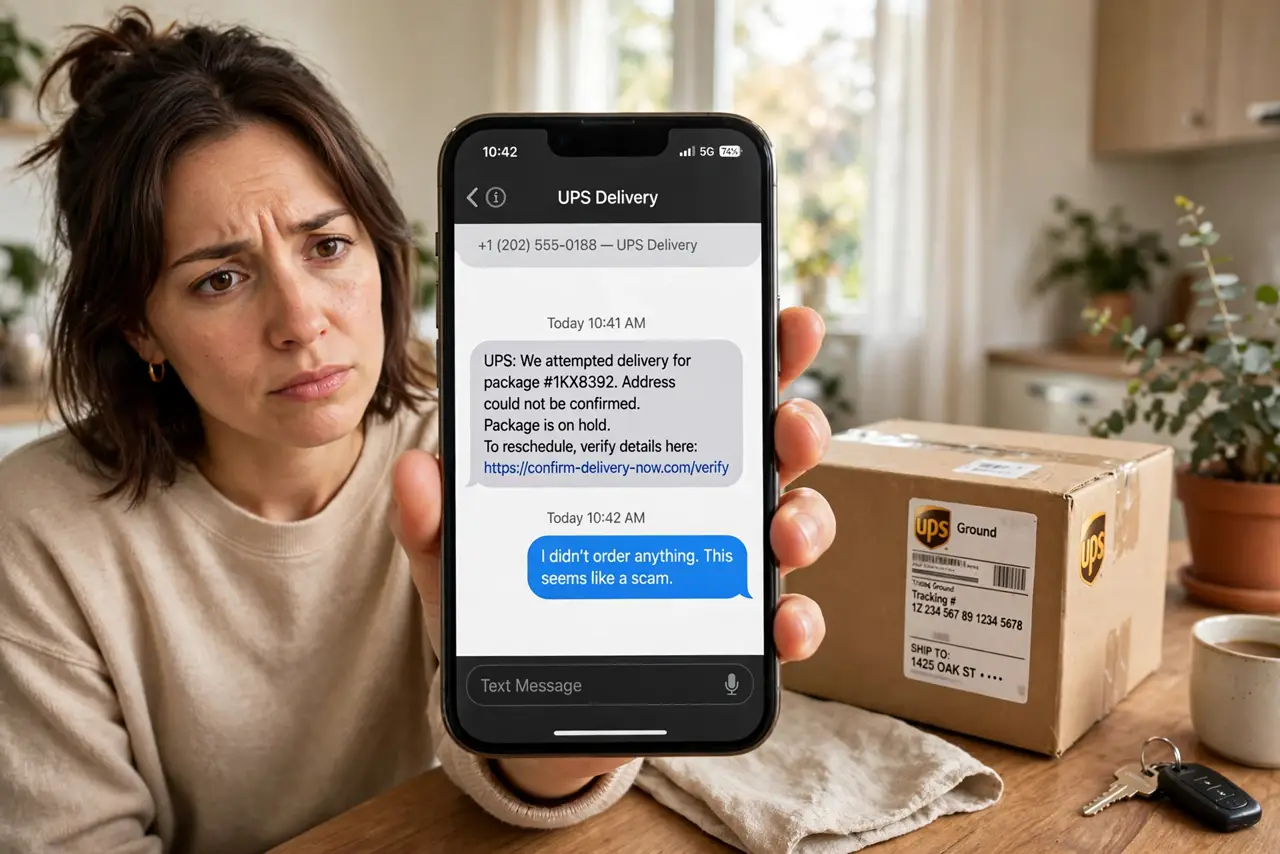
Your package could not be delivered — click here to reschedule. You were not expecting anything, but the text looks official, and the link leads to a page asking for a small redelivery fee and your card details. Package delivery texts are among the most successful scams running, because everyone orders online. This guide shows the tells, the safe way to check a real delivery, and what to do if you clicked. The same criminals run the toll scam texts — learn both patterns.
TL;DR / Quick Fix
Quick fix: real carriers never ask for payment or personal details by text to release a package. Do not click the link — open the carrier's app or type their website yourself and track with your order number. If you entered card details, call your bank immediately.
Follow these steps
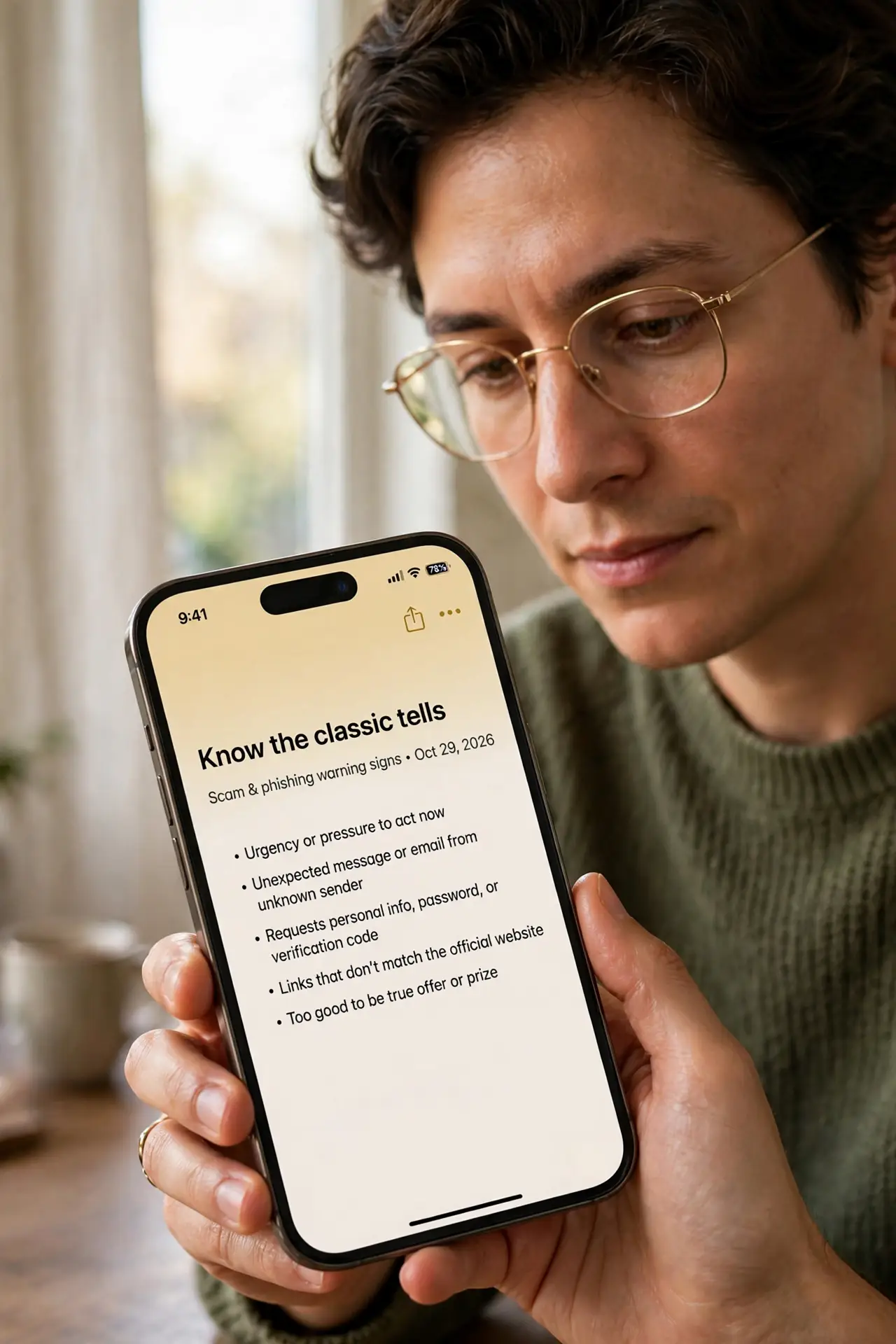
- Know the classic tells. Unexpected package, vague carrier name, urgent deadline, tiny fee to release it, link to a lookalike domain. Real carriers text only if you gave them your number for that shipment — and never demand card details by text.
- Never click the link. The link leads to a phishing page or installs malware. Delete the text. If curiosity burns, the safe check below takes thirty seconds.
- Track through official channels. Open the retailer's app or the carrier's site by typing the address yourself, and track with your real order number. If no package exists there, the text was fake — guaranteed.
- Check the sender. Scam texts come from random mobile numbers or email-to-text addresses. Real carrier alerts come from short codes you recognize — but even those can be spoofed, so the link rule matters more.
- Report it. Forward the text to 7726 (SPAM) in the US. Carriers and investigators use these reports to shut down the campaigns.
- Act fast if you paid. Call your bank or card issuer immediately to dispute the charge and reissue the card. Then run a malware scan if you downloaded anything — and watch for follow-up scam calls.
What NOT to do
- Do not click the link 'just to see.' The page harvests whatever you type and may install malware — curiosity is the attack vector.
- Do not pay a redelivery fee by text link. Legitimate redelivery fees are rare and never collected through surprise texts.
- Do not call the number in the text for 'customer service.' It reaches the scammers, who will happily 'verify' your identity.
- Do not assume you are safe because you were expecting a package. Scammers blast these texts widely; coincidence does the rest.
Frequently asked questions
I clicked but entered nothing — am I safe?
Mostly. Close the page and clear your browser data. The danger starts when you type details or download files — if you did neither, you are fine.
Why do they ask for such a small fee?
A tiny amount feels harmless, which is why people pay. The fee is bait — the real prize is your card number and personal details.
Can I get my money back?
Possibly, if you act fast. Card issuers can dispute fraudulent charges; wire transfers and gift cards are usually gone for good.