Pick a Portable Power Station
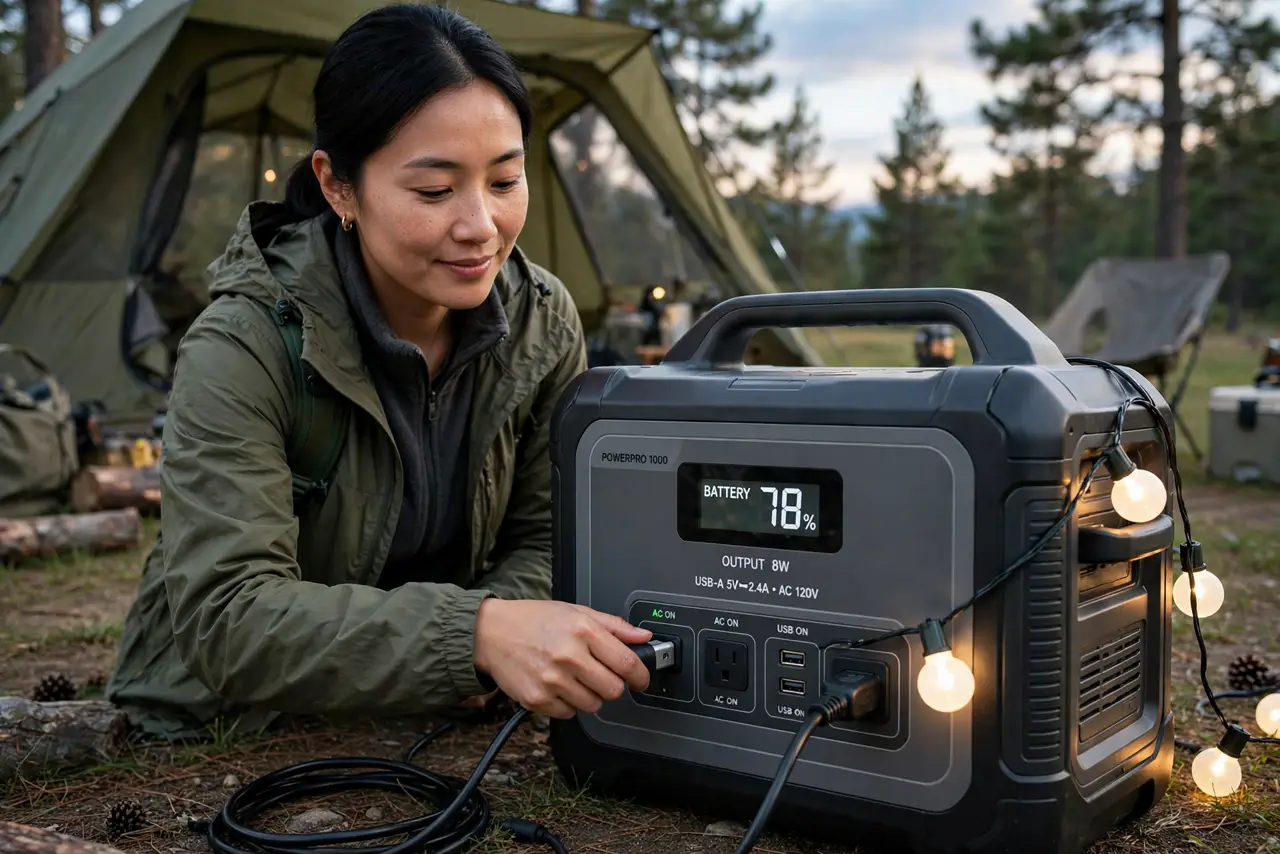
Camping, power outages, or working far from outlets — a portable power station is a big battery with AC outlets that runs fridges, laptops, and lights for hours. But watt-hours, output watts, and solar input get confusing fast, and the wrong size is an expensive paperweight. Here is how to size one right.
TL;DR / Quick Fix
Quick fix: add up the watts of what you will run at once, then pick a station with 20-30% more output and enough watt-hours for your runtime — a 500Wh station runs a 50W fridge about 8-10 hours. For outages go bigger; for camping go lighter.
Follow these steps
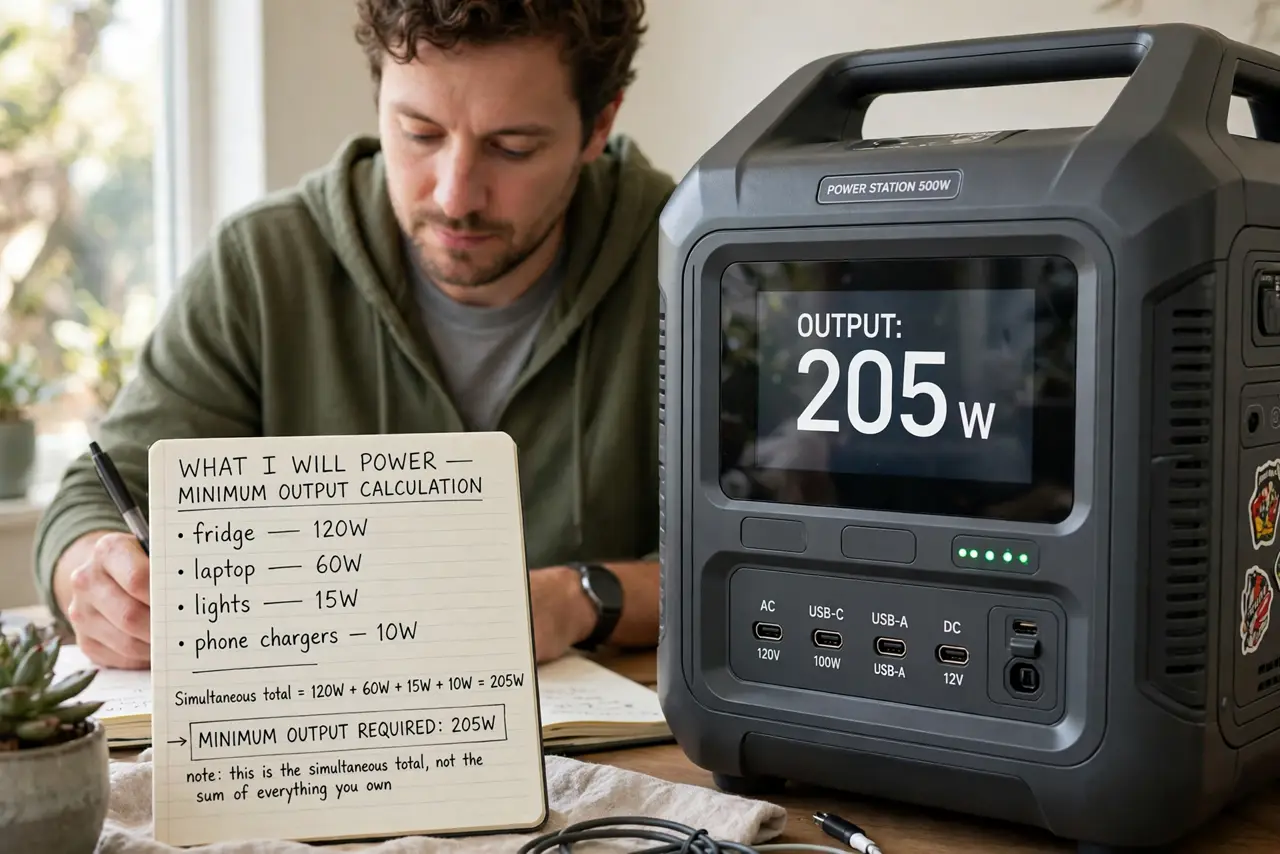
- List what you will power. Write down each device and its watts — fridge, laptop, lights, phone chargers. The simultaneous total is your minimum output requirement, not the sum of everything you own.
- Size watt-hours for runtime. Watt-hours divided by device watts gives rough hours. A 1000Wh station running 100W of gear lasts about 8-9 real-world hours after efficiency losses — do this math before buying.
- Check the output types. You need the right ports: AC outlets for household devices, USB-C PD for laptops, 12V for car-style gear. Count your devices per port type — one AC outlet is not enough for a campsite.
- Consider solar input if outdoors. For multi-day camping, solar recharging extends runtime indefinitely. Check the station's max solar input watts — higher input means meaningful recharging, not trickle.
- Weigh portability honestly. Bigger stations weigh 20-50 pounds. If you will carry it to a campsite, the 'perfect' capacity you cannot lift is useless — match size to your actual carrying.
- Compare recharge speed. A station that recharges from the wall in 1 hour beats one taking 8 when the power flickers back. Fast AC recharging matters most for outage use.
What NOT to do
- Do not buy on watt-hours alone. Output watts decide what you can run at once — a huge battery with weak output cannot start a fridge.
- Do not run high-draw appliances casually. Space heaters and hair dryers drain stations in minutes and can trip the inverter — check surge ratings.
- Do not store it fully charged for months. Lithium batteries prefer 50-80% for storage — full-charge storage degrades capacity over time.
- Do not forget airline limits. Big stations exceed flight battery limits entirely — the plane battery rules explain what can actually fly.
Frequently asked questions
How long will it run my fridge?
Divide watt-hours by the fridge's average watts (not peak) and multiply by 0.85 for efficiency. A 500Wh station and a 50W fridge gives roughly 8 hours.
Can I use it as home backup?
For essentials — fridge, phones, lights, router — yes. For whole-house backup including AC and stoves, you need a installed system, not a portable station.
Is solar charging practical?
For extending camping trips, yes with enough panel watts. As the sole recharge method it is slow — treat solar as a supplement, not the primary charger.