Calm Presentation Nerves
Your heart hammers, your mouth goes dry, and your carefully prepared points evaporate — ten minutes before you present. Stage fright is universal, even among people who do this for a living. The trick isn't eliminating nerves; it's converting the adrenaline into energy and having a plan for the first sixty seconds.
TL;DR / Quick Fix
Quick fix: nerves peak in the minutes before you start, then fade once you are talking. Slow your breathing, arrive early to test the tech, and open with a line you have rehearsed cold. Knowing your first 60 seconds by heart carries you through the worst of it.
Follow these steps
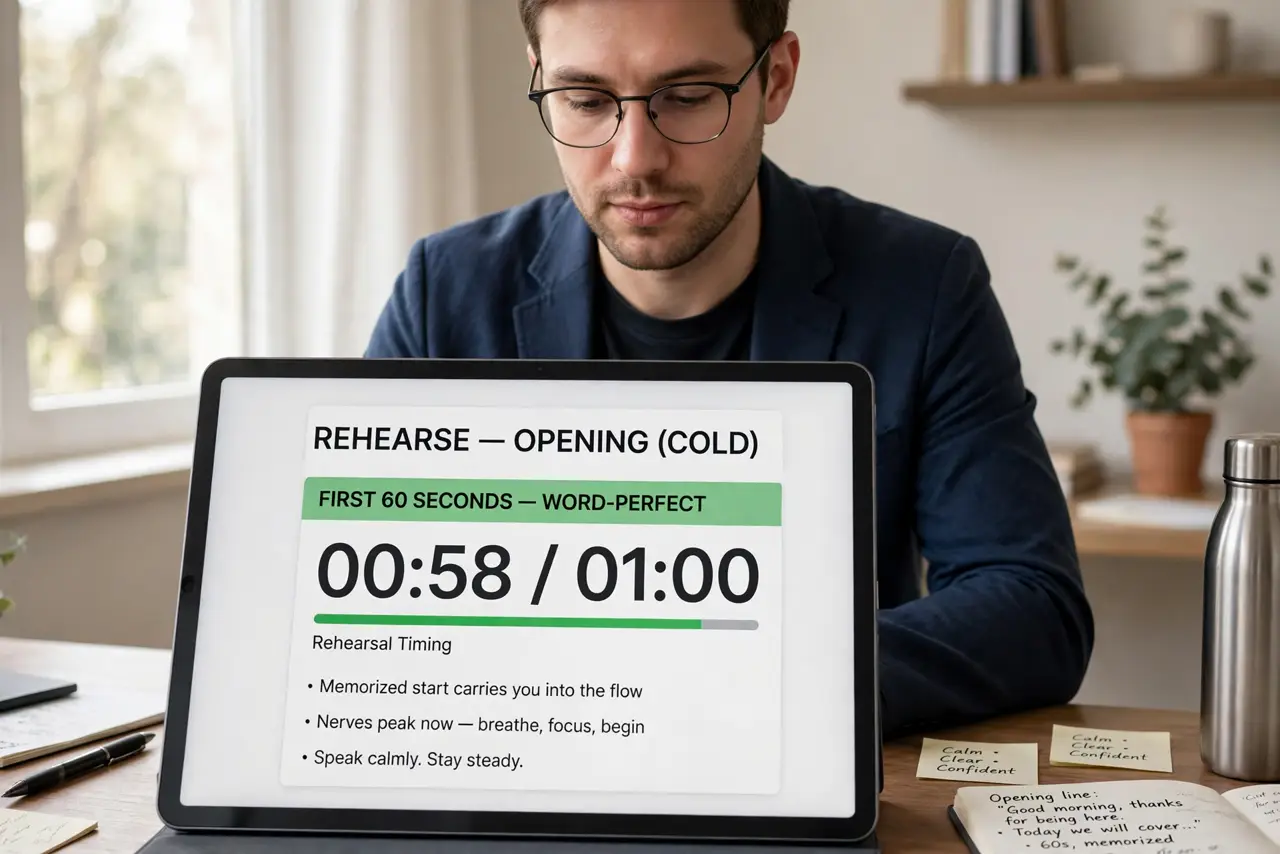
- Rehearse the opening cold. Know your first 60 seconds word-perfect. The opening is where nerves peak — a memorized start carries you into the flow, where the fear fades. See rehearsal timing too.
- Arrive early and test everything. Clicker, slides, projector, mic — test it all before anyone arrives. Tech surprises mid-talk are a top anxiety amplifier, and they're preventable.
- Breathe slowly, not deeply. Slow exhales calm your nervous system; giant gasps can make you dizzy. Four counts in, six counts out, for two minutes before you start.
- Reframe the adrenaline. The shaky energy is your body preparing to perform, not failing. Athletes feel the same thing — tell yourself 'I'm excited', not 'I'm terrified'; it measurably helps.
- Plant friendly faces. Identify two or three friendly faces in the audience and rotate eye contact among them. Presenting to allies feels like conversation, not judgment.
- Have a recovery line ready. Losing your place happens. A calm 'let me come back to that' or a sip of water buys seconds gracefully — the audience forgets instantly.
What NOT to do
- Do not memorize the whole talk word-for-word. A memorized script shatters when you lose your place; memorized *structure* with a cold opening is resilient.
- Do not load up on caffeine beforehand. It amplifies the shakes and the racing heart — water is the better pre-talk drink.
- Do not apologize for being nervous. Announcing it focuses the audience on it; they almost certainly hadn't noticed.
- Do not stare at your slides. The audience reads the slides; they need your face. Glance to advance, then talk to the humans.
Frequently asked questions
Do beta-blockers or calming supplements help?
Some people use them, but that's a medical question for your doctor — not a presentation tip. The techniques here work without side effects.
What if my mind goes completely blank?
Pause, sip water, glance at your notes. Silence feels eternal to you and brief to them — the recovery line from step 6 covers it.
Does it ever go away with experience?
It fades but rarely vanishes entirely — experienced speakers just manage it better. The pre-talk spike stays; the suffering shrinks.