Prevent Tax Identity Theft
Your tax return gets rejected because someone already filed one in your name — and your refund is heading to a thief. Tax identity theft is brutally simple: criminals file early with stolen Social Security numbers and steal refunds. The defenses are equally simple, and they work best before tax season. This guide locks it down.
TL;DR / Quick Fix
Quick fix: the best defense against tax identity theft is filing early and getting an IRS Identity Protection PIN — it blocks anyone else from filing with your number. File before thieves do, guard your Social Security number fiercely, and beware of tax-season phishing posing as the IRS.
Follow these steps
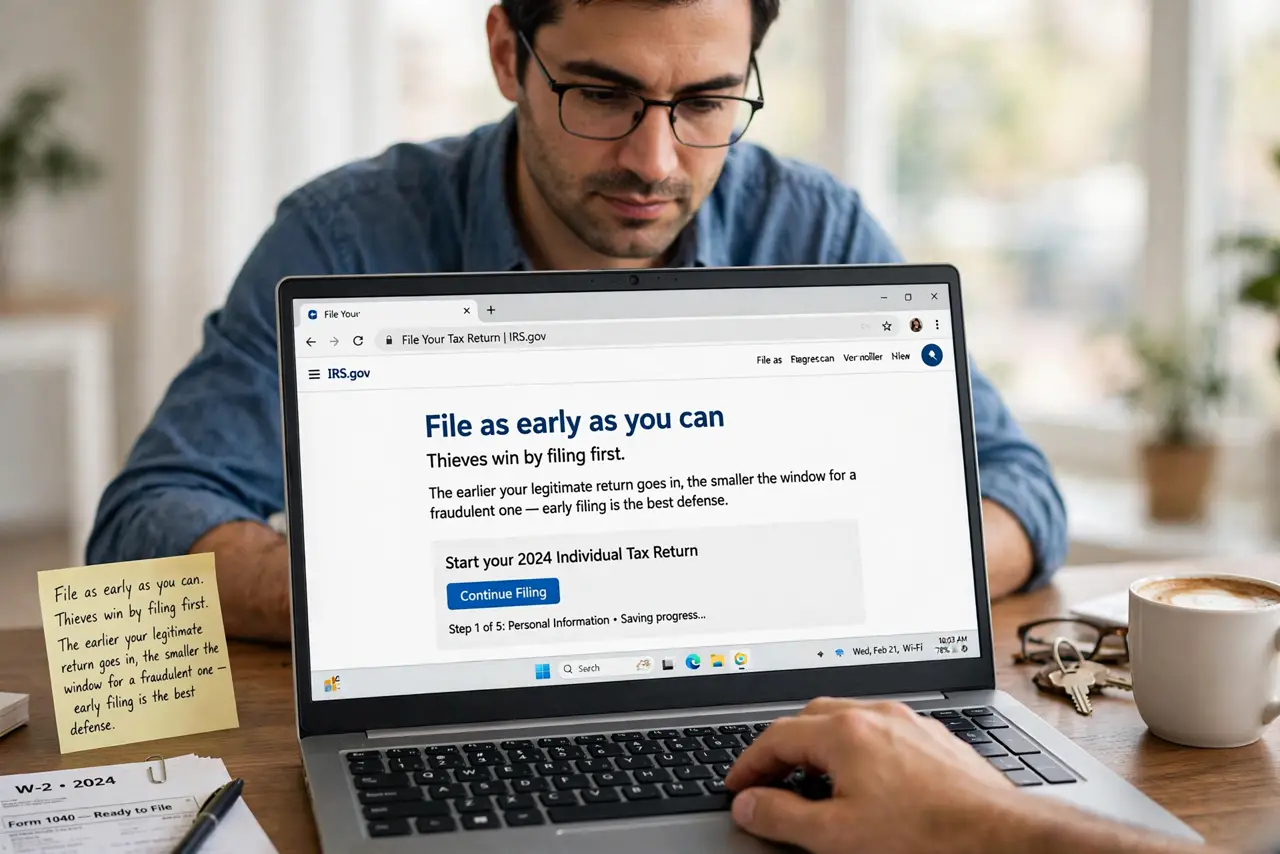
- File as early as you can. Thieves win by filing first. The earlier your legitimate return goes in, the smaller the window for a fraudulent one — early filing is the single most effective timing defense.
- Get an IRS Identity Protection PIN. The IP PIN is a six-digit code the IRS issues you; no return with your number is accepted without it. It is the closest thing to a lock on your tax identity — see the tax return theft guide for the full process.
- Guard your Social Security number. Do not carry the card, do not email the number, and question anyone who asks for it. Most tax identity theft starts with a number leaked or phished long before tax season.
- Beware tax-season phishing. Fake IRS emails, texts about 'your refund,' and shady preparers spike every spring. The IRS does not initiate contact by email or text — treat every such message as hostile until proven otherwise.
- Choose your preparer carefully. A dishonest or careless preparer can expose your data or worse. Check credentials, avoid anyone promising huge refunds or charging by refund size, and never sign a blank return.
- Watch for the warning signs. A rejected e-file, an IRS notice about unreported income from an employer you never had, or a balance due you do not recognize — any of these means act immediately, not after the weekend.
What NOT to do
- Do not wait until April to think about this. The IP PIN and early filing need setup before the rush — procrastination is the thief's best ally.
- Do not email your Social Security number. To anyone, ever — not your preparer, not your spouse. Use secure portals or in-person handoffs.
- Do not trust 'IRS' emails or texts. The IRS mails letters for first contact. Anything digital claiming to be the IRS demanding action is phishing until proven otherwise.
- Do not use a preparer who will not sign. Legitimate preparers sign returns and show credentials — a ghost preparer who vanishes after filing is a classic fraud setup.
Frequently asked questions
What is an IP PIN exactly?
A six-digit Identity Protection PIN from the IRS that must appear on any return filed with your Social Security number. Without it, fraudulent e-files get rejected automatically.
I got a notice about income I never earned. Now what?
Respond to the IRS as instructed, file an identity-theft affidavit, and get an IP PIN. Do not ignore the notice — it is evidence of theft in progress.
Does filing early really help?
Yes — the most common attack is a fraudulent return filed before yours. Once your legitimate return is accepted first, the thief's duplicate gets rejected.