Spot Identity Theft Early
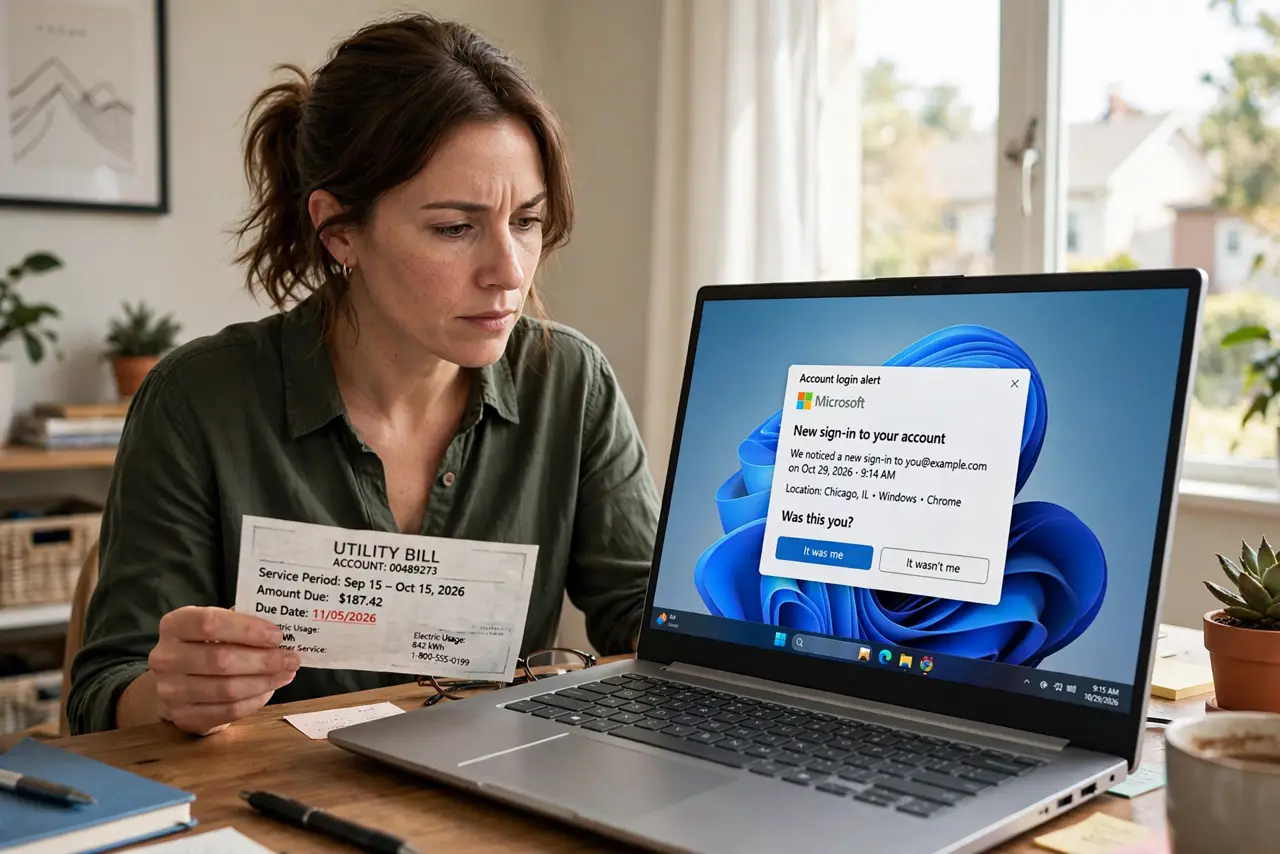
Identity theft rarely announces itself with drama — it whispers. A bill for something you did not buy. A login alert you did not trigger. A tax return rejected because 'you already filed.' Catching these whispers early is everything: hours of cleanup versus months of nightmare. This guide teaches you what to watch for and the exact first moves.
TL;DR / Quick Fix
Quick fix: identity theft shows in small signs — bills for things you did not buy, login alerts you did not trigger, a tax return rejected as already filed. Act fast: freeze your credit, change passwords on hit accounts, file reports. Early action keeps a scare from becoming a disaster.
Follow these steps
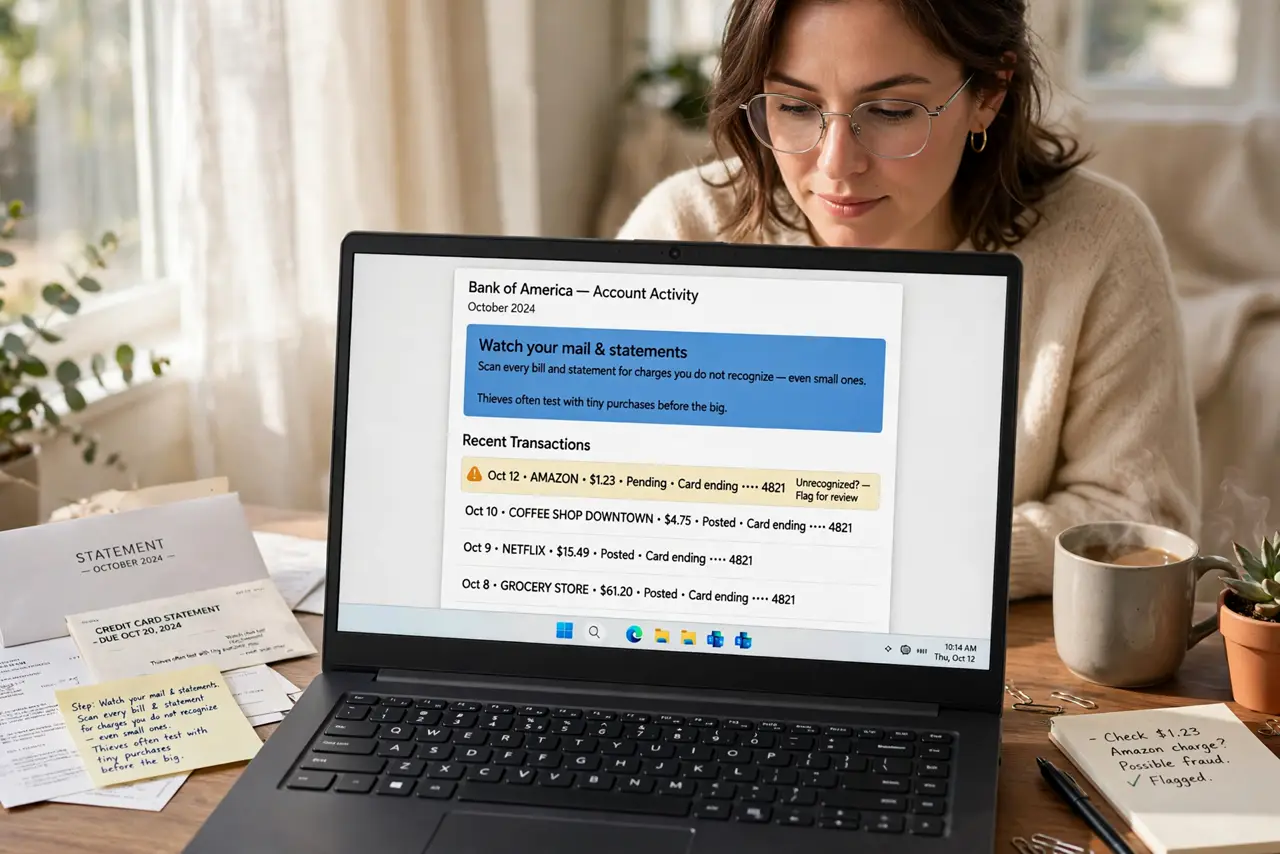
- Watch your mail and statements. Scan every bill and statement for charges you do not recognize — even small ones. Thieves often test with tiny purchases before the big ones; a two-dollar charge you ignore is a rehearsal you missed.
- Take unexpected login alerts seriously. A 'new sign-in' email you did not trigger means someone has your password or is testing it. Change that password immediately and check the account for changes — do not archive the alert.
- Check your credit reports yearly. In the US you can pull each bureau's report free annually. Look for accounts you never opened and inquiries you never authorized — the identity theft response plan starts with knowing what is on your file.
- Treat a rejected tax return as an alarm. If your e-filed return gets rejected as a duplicate, someone filed in your name. This is tax identity theft — act the same day, starting with the IRS identity-theft process.
- Freeze your credit at the first real sign. Confirmed or strongly suspected theft means freezing all three bureaus immediately. It stops new accounts cold while you sort out the existing damage.
- File reports to create a paper trail. Report to the FTC, file a police report for documentation, and notify affected companies. Reports unlock extended fraud alerts and victim protections — and the paper trail matters if disputes drag on.
What NOT to do
- Do not ignore small mystery charges. Test charges precede big fraud — investigating a strange two dollars now beats discovering a maxed card later.
- Do not reuse passwords after a breach. If theft started with a leaked password, every account sharing it is exposed — change them all, starting with email.
- Do not wait to freeze your credit. 'I will do it this weekend' is the gap thieves exploit — freezing takes minutes and works immediately.
- Do not throw away suspicious mail. Keep everything related — bills, notices, envelopes — until the case is resolved; you will need the documentation.
Frequently asked questions
How do I know it is theft and not a mistake?
One odd charge can be a merchant error. A pattern — unfamiliar accounts, multiple alerts, rejected filings — is theft. When in doubt, treat it as theft; the protective steps cost nothing.
Someone opened a card in my name. First move?
Freeze your credit at all three bureaus, then dispute the fraudulent account with the lender and the bureaus. Speed matters more than perfect order.
Can identity theft affect my tax refund?
Yes — thieves file early with your number to steal the refund. An IRS Identity Protection PIN prevents anyone else filing with your number in future years.