Fix Bed Adhesion
Your print peels off the bed halfway through — the classic spaghetti disaster. Bed adhesion is the unglamorous foundation of every successful print: the first layer must grip the bed or nothing else matters. Five fixes solve ninety percent of adhesion failures.
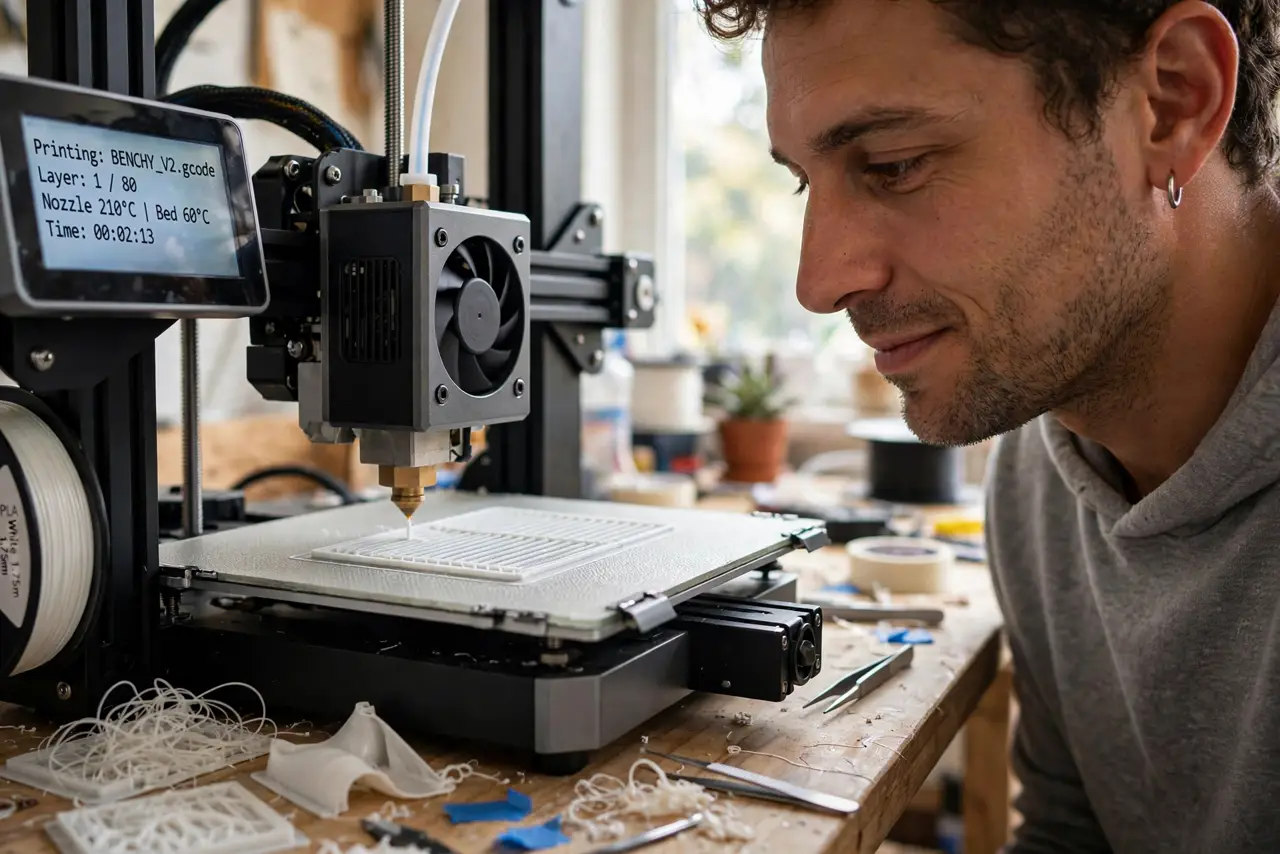
TL;DR / Quick Fix
Quick fix: clean the bed with isopropyl alcohol — fingerprints are the top adhesion killer. Re-level the bed so the first layer squishes slightly. Slow the first layer in the slicer. For stubborn prints, add a brim. If prints still peel, bed temperature or a warped bed is next.
Follow these steps
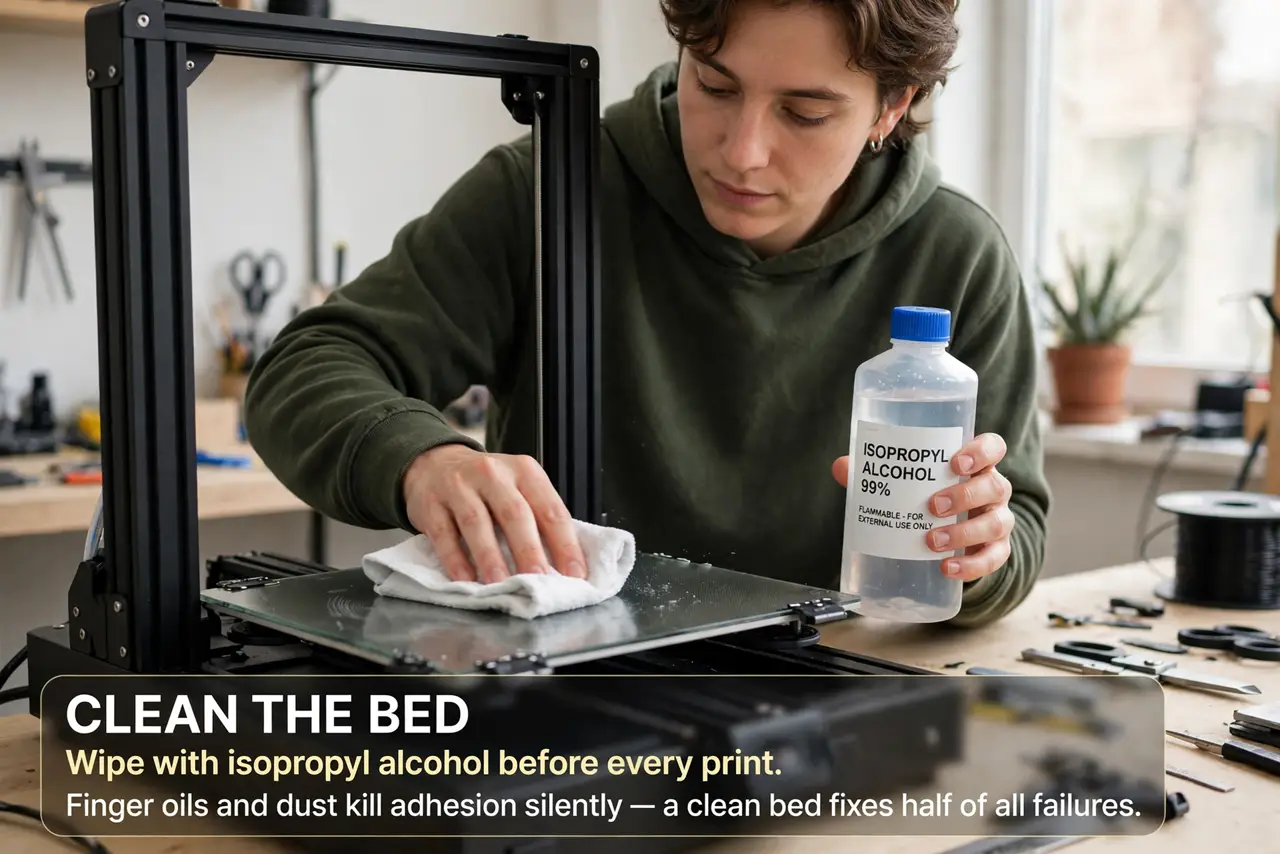
- Clean the bed. Wipe with isopropyl alcohol before every print. Finger oils and dust kill adhesion silently — a clean bed fixes half of all failures.
- Level the bed properly. The nozzle should squish the first layer slightly, not lay it as a round noodle. Paper-test each corner until the drag feels right.
- Slow the first layer. In the slicer, cut first-layer speed dramatically. Slow plastic bonds; fast plastic peels.
- Raise bed temperature slightly. More heat means better grip for most materials. Stay within the filament temperature range — too hot brings other problems.
- Add a brim or raft. A brim widens the footprint; a raft adds a sacrificial base. Both trade a little cleanup for a lot of reliability.
- Check for a warped bed. If the center never sticks while corners do, the bed may be warped. A straightedge reveals it; a glass bed or mesh leveling fixes it.
What NOT to do
- Do not crank the nozzle into the bed. Gouging the surface to force adhesion destroys the bed — level, do not plow.
- Do not skip cleaning between prints. One fingerprint undoes perfect leveling; wipe every time.
- Do not use hairspray on every printer. It works on some beds and ruins others — check your bed type first.
- Do not ignore ambient temperature. Cold drafts warp prints mid-job; shield the printer from windows and vents.
Frequently asked questions
Why does only the corner peel up?
Warping — the plastic shrinks as it cools and lifts the weakest corner. Brims, enclosures, and warmer beds fight it.
Is glue stick safe for the bed?
On glass beds, yes and it helps release too. On specialty coated beds it can damage the coating — check first.
Do I need an enclosure?
For PLA usually not; for ABS and ASA almost always. Enclosures stabilize temperature and kill draft warping.