How Much PSU Wattage?
Too small and the PC crashes under load; too big and you overpaid for capacity you will never use. Picking PSU wattage is simple arithmetic — add up your parts, add headroom, done. Here is the no-nonsense way to size it right the first time.
TL;DR / Quick Fix
Quick fix: add up your CPU and GPU power draw, add 150-200W for everything else, then buy a PSU rated about 30-50% above that total. A mid-range gaming PC usually lands near 550-650W. Bigger is not better — efficiency peaks near half load.
Follow these steps
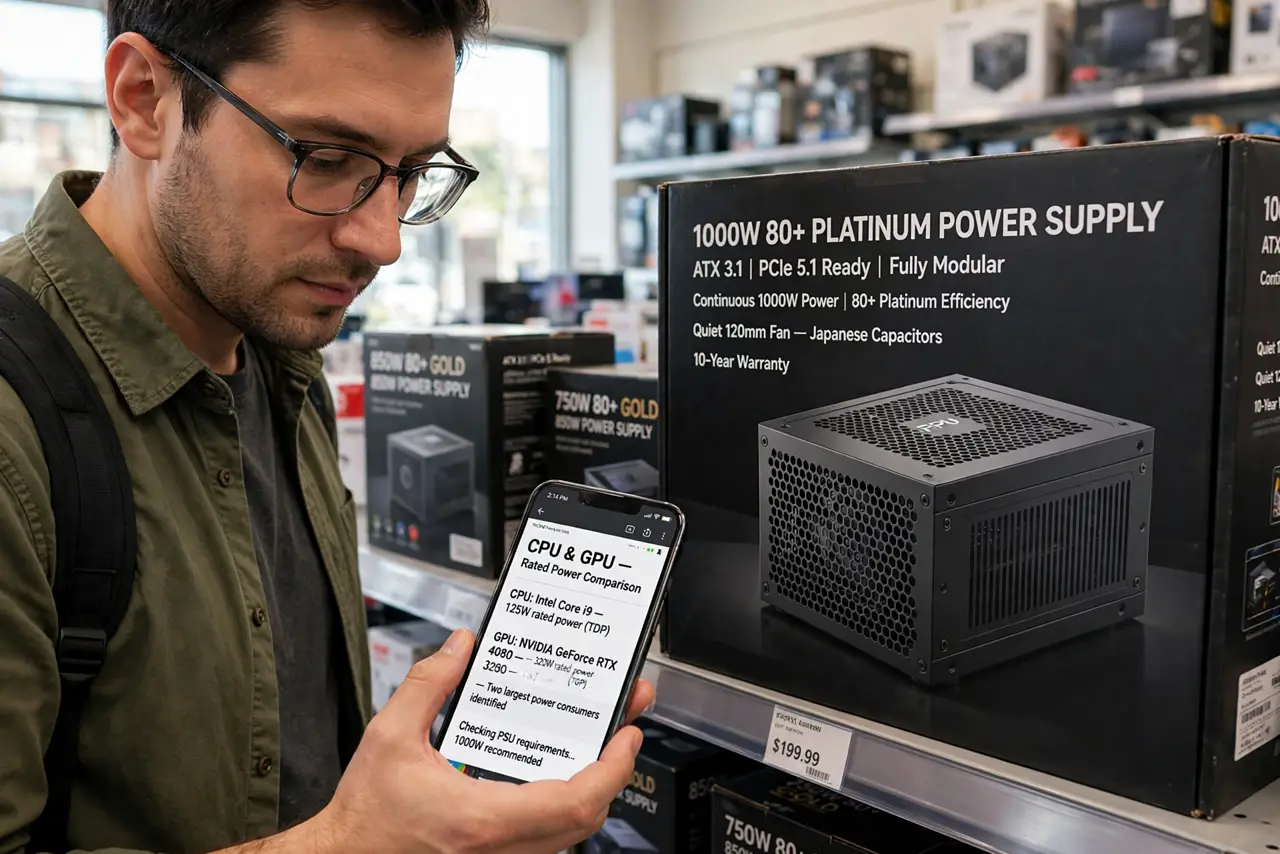
- Find your two big consumers. CPU and GPU draw the vast majority. Check their rated power on the maker's spec pages — everything else is rounding.
- Add the rest generously. Motherboard, drives, fans, RAM, and USB devices: budget 150-200W total. Overestimating here is cheap insurance.
- Add headroom, not double. Aim for a PSU rated 30-50% above your computed total. Headroom covers spikes and keeps the unit in its efficient zone.
- Do not size for upgrades you will not buy. Buying 1000W 'for someday' wastes money today. Size for the build in front of you plus one realistic GPU step.
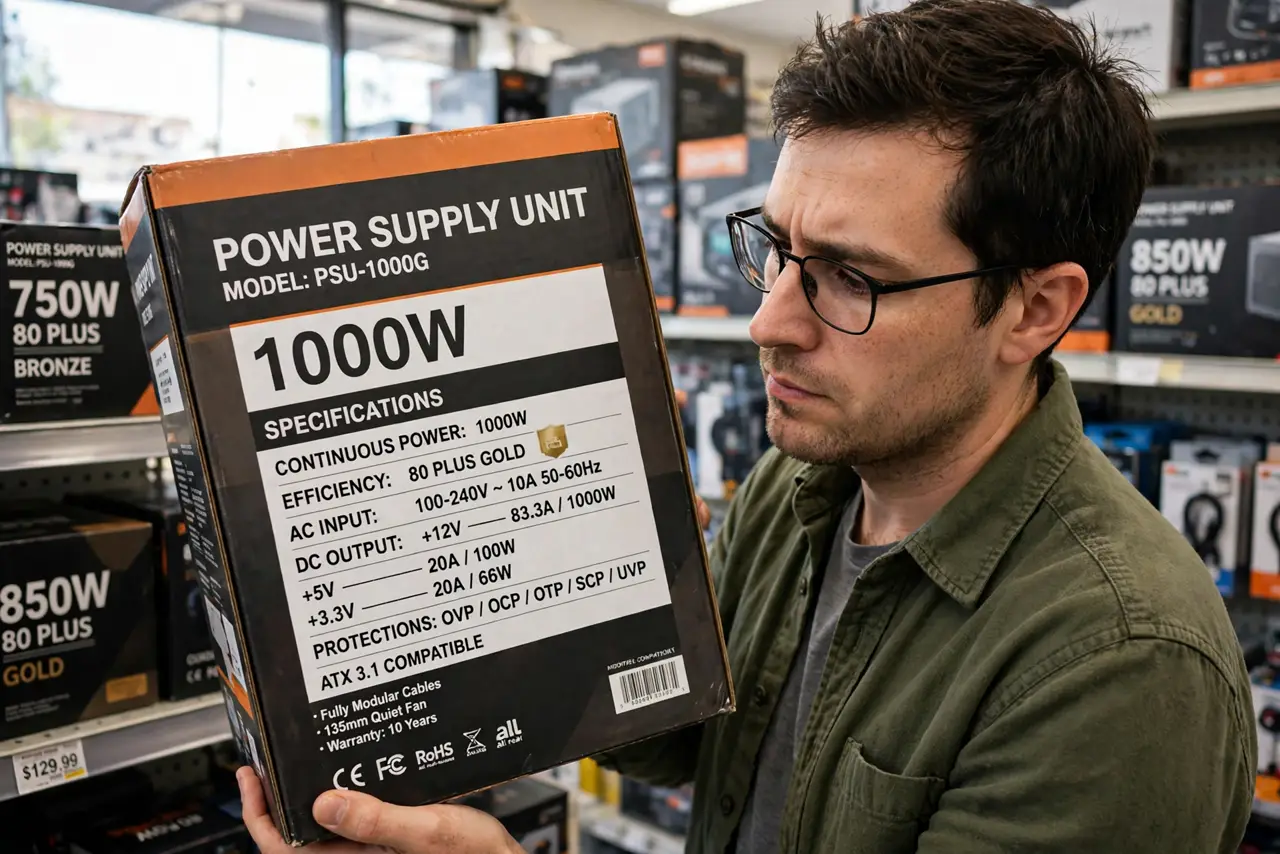
- Check the 12V rail, not just the total. Modern PCs drink from the 12V rail. A PSU's 12V capacity — printed on its label — matters more than the headline wattage.
- Match efficiency to the load. PSUs run most efficiently near half load — another reason right-sizing beats oversizing. See the 80 Plus guide.
What NOT to do
- Do not buy the cheapest PSU at your wattage. A bad PSU can take other parts with it when it fails — quality first, watts second.
- Do not assume more watts means better. An oversized cheap unit is worse than a right-sized good one.
- Do not trust online calculators blindly. They overestimate to sell bigger units — do the simple math yourself.
- Do not reuse a decade-old PSU for a new build. Capacitors age; an old unit cannot reliably deliver its label rating.
Frequently asked questions
What happens if the PSU is too weak?
Crashes and shutdowns under load, worst case. The PC protects itself — but random black screens during gaming are the classic symptom.
Can a PSU be too powerful?
Not dangerously — the PC draws only what it needs. It is just wasted money and slightly worse efficiency at low load.
How much wattage for a basic office PC?
Far less than you think — often under 300W total. A quality 450W unit is plenty for anything without a gaming GPU.