Satellite vs 5G Home Internet?
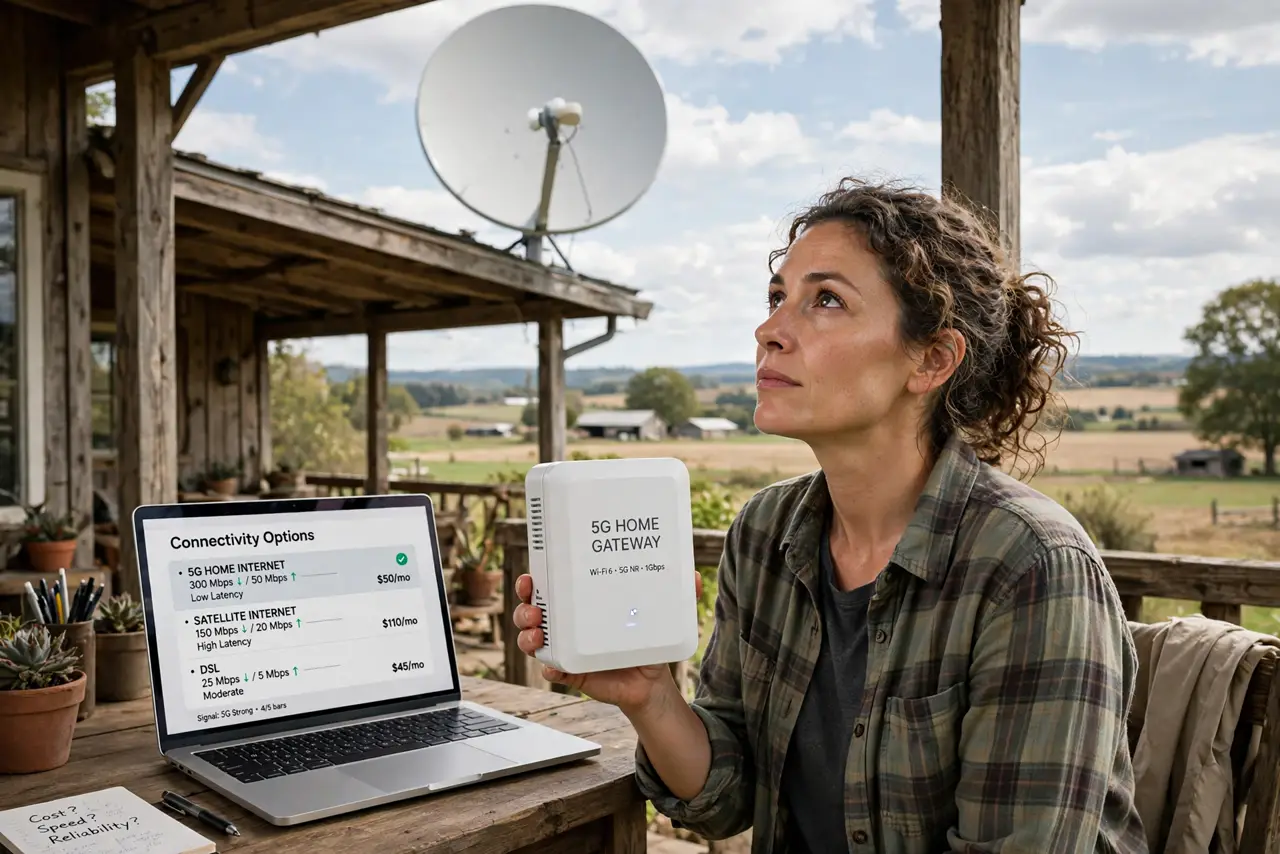
Out past the cable lines, the choice narrows to two: satellite beaming from space, or a 5G home gateway pulling signal from a cell tower. Both promise broadband where wires do not reach, but they fail in completely different ways. Here is how they actually compare for rural homes.
TL;DR / Quick Fix
Quick fix: 5G home internet wins where the cell signal is strong — lower latency, no dish, cheaper. Satellite wins where there is no usable cell signal, since it works anywhere with sky view. Test your signal first: two bars of 5G means the gateway wins.
Follow these steps
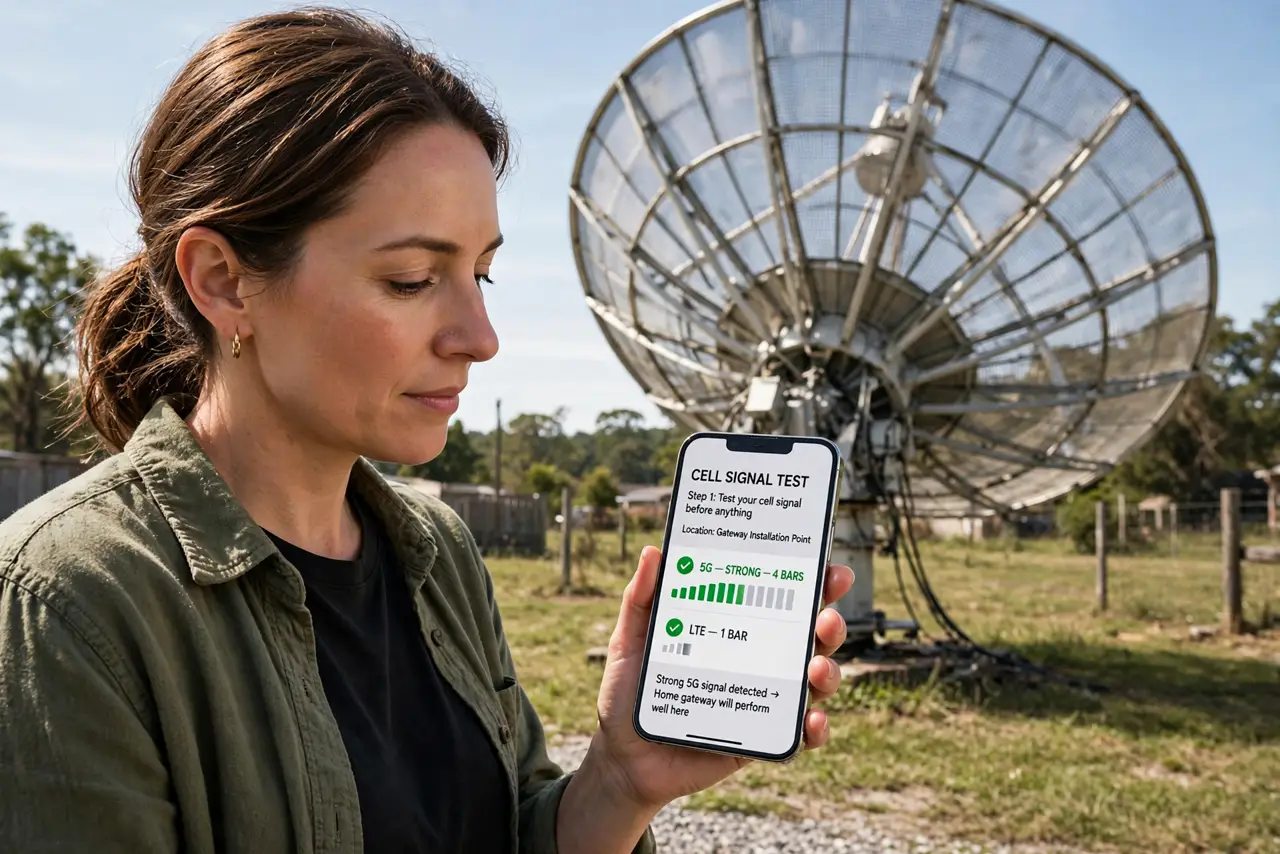
- Test your cell signal before anything. Put your phone where the gateway would sit and check the signal. Strong 5G means the home gateway will likely fly; one bar of LTE means it will crawl — the satellite basics route is then the fallback.
- Understand the latency gap. Satellite signals travel to space and back, so latency runs several times higher than 5G. Video calls and online gaming feel the difference; streaming and browsing barely notice.
- Compare the real monthly costs. 5G home plans are usually flat-rate with no equipment purchase; satellite often involves buying the dish kit plus the subscription. Price two years, not the intro offer.
- Check data policies. Some satellite plans throttle or deprioritize after a data threshold; most 5G home plans are effectively unlimited but can slow in congested areas. Read the fine print on both.
- Think about weather and obstructions. Satellite needs clear sky — heavy storms and tree cover degrade it. 5G needs tower line-of-sight and struggles with distance; hills between you and the tower hurt.
- Consider the 5G gaming caveat. Casual gaming works on both, but competitive gaming wants the lower latency of 5G — see the 5G home gaming notes before assuming either is fine for ranked play.
What to avoid
- Do not order satellite without checking the sky view. Trees and buildings blocking the dish's view cause dropouts no support call can fix.
- Do not assume 5G home internet equals phone 5G speed. The gateway shares tower capacity with every phone nearby — evening congestion is real.
- Do not sign long satellite contracts blindly. Equipment costs plus early-termination fees make switching expensive — trial periods matter here.
- Do not mount the dish yourself on a sketchy roof. A misaligned dish performs terribly; professional installation pays for itself in reliability.
Frequently asked questions
Can I use satellite internet for video calls?
Yes, modern low-orbit satellite handles calls acceptably for most people. Expect slightly higher delay than terrestrial — fine for meetings, noticeable for fast conversation.
Is 5G home internet truly unlimited?
Most plans have no hard cap, but deprioritization during congestion is common. It is unlimited the way a highway is unlimited — speed varies with traffic.
What about storms knocking out satellite?
Heavy rain and snow degrade the signal temporarily. Modern dishes handle light weather fine; severe storms cause brief outages.