Free VPNs? The Catch
A VPN that costs nothing sounds like a bargain — until you ask how the servers get paid for. Running a VPN network costs real money every month, so free providers monetize somehow: data logging and selling, injected ads, bandwidth limits that push you to paid tiers, or outright malware in shady cases. Here is the honest breakdown of the catch.
TL;DR / Quick Fix
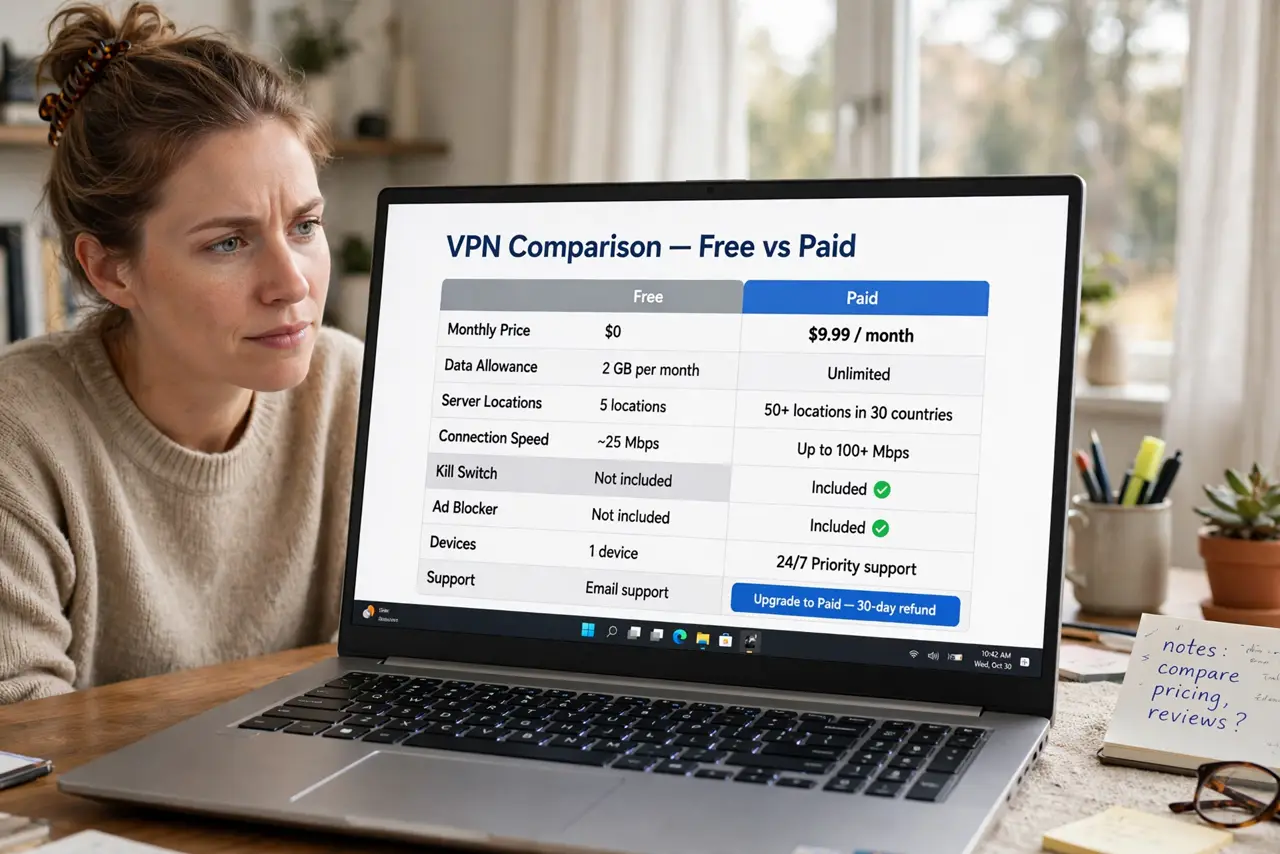
Quick fix: free VPNs pay their bills somehow — usually by logging and selling your data, showing ads, or capping you to upsell. A paid VPN costs a few dollars a month and is the actual privacy product. If you must use free, pick a known provider's limited free tier.
Follow these steps
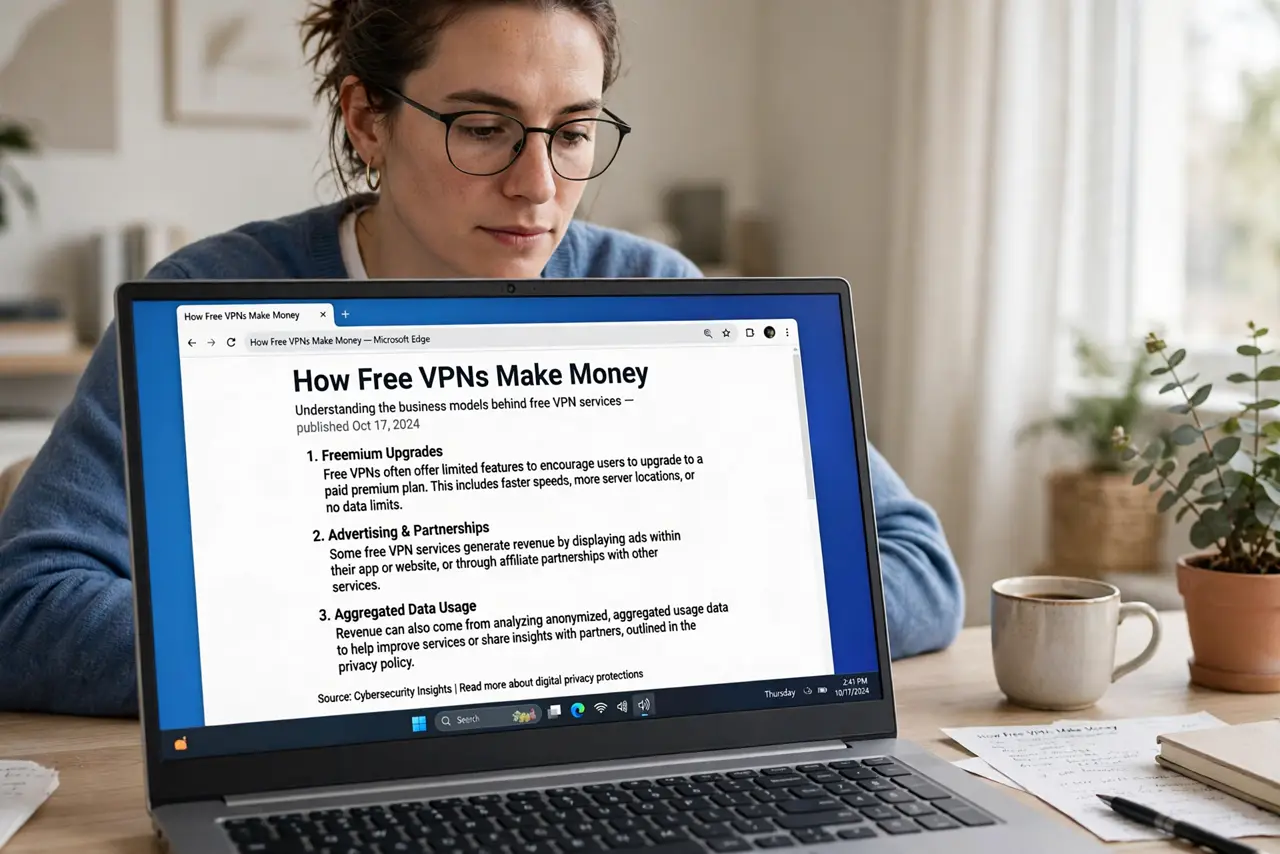
- Follow the money. VPN servers, bandwidth, and staff cost real money monthly. A free VPN's revenue comes from somewhere — your data, your attention (ads), or your future subscription (upsell). 'Free' just moves the price tag somewhere you cannot see it.
- Know the data-selling risk. The worst free VPNs log your browsing and sell it to advertisers and data brokers — the exact surveillance you installed the VPN to escape. Independent investigations have caught big-name free VPNs doing exactly this.
- Recognize the upsell model. Some reputable paid VPNs offer limited free tiers — slow speeds, few servers, data caps — as marketing. These are the only free VPNs worth touching: the company makes money from paying customers, not from you.
- Check the permissions. A free VPN app asking for contacts, location, or device admin rights is harvesting, not protecting. A VPN needs network permission — nothing else. See the free VPN risks rundown for documented cases.
- Understand what 'free' cannot buy. No-logs policies, independent audits, and fast servers all cost money. A free service promising all three is promising what it cannot afford — believe the economics, not the landing page.
- Budget the real alternative. A trustworthy paid VPN runs a few dollars a month — less than streaming. If privacy matters enough to install a VPN, it matters enough to pay for one. Learn the VPN basics to choose well.
What NOT to do
- Do not install a random free VPN from an app store. Unknown free VPNs are among the most data-hungry apps in existence.
- Do not believe '100% free, no logs, unlimited' claims. The economics do not work — something is being sold, and it is you.
- Do not grant a VPN app extra permissions. Network access is all it needs — contacts and location requests are red flags.
- Do not use a free VPN for sensitive logins. Banking over a data-harvesting VPN is worse than banking over plain café Wi-Fi.
Frequently asked questions
Are ALL free VPNs bad?
No — limited free tiers from reputable paid providers are legitimate marketing. Unknown 'completely free forever' VPNs are the dangerous ones.
What about free VPNs built into browsers?
Better than shady apps but limited — they usually protect only browser traffic, not your other apps. Fine as a supplement, not a replacement.
Can a free VPN give me malware?
The app itself occasionally, in the worst cases — but the common harm is silent data harvesting, not dramatic viruses.