'Grandma, It's Me' Call? Verify
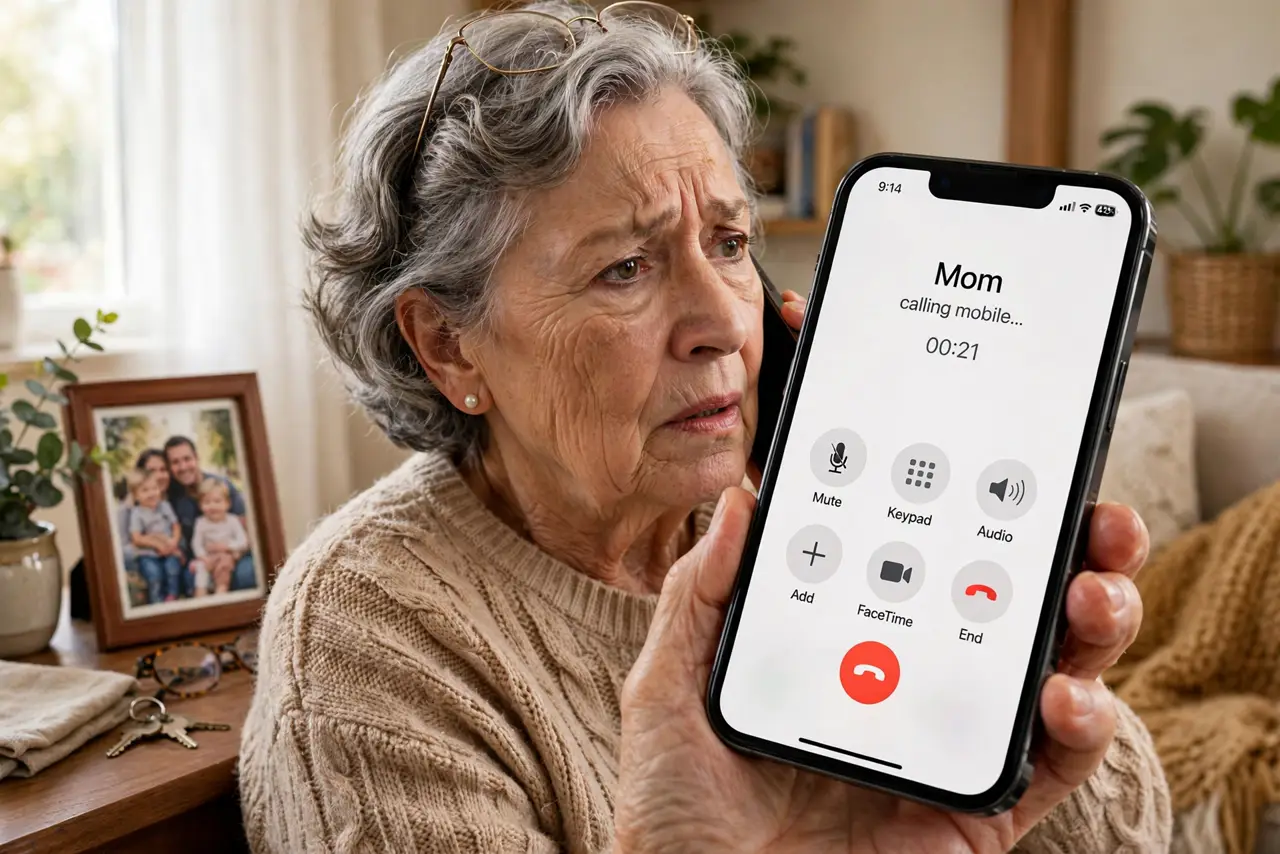
'Grandma, it's me — I'm in trouble, please don't tell mom.' The voice sounds right, the panic feels real, and the request is always the same: money, fast, secretly. Sometimes it is AI cloning a grandchild's voice. Whether human or synthetic, the defense is identical: verify before you pay.
TL;DR / Quick Fix
Quick fix: do not send money on an urgent call, even if the voice sounds right — hang up and call your grandchild's known number directly. Agree on a family code word in advance for real emergencies. Scammers forbid telling anyone; that secrecy is the proof it is fake.
Follow these steps
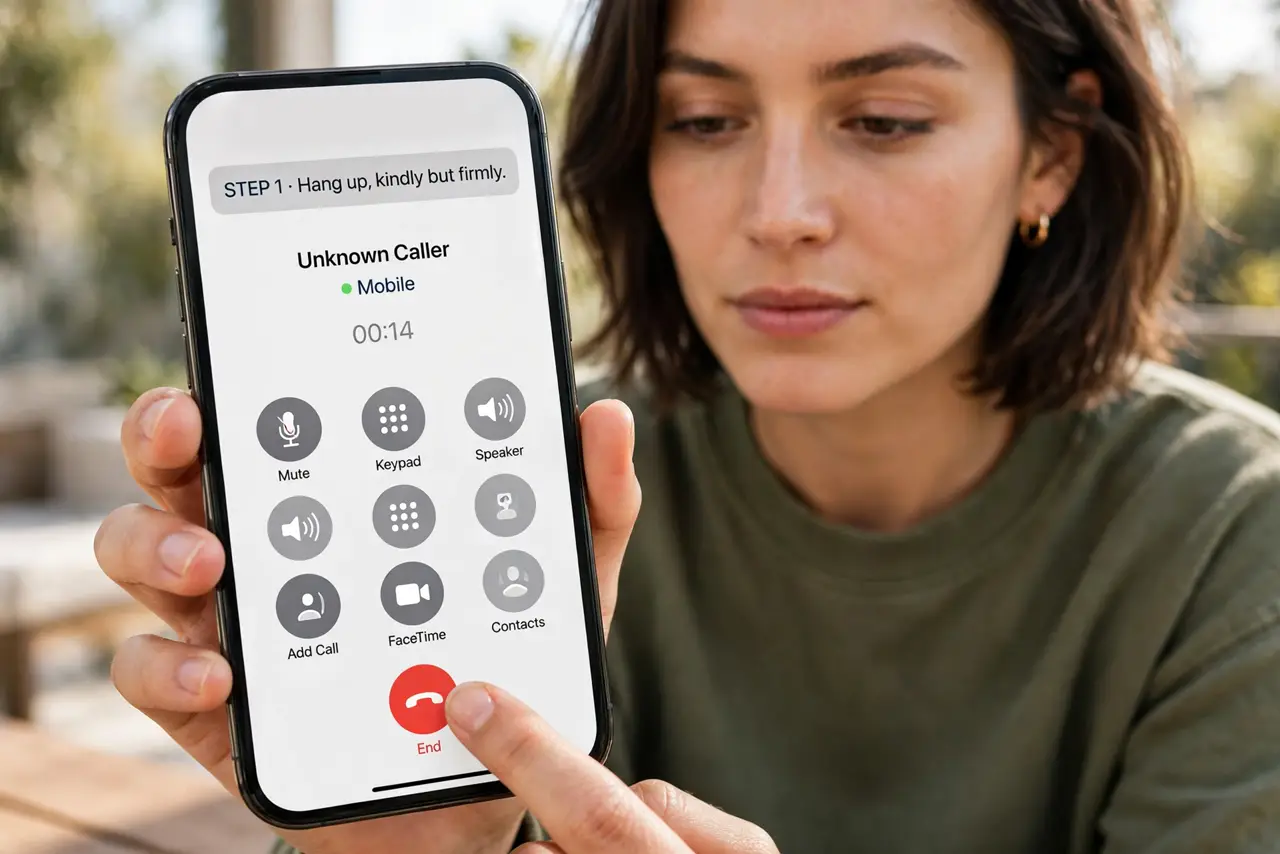
- Hang up, kindly but firmly. Say you love them, hang up, and call right back on the known number. A real grandchild in trouble wants you to verify; only a scammer needs you not to.
- Call the known number. Dial the grandchild's actual number — not any number the caller gave you. If they answer normally, the emergency never existed. See spoofed caller ID for why the screen lied.
- Ask a question only they know. If you reach voicemail, try family: ask something personal. Scammers fail personal trivia — though note AI voice clones can now mimic voices, so this is step two, not the whole defense.
- Set a family code word now. Agree in calm times: any real emergency call includes the code word. No word, no money — simple enough for everyone to enforce.
- Never send money secretly. 'Don't tell mom and dad' is the scammer's shield. Real emergencies survive family involvement; scams do not.
- Report the attempt. Report to local police and the fraud agency in your country. Grandparent scams are serial — your report may match an active case.
What NOT to do
- Do not trust the voice alone. AI cloning needs only seconds of audio — a voicemail greeting or a social video suffices.
- Do not send gift cards, wire transfers, or crypto. Those are the scammer's payment rails precisely because they are irreversible.
- Do not keep it secret 'as asked.' The secrecy request is the scam's load-bearing wall — knock it down by telling family.
- Do not feel foolish for almost believing. The panic is engineered; smart, loving people fall for it daily.
Frequently asked questions
Can AI really clone a voice?
Yes — convincingly, from short samples. That is why voice alone no longer verifies identity, and why the callback-plus-code-word system matters.
What if the caller knew family details?
Details leak from social media and breaches. Knowing names proves research, not identity — verification still goes through the known number.
My grandparent already sent money — now what?
Call the bank or wire service immediately to attempt a recall, file a police report, and report to the fraud agency. Speed matters; then set up the code word for next time.