Spoofed Caller ID? How It Works
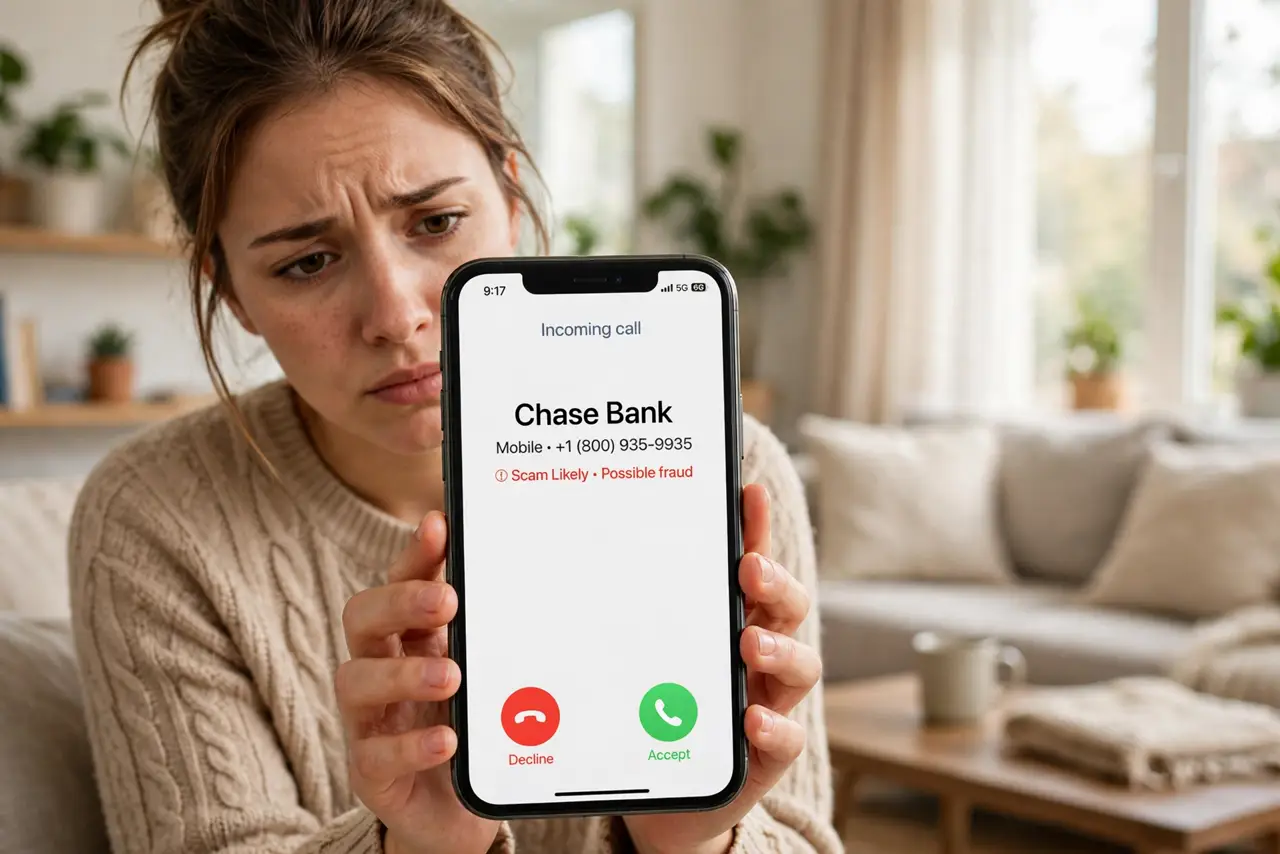
Your phone shows your bank's name — or a local number, or even your own number — but the caller is a scammer in another country. Caller ID was never designed as security; it is a claim the caller makes about themselves, and faking it costs pennies. Here is how it works and the one habit that defeats it.
TL;DR / Quick Fix
Quick fix: treat caller ID as a suggestion, not proof — anyone can fake any number. If a caller claims to be your bank or an agency, hang up and call back on a number you trust. Never give codes, passwords, or remote access to an inbound caller.
Follow these steps
- Learn why it is fakeable. Caller ID is self-reported by the calling system — like the return address on an envelope. Internet calling tools let anyone set any number or name for almost nothing.
- Know the favorite disguises. Your bank, the tax agency, a local number like yours, even your own number. Familiarity lowers your guard — that is precisely why scammers pick these.
- Hang up on inbound claims. Bank calling about fraud? Agency demanding payment? Hang up. You lose nothing real — legitimate callers leave messages and accept callbacks. See bank call verification.
- Call back on a trusted number. Use the number on your card, your statement, or the official site. An inbound call is a claim; an outbound call you placed is a connection.
- Never authenticate to an inbound caller. Codes, passwords, 'confirm your identity' — none of it goes to someone who called you. Real institutions do not work that way; see spoofed local numbers.
- Use call screening tools. Your phone's spam screening and carrier's scam blocking catch many spoofed calls before they ring. Enable both — they are free and silent.
What NOT to do
- Do not trust the name on the screen. It is the easiest part to fake and the part everyone trusts most.
- Do not stay on the line 'to be polite.' Politeness is the scammer's favorite exploit — hang up cheerfully.
- Do not call back the number that called you. Spoofed inbound, scammer outbound — the round trip stays in their hands.
- Do not give remote access to any inbound caller. That ask belongs to the refund scam family, whatever the caller ID says.
Frequently asked questions
Is spoofing caller ID illegal?
Spoofing to defraud is illegal in most countries — but the callers operate from abroad, beyond easy reach. Defense beats prosecution here.
Can my carrier stop spoofed calls?
Partially. Authentication standards are rolling out and carriers offer scam blocking — enable them, but keep the hang-up habit as your real defense.
What if it shows my own number?
That is a known spoofing trick to spark curiosity. Nobody legitimate calls you from your own number — do not answer.