Fake Delivery Texts? The Scam
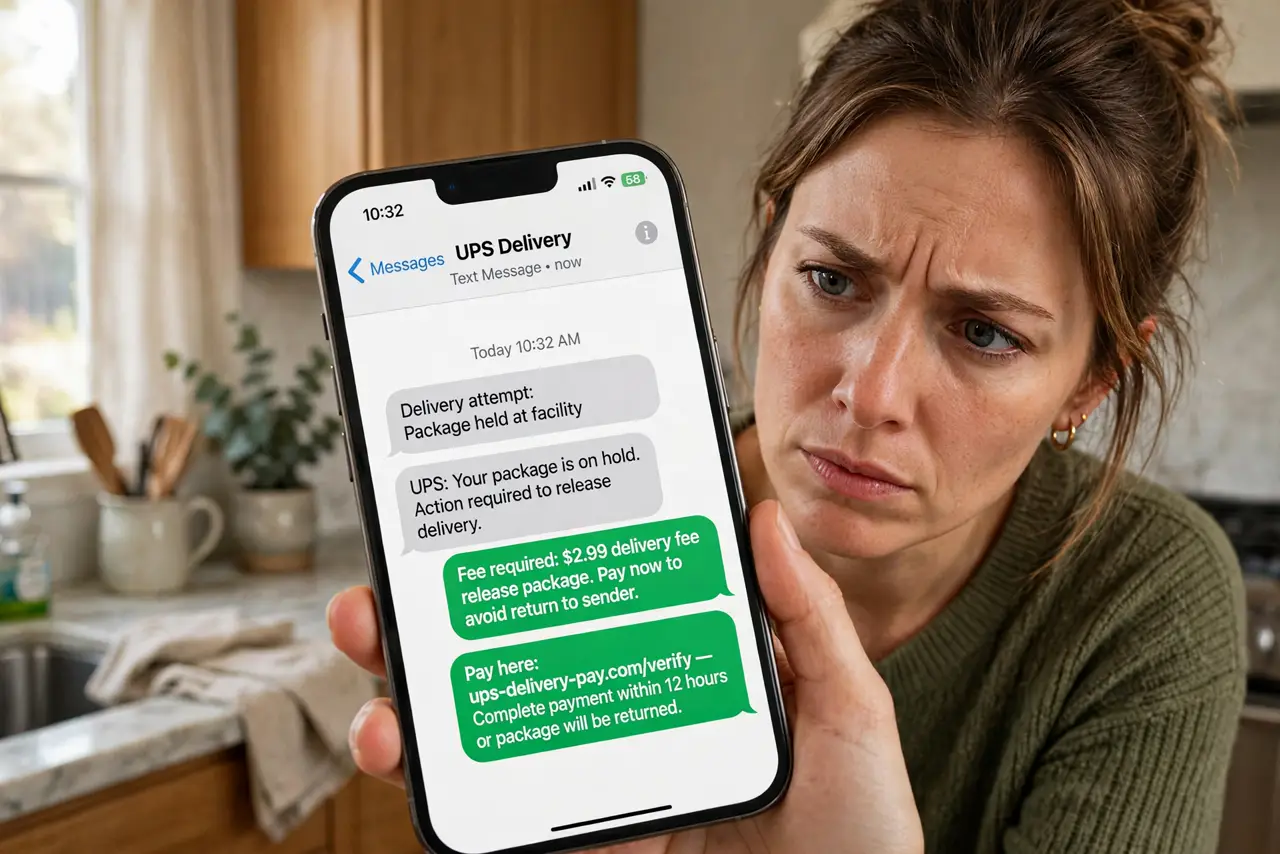
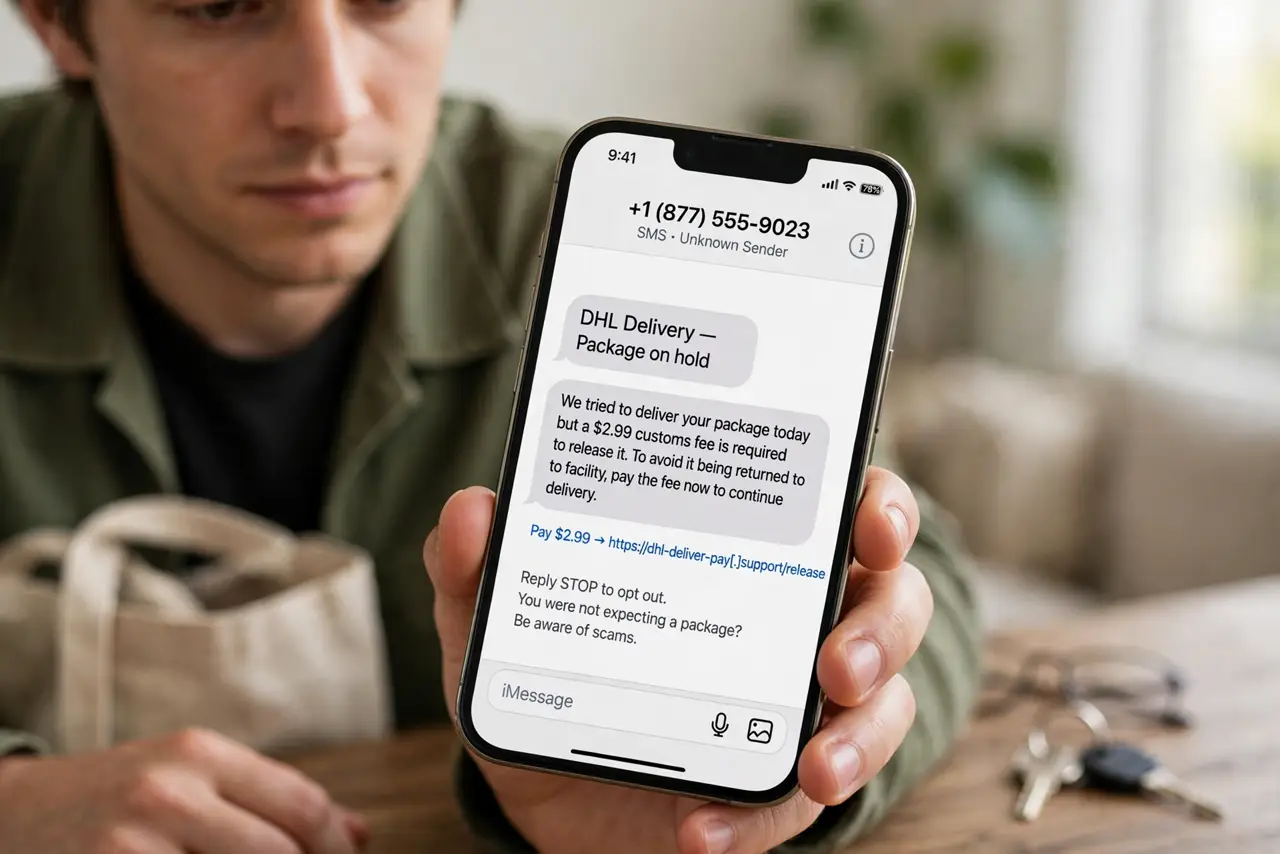
The text says your package is held for an unpaid fee — just click to pay $2.99 and release it. You weren't expecting anything, but what if you were? Fake delivery texts are among the most effective smishing lures because everyone orders online now. The fee is fake; the credential theft is real. Here is the playbook.
TL;DR / Quick Fix
Quick fix: delivery texts demanding a fee or redelivery click are smishing — carriers don't collect surprise fees by text link. Never tap the link; check tracking in the carrier's app or site directly. Don't reply, even STOP. Forward the text to 7726 (SPAM), then delete and block the number.
Follow these steps
- Recognize the lure. Unpaid customs fee, failed delivery needing reschedule, package held at depot — always with a link and urgency. The amounts are small to seem plausible. See the fake delivery text breakdown for the anatomy. Real carriers don't operate this way.
- Never tap the link. It leads to a convincing fake carrier site harvesting your card details — or installing malware. The small fee is the hook; the card number is the catch. Curiosity is the entire attack.
- Check tracking yourself. Open the carrier's official app or type their website yourself; enter any tracking number from your actual orders. If nothing's held, nothing's held. The real status never requires the text's link.
- Don't reply. Replying — even STOP — confirms your number is live and monitored. Legit carriers don't run interactive SMS with strangers. Silence, report, block: the full routine, same as smishing.
- Report it. Forward to 7726 (SPAM) — carriers use these reports to kill the campaigns. Also use your phone's Report Junk option. Each report trains filters that protect everyone.
- Warn the household. These texts target everyone, but older relatives and busy parents tap fastest. A thirty-second warning — 'carriers never ask for fees by text' — is remarkably effective prevention.
What NOT to do
- Do not pay any 'fee' from a text link. Real customs and carriers bill through official channels, never surprise SMS links.
- Do not enter card details on a site reached from a text. If a fee were real, you'd pay it in the carrier's app — navigate there yourself.
- Do not trust it because you're expecting a package. Scammers blast these blindly; sometimes they coincide with real orders — verify independently anyway.
- Do not download the 'tracking app' it offers. That's malware delivery wearing a delivery uniform.
Frequently asked questions
I paid the fee — what now?
Call your bank immediately to dispute and replace the card — the site harvested the details. Treat it as card compromise: new card, watch statements, consider a fraud alert.
How did they get my number?
They didn't target you — these go out by the million to sequential numbers. A hit is luck, not a leak (though leaks help them personalize).
Do real carriers ever text?
Real carriers send tracking updates, but they never demand payment or login via text link. The rule stands: info texts fine, action links never.