Student Loan Forgiveness Calls? Check
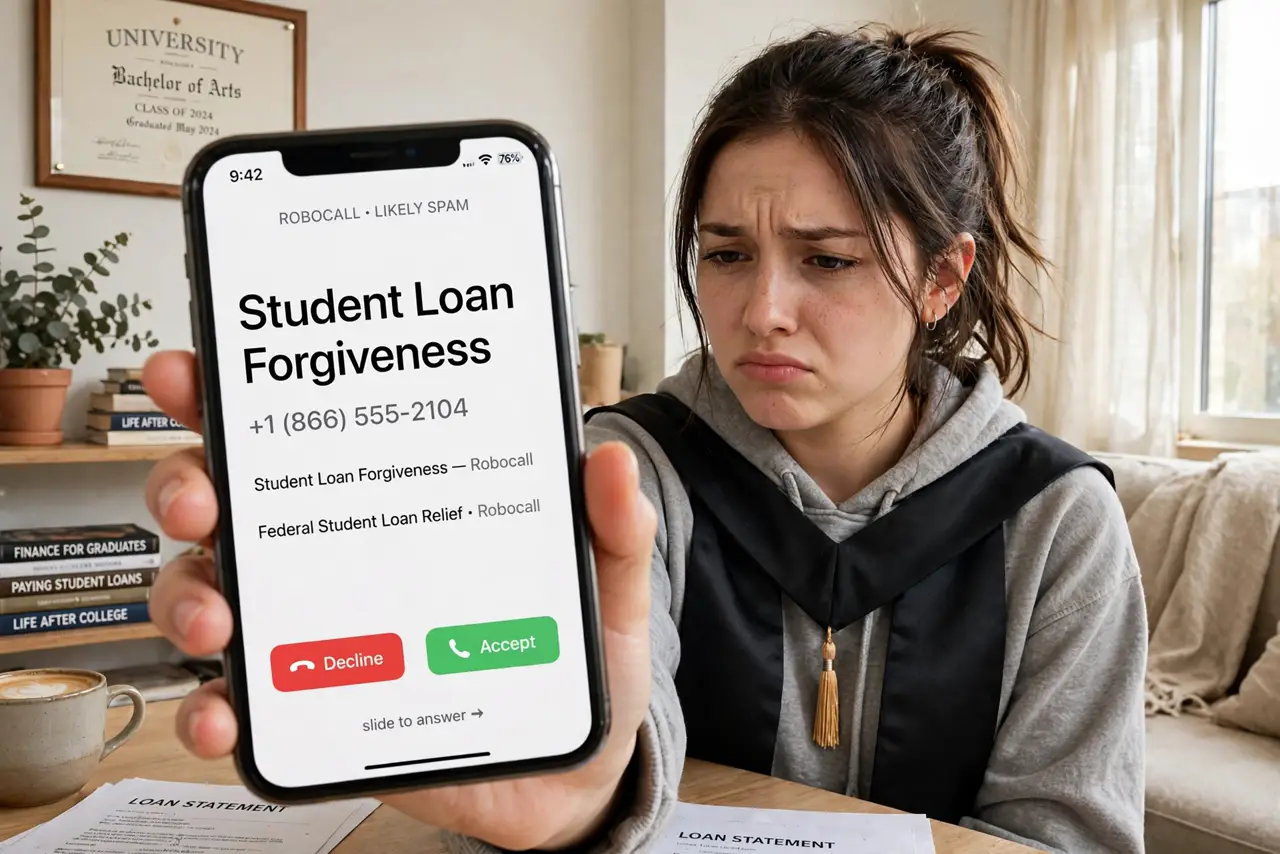
'Your student loans qualify for immediate forgiveness — just pay the processing fee.' Forgiveness programs are real, which is what makes the scam work: callers wrap lies in the shape of truth. Real forgiveness never arrives by robocall, never charges upfront fees, and never needs your student-aid password.
TL;DR / Quick Fix
Quick fix: hang up — real loan forgiveness never comes by robocall and never charges upfront fees. Check your real options at studentaid.gov, typed by you, or call your loan servicer directly. Never give your FSA ID password to a caller; with it, scammers can change your account.
Follow these steps
- Hang up on forgiveness robocalls. The Department of Education does not robocall about forgiveness. Every such call is a sales pitch or a scam — sometimes both.
- Never pay upfront fees. Real forgiveness and repayment programs are free to apply for. Any 'processing fee' or 'enrollment charge' is the scam's business model — see upfront-fee warnings.
- Guard your FSA ID. Your Federal Student Aid login controls your loans. Callers asking for the password want to change your servicer details and divert payments — never share it.
- Check reality at studentaid.gov. Type the address yourself. Your actual loan details, servicer, and eligible programs live there — compare any offer against it.
- Call your servicer directly. Use the number on your statements, not the caller's. Ask about the 'program' you were offered — the servicer will confirm it does not exist.
- Report the callers. Report to the FTC and your state attorney general. Forgiveness-scam operations are serial; reports build the enforcement cases.
What NOT to do
- Do not trust 'limited-time forgiveness' pressure. Real programs have published deadlines on official sites — not countdowns on cold calls.
- Do not sign power-of-attorney or third-party authorization forms from callers. Those documents hand your loans to the scammer.
- Do not assume a professional website means legitimate. Scam document-prep companies look polished — the upfront fee is still the tell.
- Do not stop paying your loans because a caller 'enrolled' you. Missed payments damage your credit while the scammer keeps the fee.
Frequently asked questions
Is student loan forgiveness real?
Yes — several federal programs exist. But enrollment is free, done through official channels, and never sold by robocall. The programs are real; the callers are not.
What is a document-prep scam?
Companies charging fees to fill out free federal forms — sometimes legitimate-looking paperwork, always unnecessary cost, often paired with harvesting your FSA credentials.
They knew my loan balance — legit?
No. Balances leak in breaches and data brokers sell them. Knowledge proves data access, not legitimacy — verify through studentaid.gov.