Set Fraud Alerts
A stranger opens a credit card in your name, and the first you hear of it is the bill. A fraud alert is the free, five-minute tripwire that makes that harder: it tells lenders to verify your identity extra carefully before approving new credit. It is not as strong as a credit freeze, but it is faster to set up and a smart first move. This guide shows how.
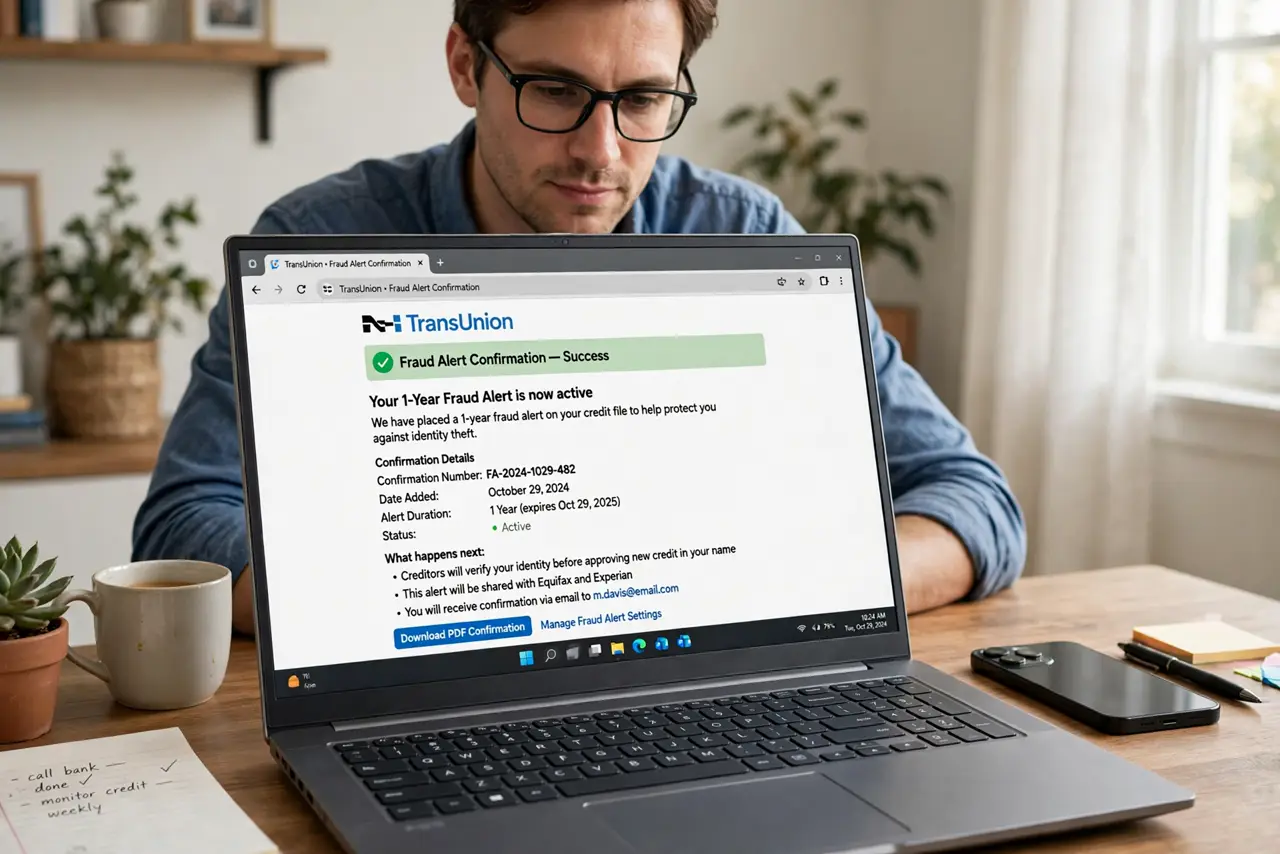
TL;DR / Quick Fix
Quick fix: a fraud alert tells lenders to verify your identity carefully before opening accounts — free to place with one bureau, which notifies the others, lasting one year. Weaker than a credit freeze but faster to set up. Use it alongside a freeze, or as a first step today.
Follow these steps
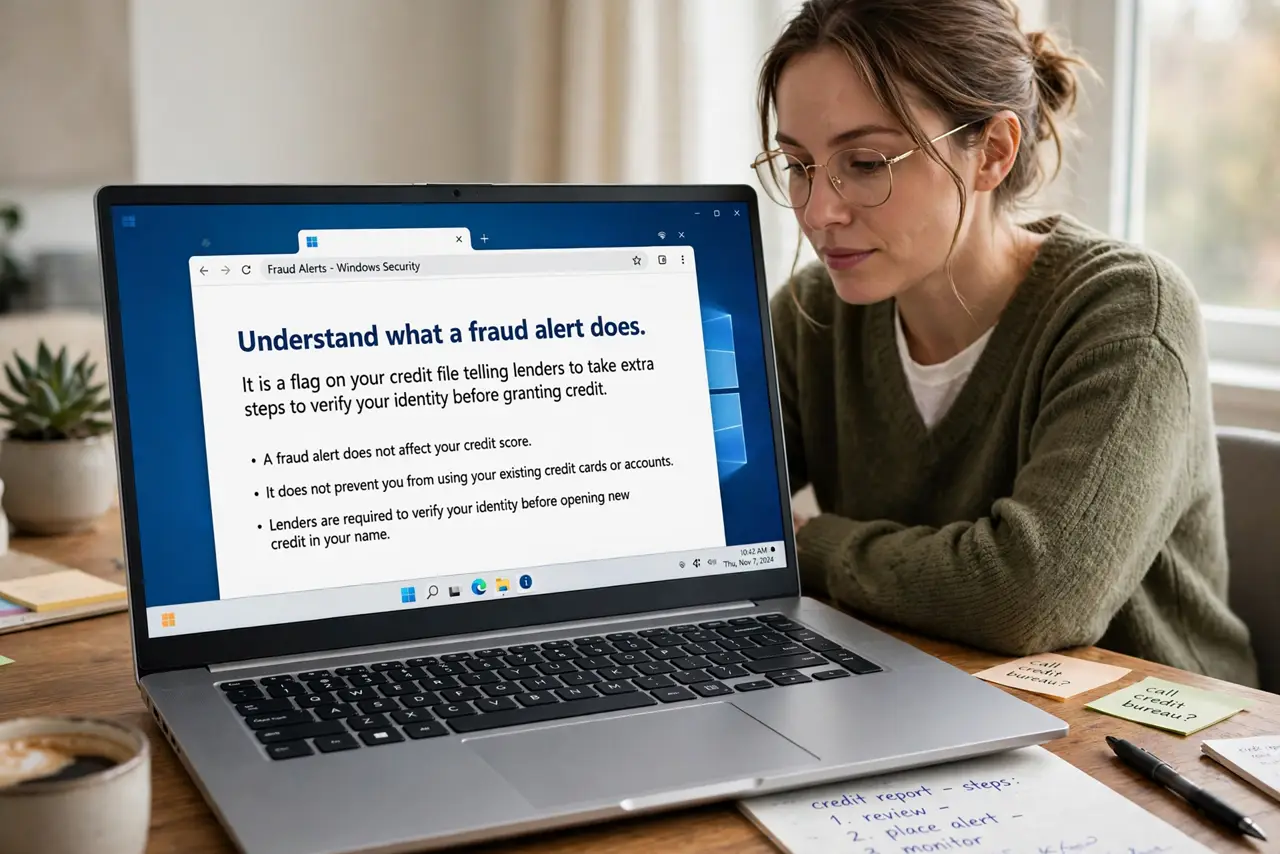
- Understand what a fraud alert does. It is a flag on your credit file telling lenders to take extra steps to verify your identity before granting credit. It does not block applications like a freeze does — it adds friction that stops most automated fraud. See the full comparison before choosing.
- Contact one bureau. Call or go online with Equifax, Experian, or TransUnion — just one. By law, that bureau must notify the other two, so a single request covers all three files.
- Choose the right alert length. The standard initial alert lasts one year and suits most situations. Extended alerts (seven years) exist for confirmed identity-theft victims with a police report or FTC filing — use the one that matches your situation.
- Confirm all three files show it. After a few days, check that each bureau lists the alert. The notification system usually works, but verifying takes minutes and closes the loop.
- Renew before it expires. One-year alerts lapse silently. Set a calendar reminder to renew — or better, upgrade to a credit freeze, which does not expire and protects more strongly.
- Layer it with a freeze for real protection. The alert is the tripwire; the credit freeze is the wall. Together they cost nothing and cover both detection and prevention — do both, not one.
What NOT to do
- Do not treat an alert as a freeze. An alert asks lenders to be careful; a freeze blocks them. Determined fraud can slip past an alert — it cannot slip past a freeze.
- Do not place it and forget it. One-year alerts expire quietly; an expired alert protects nothing.
- Do not skip verifying all three bureaus. The notification chain usually works, but 'usually' is not 'always' — confirm.
- Do not rely on it for existing accounts. Fraud alerts target new credit applications, not takeover of accounts you already have — monitor those separately.
Frequently asked questions
Is a fraud alert really free?
Yes — by federal law, all three bureaus must let you place, renew, and remove fraud alerts at no cost. Never pay for this.
Will it slow down my own applications?
Slightly — lenders may call to verify your identity before approving. That friction is the feature working, and it adds minutes, not days.
Should I get an alert or a freeze?
Both. The alert is fast and easy; the freeze is stronger and permanent until you lift it. They complement each other at zero cost.