Heart Rate Wrong During Workouts? Fix It
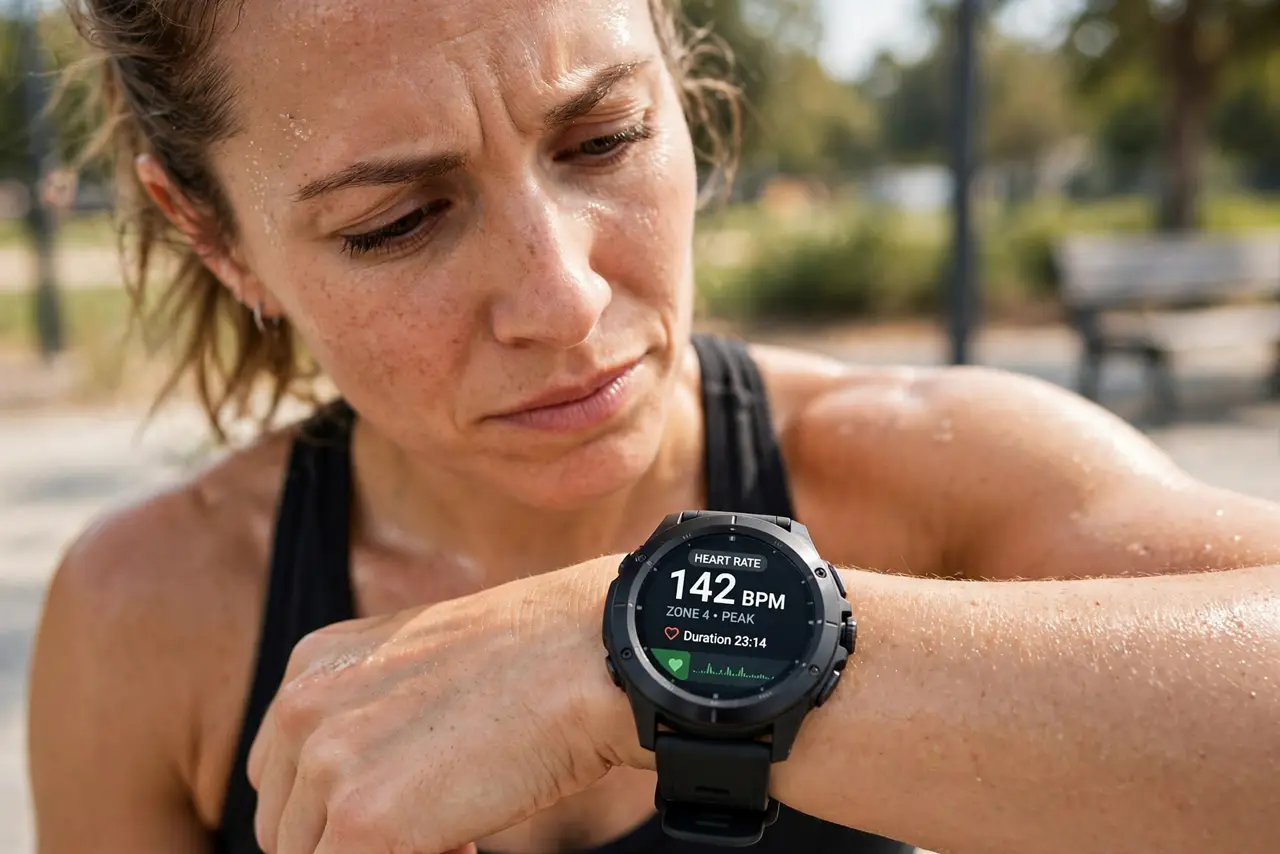
Your watch says 190 bpm on an easy jog, or flatlines mid-sprint. Wrist heart-rate sensors are finicky: fit, motion, tattoos, and cold skin all corrupt the reading. This guide gets the sensor reading you — not your arm swing.
TL;DR / Quick Fix
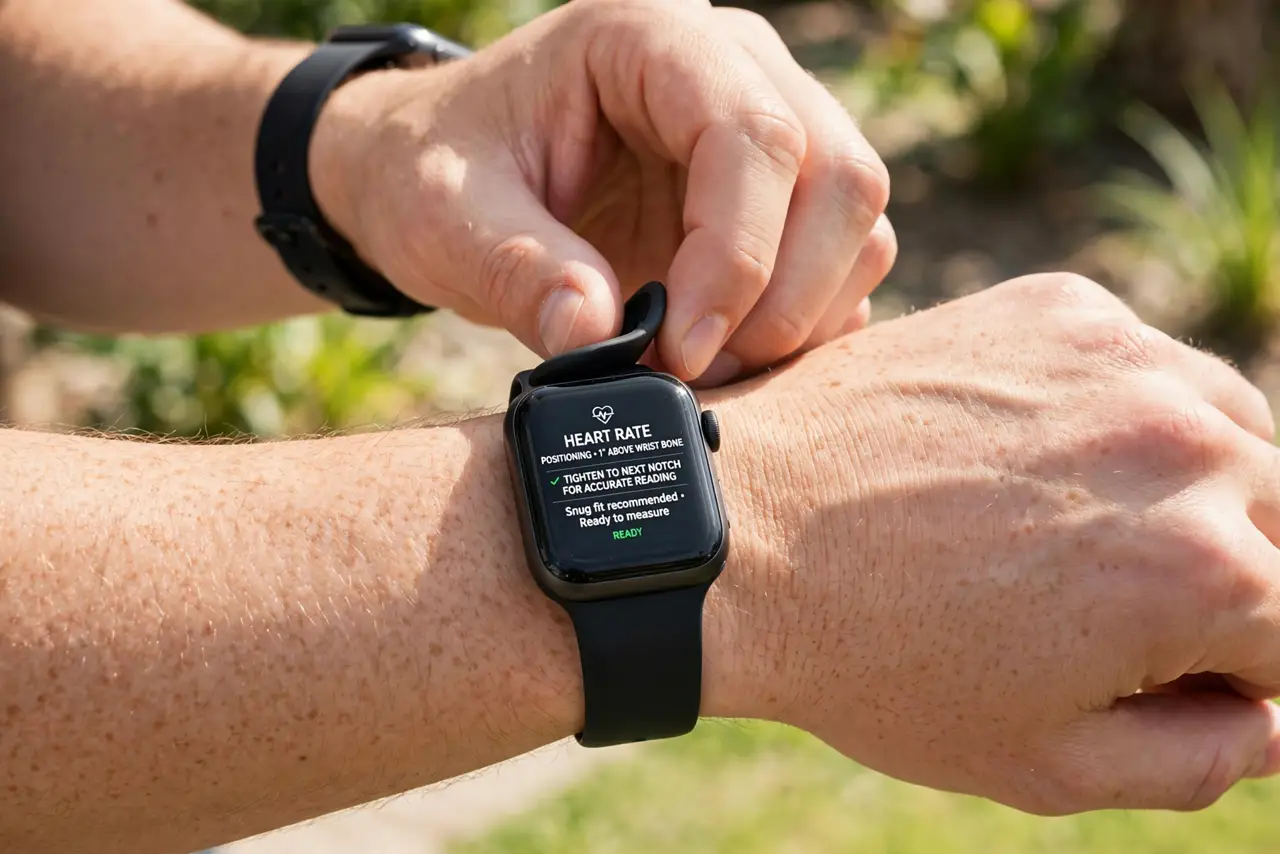
Quick fix: tighten the watch one notch above your wrist bone and warm up for five minutes before trusting the number. Clean the sensor window. If readings stay erratic during intense exercise, a chest strap remains the gold standard for accuracy.
Follow these steps
- Wear it tighter and higher. Slide the watch an inch above the wrist bone and snug it one notch tighter than daily wear. A bouncing sensor cannot track a pulse — the number one fix.
- Warm up before judging. Cold skin constricts blood vessels and weakens the optical signal. Give it five minutes of easy effort before deciding the reading is wrong.
- Clean the sensor window. Wipe the green LED window on the back with a soft cloth. Sweat film and sunscreen scatter the light the sensor depends on.
- Hold still for a spot check. Pause, stand still, and take a manual pulse for 15 seconds. Comparing against your own count tells you whether the watch or your expectation is off.
- Know the motion problem. Fast arm movements — running, burpees, rowing — inject rhythmic noise at step cadence. The watch may lock onto your stride instead of your pulse, showing a suspiciously round number.
- Use a chest strap for training zones. If you train by heart-rate zones, pair a Bluetooth chest strap. Electrical sensing at the chest beats optical sensing at a bouncing wrist every time.
What NOT to do
- Do not trust a single wild reading. One spike to 200 on an easy run is sensor noise — look at the workout's overall trend instead.
- Do not wear the watch over a tattoo for readings. Dark ink absorbs the sensor's green light and degrades accuracy significantly.
- Do not use wrist readings for medical decisions. Consumer sensors are fitness estimators, not medical devices — see a professional for health concerns.
- Do not overtighten to the point of pain. Snug means no sliding, not a tourniquet; circulation matters more than pressure.
Frequently asked questions
Why is my heart rate so high on my watch?
Usually a loose fit letting the sensor bounce, cold skin, or the watch locking onto your arm swing instead of your pulse.
Are wrist heart rate sensors accurate?
Good enough for steady cardio trends — like step counting, they estimate rather than measure precisely. They get shaky for intervals and intense arm movement. Chest straps are notably more accurate.
Do tattoos affect heart rate sensors?
Yes. Dark tattoo ink absorbs the green LED light the sensor uses, often making readings unreliable over the tattoo.