Social Security Call Scams
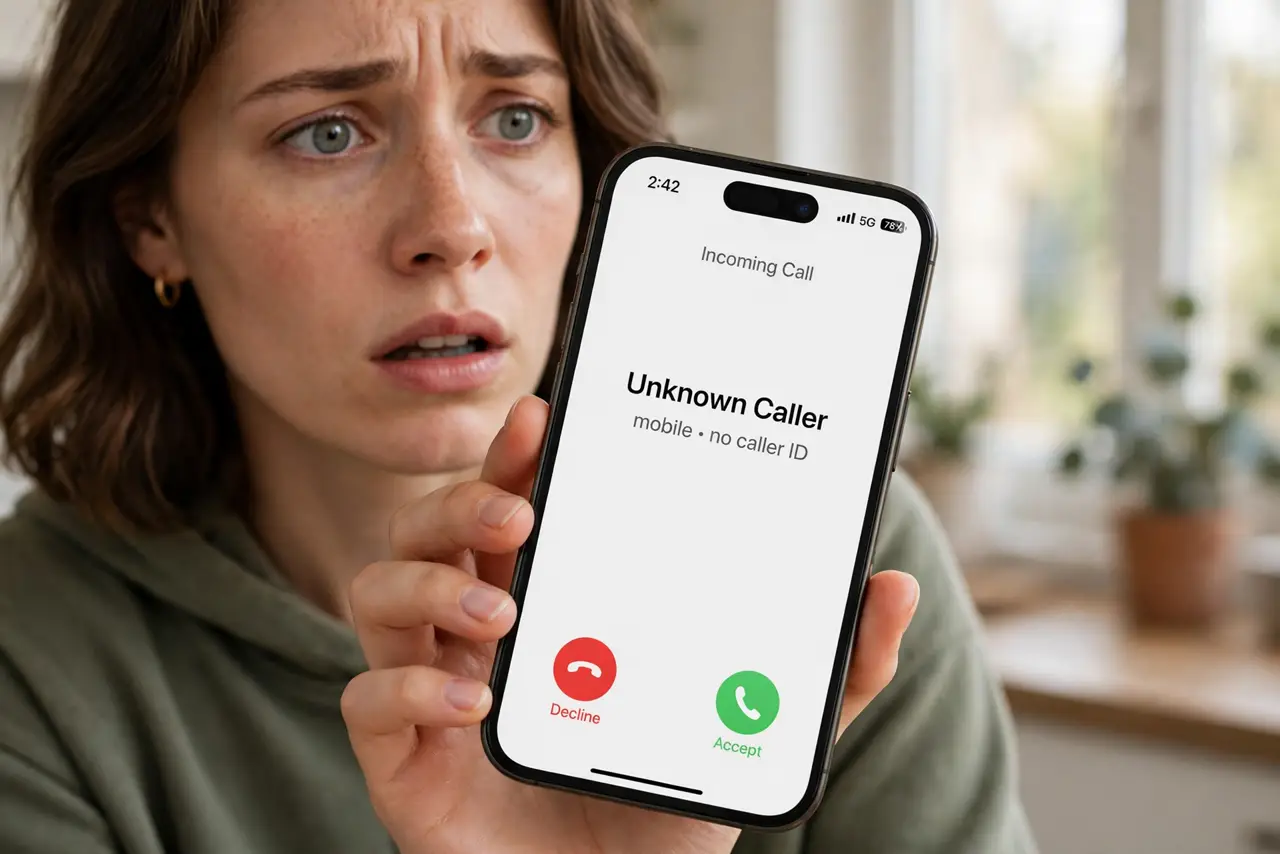
Your Social Security number has been suspended — a threatening call, often robocall-voiced, warns of arrest unless you act now. It names your benefits, cites case numbers, and demands payment or personal details to fix it. Every word is a lie: the Social Security Administration never suspends numbers, never threatens arrest by phone, and never demands gift cards. But the fear it creates is real.
TL;DR / Quick Fix
Quick fix: hang up — the SSA never calls threatening arrest or suspended numbers. Do not press any number, do not call back, and never share your Social Security number with a caller. Report the call to the SSA's fraud hotline and warn older relatives, who are targeted most.
Follow these steps
- Recognize the script. Threatening tone, suspended Social Security number, imminent arrest, case numbers — then the pivot to payment via gift cards, wire, or crypto. Real agencies do not operate this way, ever.
- Hang up without engaging. Do not press 1 to speak to an agent, do not argue, do not call back. Any engagement confirms your number is live and invites more calls.
- Know what the SSA actually does. The SSA communicates by mail, never threatens arrest, never suspends numbers, and never demands immediate payment by phone. If it contradicts this, it is not the SSA — the IRS version runs the same playbook.
- Never share your SSN with callers. Your Social Security number plus a few details enables identity theft. No legitimate agency collects it through threatening cold calls.
- Report the call. Report to the SSA Office of the Inspector General's fraud hotline and the FTC. Reports map the campaigns and occasionally shut them down.
- Protect the prime targets. These scams aim overwhelmingly at older adults. A calm five-minute conversation with parents and grandparents — the SSA will never call like this — is the best defense there is.
What NOT to do
- Do not stay on the line to investigate. Curiosity keeps you on with a professional manipulator — hang up immediately.
- Do not pay with gift cards, crypto, or wire. No government agency accepts these — the payment method alone proves the scam.
- Do not trust the caller ID. Scammers spoof official-looking numbers, even the SSA's real ones — the display means nothing.
- Do not assume a voicemail is safer. The same script arrives as robocall voicemails — delete them the same way.
Frequently asked questions
What if they knew my name and address?
Scammers buy leaked personal data cheaply. Knowing public details about you does not make them legitimate — the threats still prove the fraud.
I already gave information — now what?
Freeze your credit with the bureaus, file an identity theft report with the FTC, and monitor your SSA account for changes.
Why do they always threaten arrest?
Because fear short-circuits judgment. An urgent threat of arrest stops victims from pausing to think — which is exactly the point.