Are Solar Chargers Worth It?
Solar chargers promise free energy from the sun — but the panel on a typical portable unit is tiny, and 'solar charging your phone' often means eight hours of direct sun for half a charge. They're brilliant in exactly one scenario and disappointing everywhere else. Here's the honest math.
TL;DR / Quick Fix
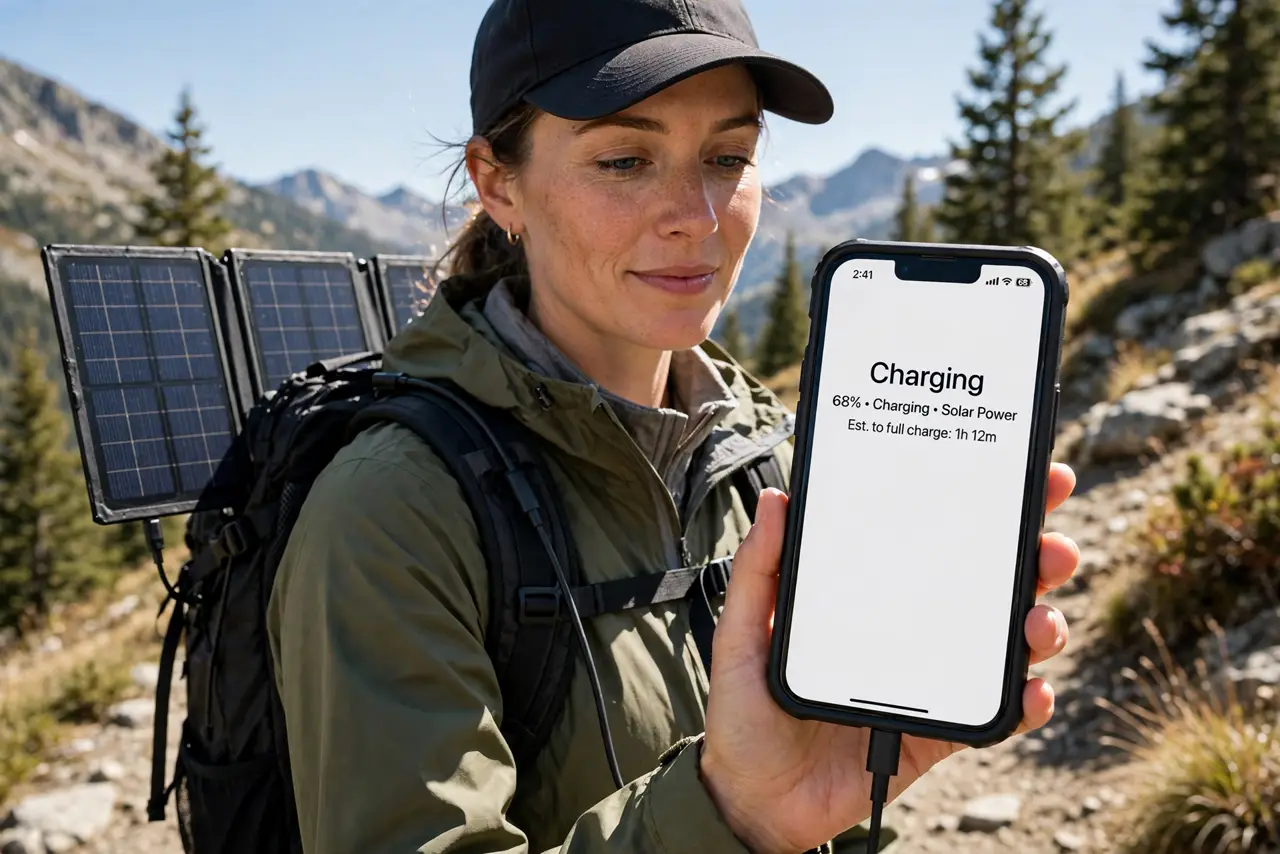
Quick fix: solar chargers trickle-charge slowly — expect hours of direct sun for a meaningful phone charge. They suit multi-day hikes and emergencies, not daily use. A power bank charged at home beats a solar panel for every normal trip.
Follow these steps
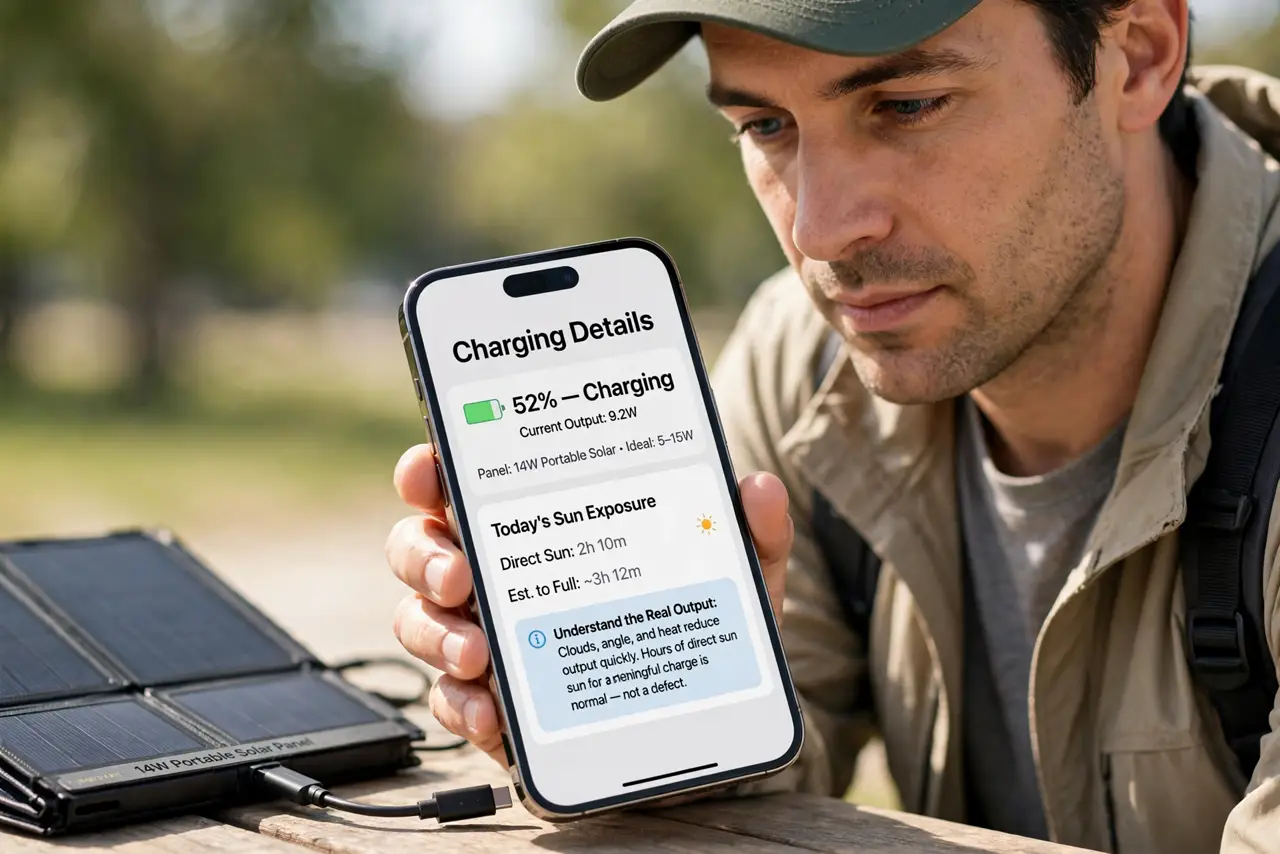
- Understand the real output. A typical portable panel delivers 5-15W in *ideal* sun — clouds, angle, and heat cut that fast. Hours of direct sun per meaningful phone charge is normal, not a defect.
- Know the one scenario they win. Multi-day trips beyond any outlet: hiking, remote camping, emergencies. There, trickle-charging a power bank all day beats carrying ten dead ones.
- Prefer panel-to-bank, not panel-to-phone. Charge a power bank from the panel during the day, then fast-charge the phone from the bank at night. Direct phone charging wastes sun on inefficient trickle.
- Size the panel honestly. Bigger panel = faster charging, no way around physics. Pocket-size panels are emergency-only; backpack-size folding panels are the practical minimum.
- Check the use case math. Daily commute? Useless — a wall-charged power bank wins. Week-long trek? Excellent. Match the tool to the trip, not the fantasy.
- Watch for junk specs. Inflated wattage claims plague this market like power banks. Reputable outdoor brands publish real-world numbers; see slow-charge realities for the charging-speed context.
What NOT to do
- Do not expect wall-charger speeds. Physics caps small panels; anyone promising 'fast solar charging' from a pocket panel is lying.
- Do not buy one for daily use. A $20 power bank charged nightly outperforms a $60 solar panel on every normal day — solar is for off-grid days.
- Do not leave panels baking unattended. Heat degrades both the panel and anything charging; ventilated placement matters.
- Do not assume cloudy = charging. Heavy overcast can drop output 80%+ — plan as if the sun owes you nothing.
Frequently asked questions
How long to charge a phone by solar?
Roughly 4-8 hours of good direct sun for a substantial charge with a decent folding panel. Pocket panels take far longer — they're trickle devices.
Are solar power banks any good?
The panel on most is too small to matter — it's a gimmick that adds cost. A separate folding panel plus a normal power bank works far better.
Do solar chargers work indoors?
Barely — window light is a tiny fraction of direct sun. Treat indoor solar as decorative, not functional.