Spot Charity Scams
A disaster hits the news and within hours the donation appeals arrive — texts, calls, social media posts, all urgent, all heartbreaking. Most are real charities doing real work. Some are scammers surfing the wave of generosity, collecting for victims that do not exist. Giving wisely takes five extra minutes and ensures your money helps instead of vanishing. The charity verification basics are worth knowing before the next crisis.
TL;DR / Quick Fix
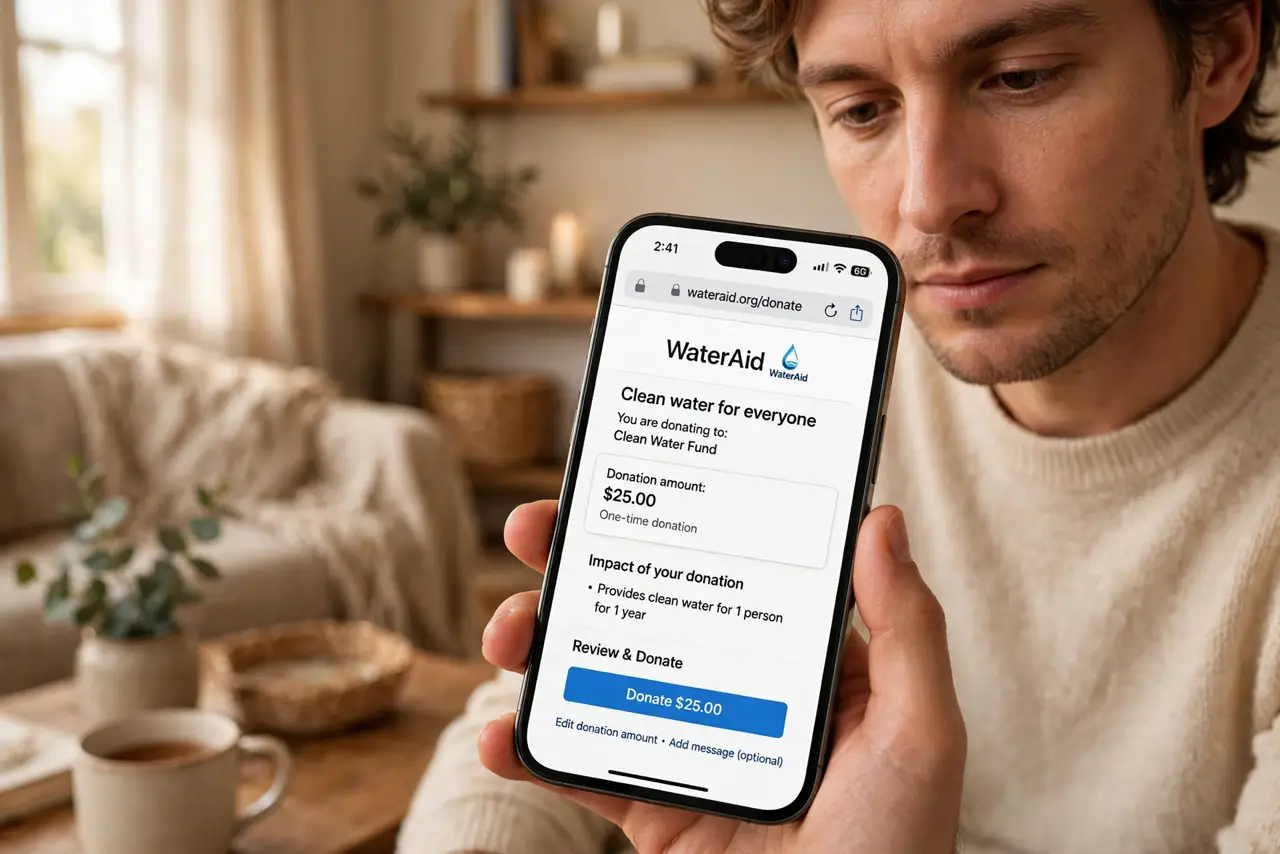
Quick fix: after a disaster, donate only to charities you verify independently — look up the organization yourself rather than clicking links in messages. Real charities never pressure you, never demand gift cards or wires, and always give receipts. When in doubt, give to a well-known organization directly.
Follow these steps
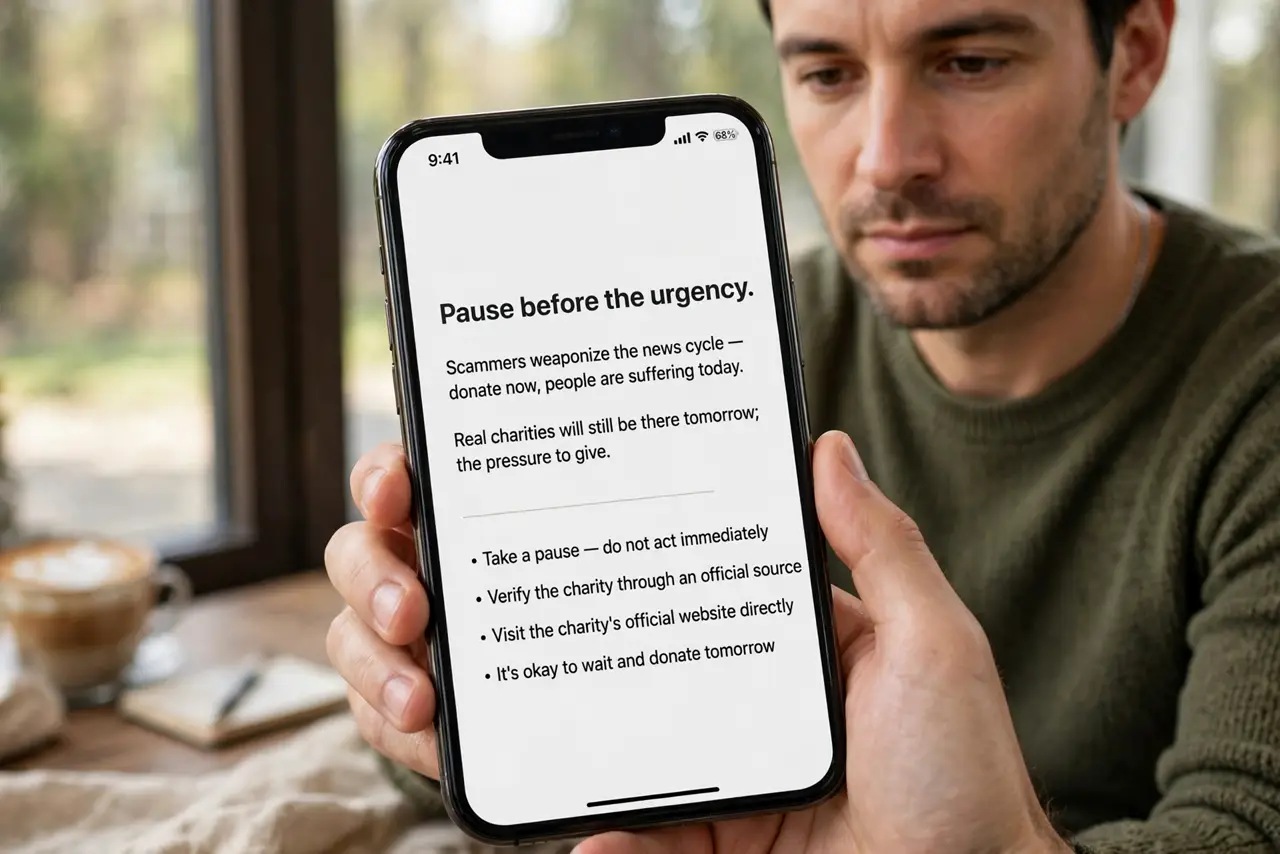
- Pause before the urgency. Scammers weaponize the news cycle — donate now, people are suffering today. Real charities will still be there tomorrow; the pressure to give this instant is the scammer's tool, not the charity's.
- Verify the charity independently. Look up the organization yourself through a charity evaluator or its official site — never through the link in the appeal. A real charity has a track record, financial filings, and a verifiable address.
- Watch the payment method. Gift cards, wire transfers, and crypto are scammer payments. Real charities take cards and checks through their own secure site and always issue receipts.
- Beware the lookalike name. Scammers register names one letter off from famous charities. Read the name carefully and confirm the website address matches the real organization's domain.
- Never donate over a cold call. Legitimate charities do not cold-call demanding card numbers. If a caller claims to represent one, hang up and donate through the charity's official site if you choose.
- Keep your receipt. Real donations come with receipts for taxes and records. No receipt, no accountability — treat a receipt-less appeal as a red flag, not an oversight.
What NOT to do
- Do not click donation links in unsolicited messages. Go to the charity's site yourself — the link in the text is the attack vector.
- Do not donate via gift cards or wire transfers. No legitimate charity operates this way; those payments exist to be irreversible.
- Do not trust a charity that only exists on social media. Real organizations have websites, filings, and history beyond a viral post.
- Do not let guilt override verification. The urgency you feel is real; the organization exploiting it may not be.
Frequently asked questions
How can I check if a charity is real?
Use an independent charity evaluator or check its registration with the relevant authorities. Real charities welcome scrutiny — scammers deflect it.
Is it safe to donate through social media fundraisers?
Platform-run fundraisers with verified organizers are generally fine. Random posts and DMs asking for direct transfers are not.
What if I already donated to a scam?
Contact your bank or card provider about reversing the charge, report the appeal to the platform and authorities, and treat it as a lesson in verification.