Spot Job Scams
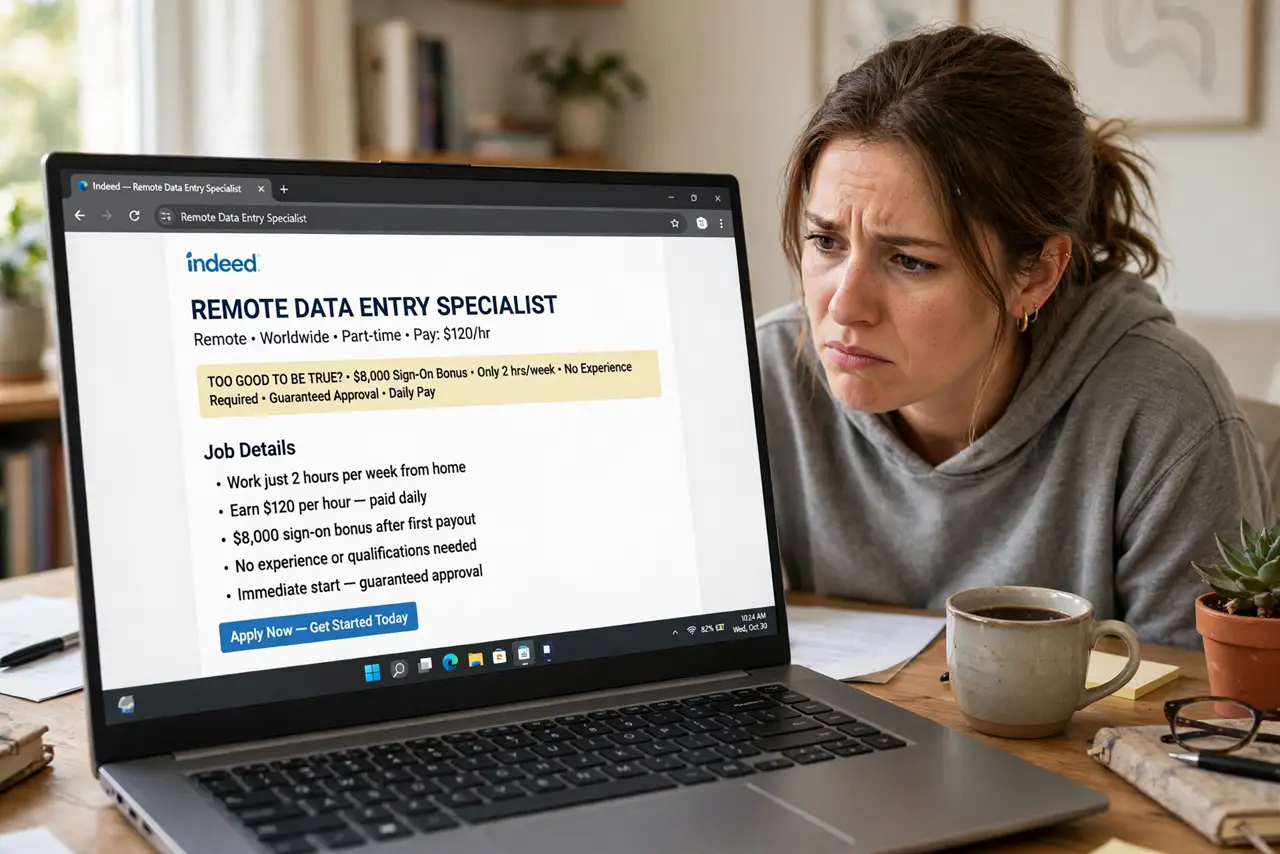
The job pays remarkably well for simple remote tasks, the interview happened entirely over text chat, and you are hired — but first, pay for your training kit, or deposit this check and forward part of it, or share your bank login for payroll setup. Every version of this is a scam. Real employers never charge you to hire you, never interview only by text, and never need your bank password. The too-good offer is the bait; the fee is the hook.
TL;DR / Quick Fix
Quick fix: a job paying well for simple tasks, interviewing only by text, and asking for money or your bank login upfront is a scam — real employers never charge to hire you. Verify the company independently, never pay for equipment or training, and report fake listings to the platform.
Follow these steps
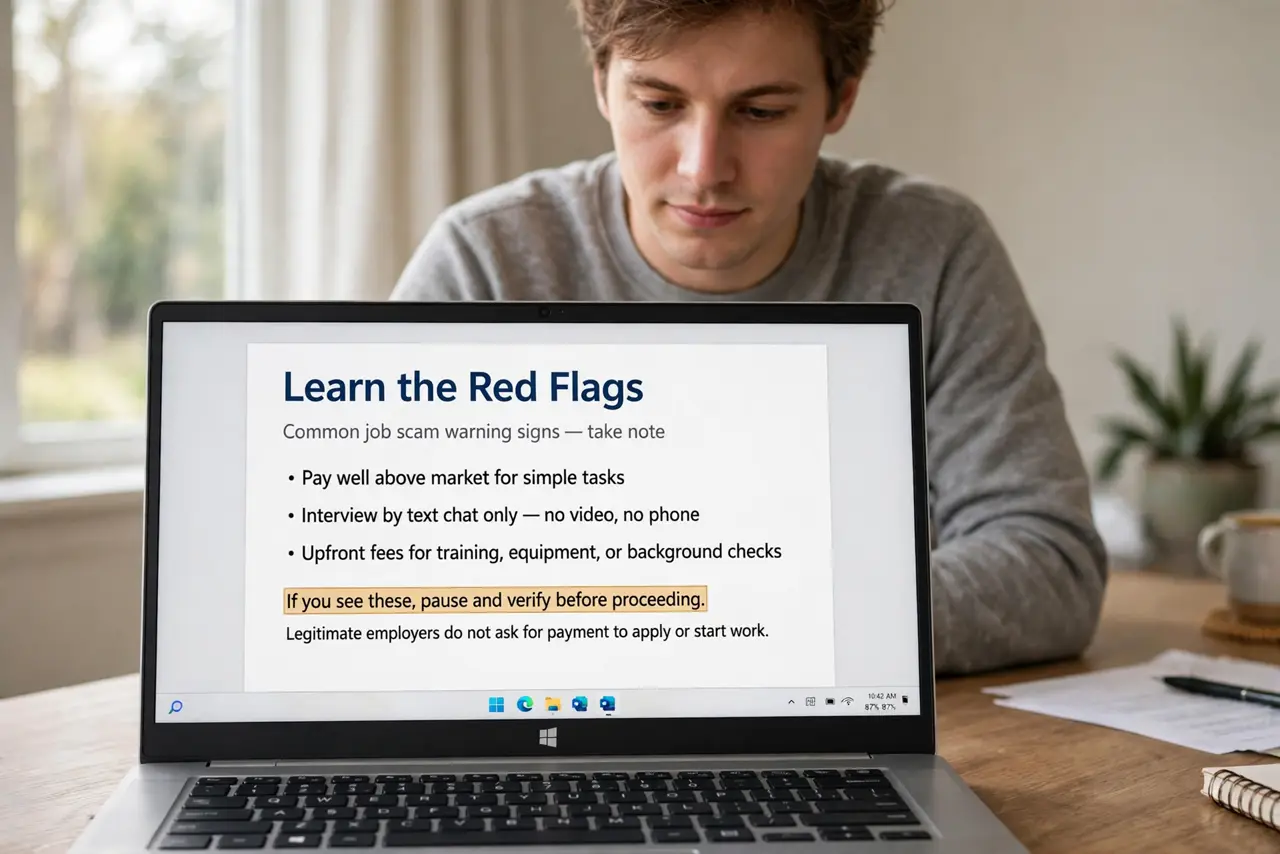
- Learn the red flags. Pay well above market for simple tasks. Interview by text chat only, no video, no phone. Upfront fees for training, equipment, or background checks. Requests for bank logins, gift cards, or check-cashing favors. Any two together: scam.
- Never pay to get hired. Training fees, equipment deposits, certification costs deducted from your first check — legitimate employers absorb hiring costs. Money flowing from you to the employer before your first paycheck is the defining mark of the scam.
- Verify the company independently. Do not trust the listing's links — search the company yourself, call their public number, check their real careers page. Scammers impersonate real companies and invent fake ones with equal ease; five minutes of independent checking defeats both.
- Never share bank logins or cash checks for them. The fake-check variant: they send a check, you deposit it, forward part back — then the check bounces and you owe the bank everything. Payroll needs account numbers on official forms, never your login, never forwarded funds.
- Watch the interview channel. Real hiring involves voices and faces — video calls, phone screens, in-person meetings. Text-only interviews exist to hide that there is no office, no team, and no job. Insist on a live conversation; scammers vanish.
- Report and warn. Report the listing to the job platform and the company being impersonated. Like romance scams, these run on manufactured trust at scale — your report protects the next applicant. Check known job-offer scam patterns to sharpen your eye further.
What NOT to do
- Do not pay any upfront fee, ever. Equipment, training, background checks — the direction of money at hiring time is toward you, never from you.
- Do not deposit their check and forward money. The check is fake; the forwarded money is real and unrecoverable; the bank holds you responsible.
- Do not share bank logins or full identity documents early. Payroll setup happens after signed offers through official channels — not over chat in week one.
- Do not ignore the text-only interview. No voice, no face, no job — insist on a live conversation before sharing anything personal.
Frequently asked questions
What about jobs that ask me to buy equipment?
Real remote employers ship equipment or reimburse you — they do not have you buy from their vendor with your money. Purchase-first is the scam.
I already sent money — what now?
Stop all contact, report to the platform, the impersonated company, and your national fraud line. If you shared banking details, alert your bank immediately.
Are freelance platforms safe?
Safer, not safe — scammers operate there too. Keep communication and payment inside the platform, where the protections apply.