Spot Romance Scams
They matched with you weeks ago and the connection feels electric — long messages, big plans, talk of a future. Then comes the emergency: a stranded trip, a medical bill, a business crisis — and they need money, gift cards, or crypto, urgently, secretly. This is the romance scam: a criminal running a script, often juggling dozens of victims, and the person in the photos is not the person typing. Money is the entire plot.
TL;DR / Quick Fix
Quick fix: an online love interest who dodges video calls or needs money is a scammer — never send money to someone you have not met. Insist on a live video call early; scammers refuse or fake it. Cut contact and report the profile the moment money enters the chat.
Follow these steps
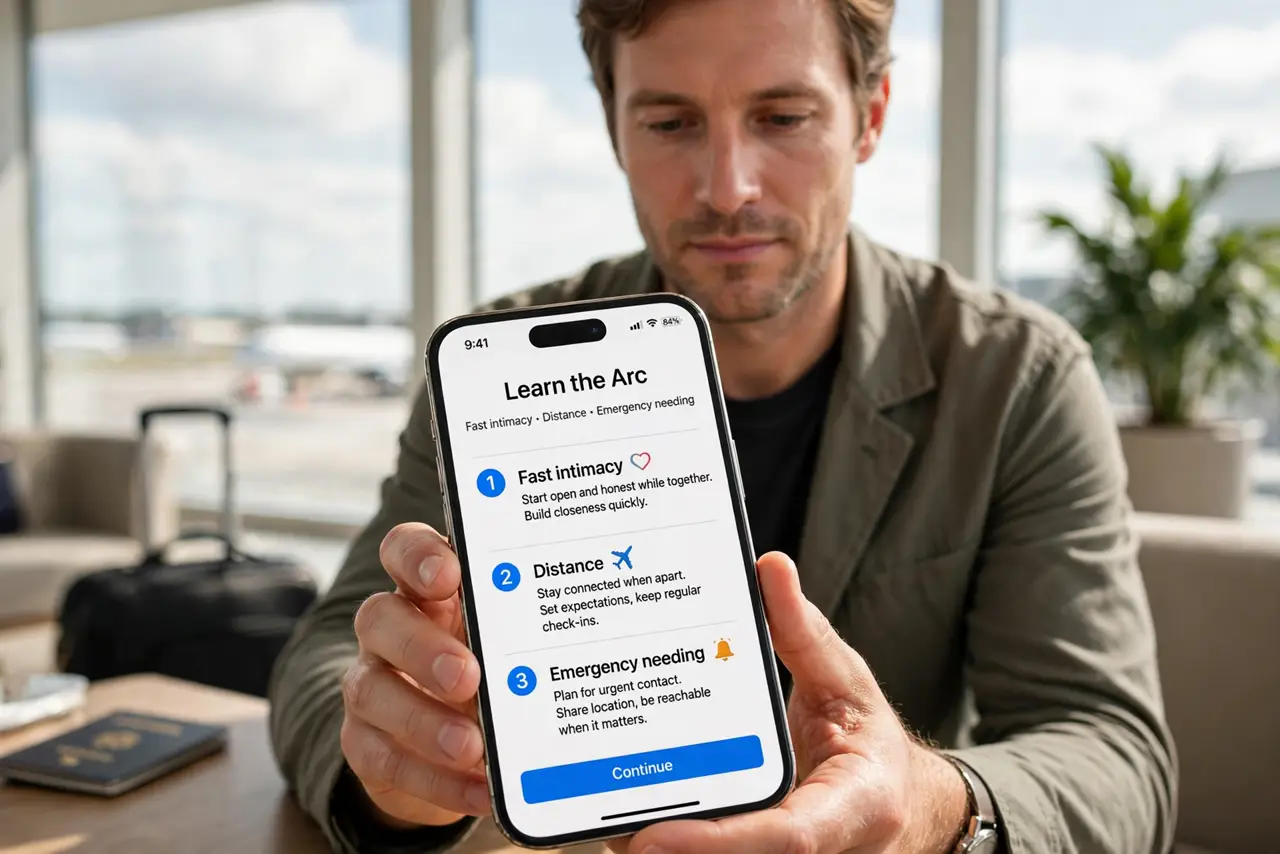
- Learn the arc. Fast intimacy, then distance (deployed soldier, offshore worker, traveling businessperson — always somewhere unreachable), then the emergency needing money. The unreachable job explains why you can never meet; the emergency monetizes the attachment. Every romance scam follows this arc.
- Insist on live video early. A real person video-calls; a scammer dodges, delays, or sends pre-recorded clips. Ask for a live call with a specific gesture (wave with your left hand) — deepfakes exist, but most scammers simply refuse, which tells you everything.
- Reverse-image-search their photos. Save a profile photo and run it through a reverse image search. Stolen model photos and stock images surface immediately — a scammer's gallery is always borrowed.
- Never send money, gift cards, or crypto. No emergency is real. Not the hospital bill, not the stranded flight, not the business deal that needs your wire to close. Money sent to a romance scammer is unrecoverable — the rule is absolute because the scam is absolute. The gift card red flags apply here too.
- Watch for the secrecy request. Do not tell your family, they would not understand — isolation is how the scam survives contact with reality. The moment someone asks you to hide the relationship, tell someone precisely because they asked you not to.
- Cut contact and report. Block everywhere at once — partial blocking invites the hoovering comeback. Report the profile to the platform and to your national fraud line. Then tell a friend what happened; shame keeps victims silent, and silence protects scammers. The job-scam playbook runs on the same manipulation engine, if you want to see the pattern elsewhere.
What NOT to do
- Do not send money to test whether they are real. There is no test version of this — the first transfer is simply the first loss.
- Do not keep it secret because you feel foolish. These operations are professional psychological campaigns; falling for one says nothing about your intelligence and everything about their craft.
- Do not believe the video call you finally got. Pre-recorded loops and deepfakes fool the hopeful — insist on interactive, unpredictable live video.
- Do not try to scam-bait them yourself. Engaging further risks more manipulation, and some operations turn threatening when the money stops.
Frequently asked questions
What if I already sent money?
Stop all contact immediately, report to the police and your national fraud line, and tell your bank. Recovery is unlikely, but reporting builds the cases that dismantle these networks — and protects the next target.
Are all deployed-soldier profiles fake?
The scammer's soldier is always fake; real service members do not solicit money from online contacts. Anyone in uniform asking for funds is a scammer wearing a stolen photo.
How do I help a friend who is being scammed?
Gently, without mockery — show them this pattern, offer to reverse-image-search together, and be patient. Victims defend the scammer; attacks on the scammer feel like attacks on the relationship.